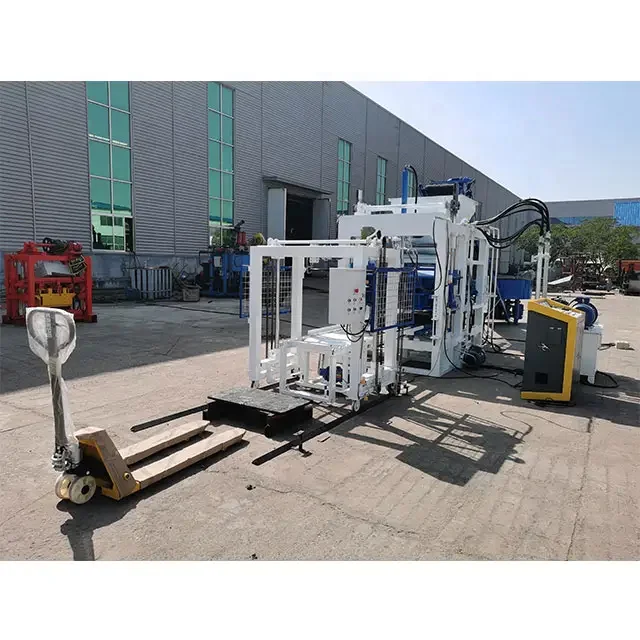
Description
Control Language Matched — Every QT4-18 ships with the PLC display locked to your operator’s native script before the crate is sealed.
Technical Specifications
| Parameter | Value |
|---|---|
| Model | QT4-18 |
| Product Type | Automatic Concrete Block Making Machine |
| Overall Dimensions (L×W×H) | 2500×1750×2200 mm |
| Rated Pressure | 16 MPa |
| Vibration Form | Platform Vibration |
| Pallet Size | 950×550 mm |
| Molding Cycle | 18–25 s |
| Overall Power | 27.5 kW |
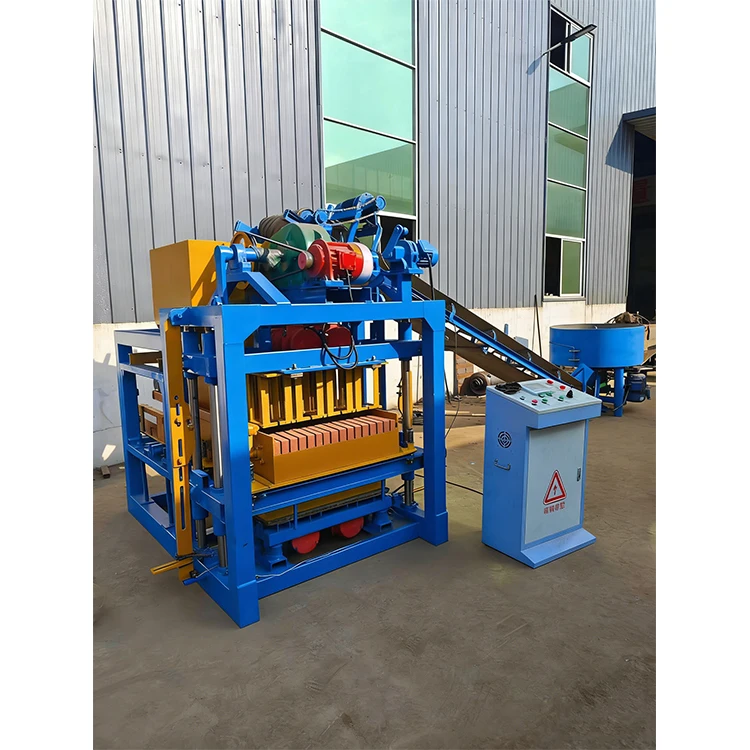
| Control System | PLC control with frequency converter, machine-to-person interface |
| Electrical Components | Schneider internationally renowned brand |
| Mould Lifting Mechanism | Double-sided synchronous gears |
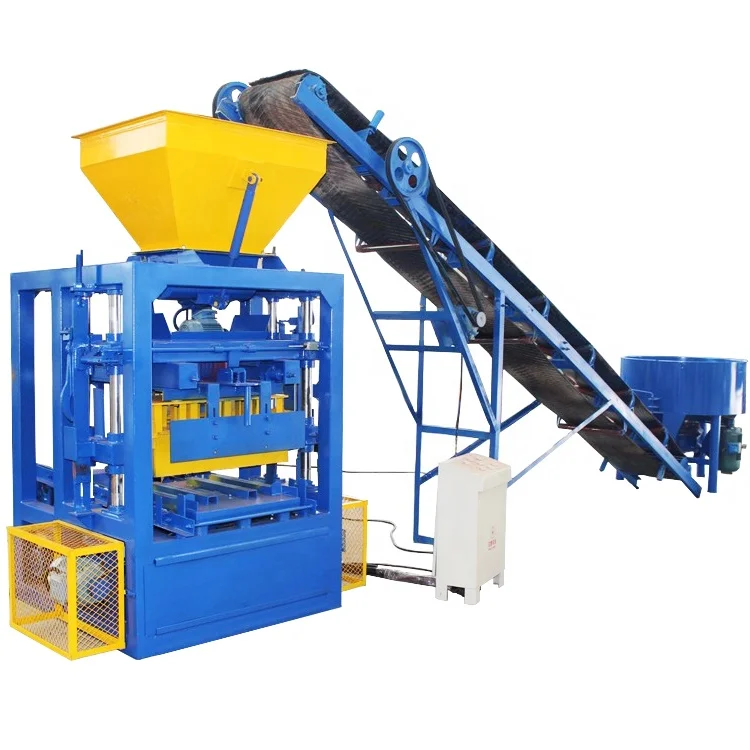
| Material Feeder System | Hopper, feeding box, feeding platform, conveyor system with distribution belt hopper |
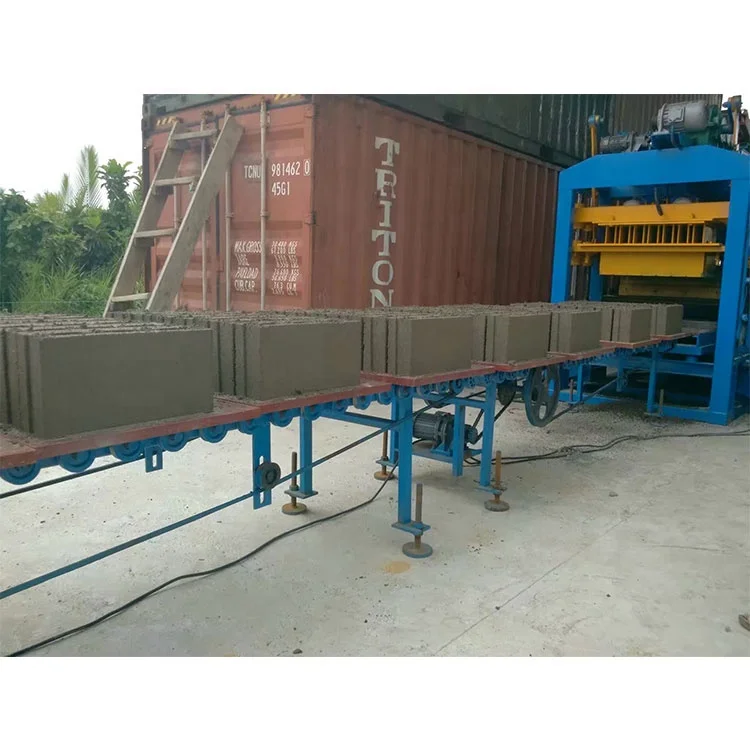
| Block Receiver | Frame, convey system, idler wheels, motor and reducer with triangle belt |
| Pallet Feeder Power | Hydro-cylinder driven |
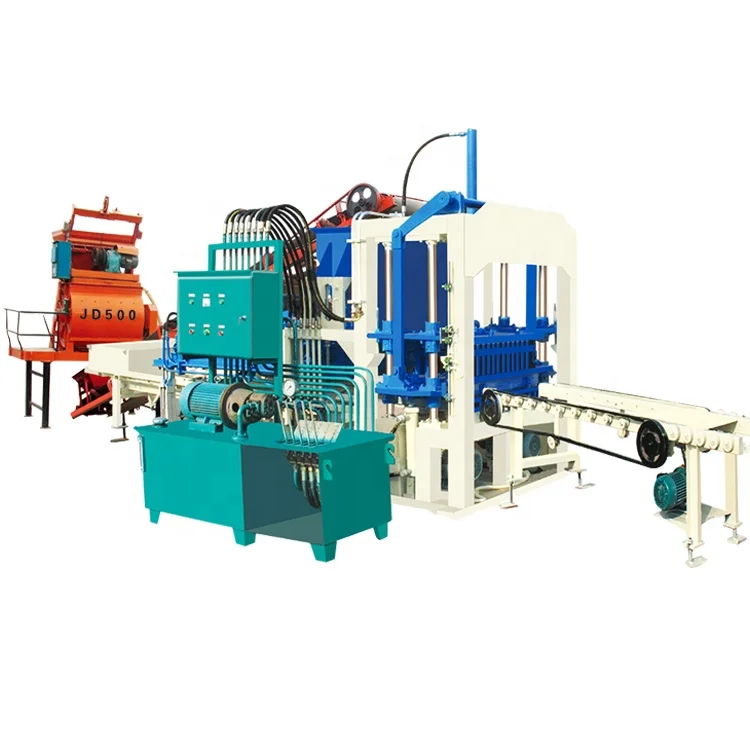
| Automation Level | Automatic (pallet feeding, molding, block conveying integrated) |
| Output Capacity | Basis not stated in source — confirm block format and material |
| Voltage & Frequency | To be confirmed before commissioning |
| PLC Display Language | To be confirmed before production |
Application Suitability
| Application | Material or Output |
|---|---|
| Hollow block production | Crushed stone, cement, sand aggregate blends |
| Solid block manufacturing | Dense concrete mixes for load-bearing walls |
| Paving block pressing | Fine aggregate with pigment for interlocking driveway formats |
| On-site contractor production | Locally sourced gravel and cement for housing projects |
| Format expansion for existing plants | New mould profiles added to current product catalogue |
Why Your PLC Display Language Must Be Confirmed Before Crating
An unreadable control screen turns an automatic block making machine PLC controlled system into a very expensive manual press.
I once commissioned a block line where the PLC touchscreen defaulted to English while the floor crew only read Vietnamese. The stacking recipe would not load, the cycle timer stayed in setup mode, and the plant sat idle for four full days while we scrambled to push a language patch over a patchy mobile connection. That downtime cost the owner more than the shipping. An automatic block making machine PLC controlled unit only delivers its promised consistency when the operator can actually read what the screen is telling them [NEED_CITE: PLC interface language and operator error correlation in industrial machinery].
How Frequency Converter Regulation Holds Cycle Consistency
The QT4-18 pairs its PLC with a frequency converter that governs the vibration motor speed rather than letting it run at a fixed frequency. This means the vibration force applied to each pallet stays within a narrow band throughout the shift, regardless of how many starts and stops occur. Operators set the target ramp-up and hold times once, and the converter repeats that profile on every cycle. Without this regulation, voltage sag during peak draw can slow the motor mid-cycle and produce under-compacted blocks on the trailing edge of the pallet.
Synchronous Gear Mould Lifting and What It Eliminates
Mould alignment drift is the quiet killer of block dimension accuracy. The QT4-18 uses double-sided synchronous gears to raise and lower the mould box, keeping both sides level within the same tooth engagement. When one side of a mould lifts even slightly ahead of the other, the freshly pressed block drags against the cavity wall and chips its corner. Over a long production run those micro-chips accumulate into reject pallets. Synchronous lifting removes that variable, so the mould releases cleanly every time [NEED_CITE: mould release defects in vibration-pressed concrete blocks].
Reading the Specs That Actually Matter
The 16 MPa rated pressure and platform vibration work together to compact the concrete mix. Pressure alone cannot consolidate a stiff zero-slump mix; vibration liquefies it momentarily so the hydraulic ram can push aggregate particles into tight contact. The 950×550 mm pallet size dictates how many blocks fit per cycle, and therefore how your curing yard must be laid out — order pallets that match the forklift tine spacing you already run. The 27.5 kW overall power draw tells your electrician whether the existing panel has spare capacity or needs a dedicated breaker. Molding cycle of 18–25 seconds is the mechanical window; the real throughput depends on how fast your mixer can feed and how quickly cured blocks move off the rack.
The Hidden Cost of Skipping Automation Details
Buyers who focus only on the press often discover that pallets still need to be fed by hand and wet blocks stacked manually on the curing racks. The QT4-18 integrates automatic pallet feeding via its hydro-cylinder system and a motorised block receiver conveyor, but stacking, cubing, and rack handling are separate stations. If those are not quoted together, the labour count on the floor stays high and the press sits idle waiting for someone to carry pallets back. Confirming the full material flow — from mixer discharge to cured block exit — before the purchase order is signed prevents that gap [NEED_CITE: hidden labour costs in partial-automation block plants].
Why Source This Configuration Here
Block machinery is the sole focus of this production team, so the press, mould, pallet, and handling equipment are specified as one matched set rather than assembled from unrelated suppliers. Configuration starts from your actual mix design and local aggregate, not a catalogue default. Moulds are designed for the formats your market moves, including custom drawings when standard profiles do not fit. The automation level is selectable, letting a buyer start with the QT4-18’s integrated cycle and add automatic stacking or cubing later as demand grows. Installation support includes on-site commissioning and operator training so the crew is fluent before the engineer leaves.
Documentation & Verification
- Line layout drawing with capacity stated per block format, not a generic hourly figure
- Hydraulic and electrical schematic matching the shipped QT4-18 serial number
- Voltage, frequency, and PLC display language written confirmation before production
- Factory test record showing cycle timing on the specified mould profile
- Mould drawing and format list covering every cavity the buyer ordered
- Packing photographs taken at the loading bay before container doors close
Installation, Commissioning & Support
- Foundation pad poured level to the 2500×1750 mm footprint with anchor bolt pockets
- Dedicated 27.5 kW circuit at confirmed voltage and frequency, isolated from welder loads
- Hydro-cylinder pallet feeder bled and stroke length set to the 950×550 mm pallet during commissioning
- PLC recipe loaded for each mould profile with operator walkthrough in confirmed language
- Schneider component cross-reference sheet left with the maintenance team for local sourcing
- Wear parts list covering mould liner, gear teeth, and conveyor belt splicing schedule
What to Send With Your Inquiry
Tell us the block format you sell most — dimensions, wall thickness, and target compressive strength. Share your local aggregate type and the mix ratio your batch plant currently runs. Confirm the voltage and frequency at your site panel, and the language your operators read on a screen. If you already have curing racks or a forklift, give us the pallet dimensions and tine spacing so the 950×550 mm pallet choice is validated against your existing equipment.
Frequently Asked Questions
Q: How is output capacity calculated, and which block format is the cycle time based on?
A: The 18–25 second molding cycle is a mechanical window that varies by block height and mix stiffness. We calculate daily output only after you confirm the exact block format, pallet pattern, and shift length. The capacity sheet we return states the assumed format so there is no mismatch between quoted and real production.
Q: What PLC language options are available, and can the interface be set before shipment?
A: The machine-to-person interface supports multiple display languages. We confirm the required language during the order stage and flash the correct firmware before the factory test. The operator sees their own script the moment the QT4-18 powers up on site, avoiding the downtime of post-arrival reprogramming.
Q: Can the QT4-18 be upgraded later with automatic stacking and cubing?
A: Yes. The PLC architecture and the block receiver conveyor are designed to accept downstream stacking and cubing stations. You can commission the press as a stand-alone automatic unit now and bolt on the handling modules when volume justifies the additional investment.
Q: What voltage and frequency configurations are available?
A: The electrical system is built to the voltage and frequency you confirm at order — whether that is 380 V 50 Hz, 440 V 60 Hz, or another combination. Schneider components are rated across common industrial ranges, and the confirmation is documented before any panel is wired.
Q: How does automation level affect labour count on the line?
A: The QT4-18 automates pallet feeding, pressing, and block conveying. You still need operators at the mixer, curing rack, and off-loading points unless those stations are also automated. We map the full headcount in the line layout so you see exactly which positions remain manual.