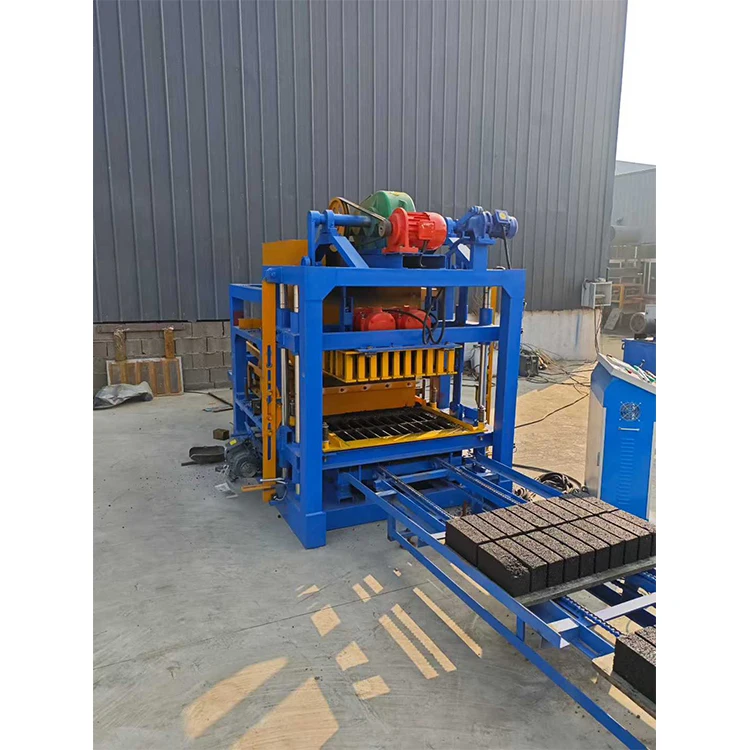


Description
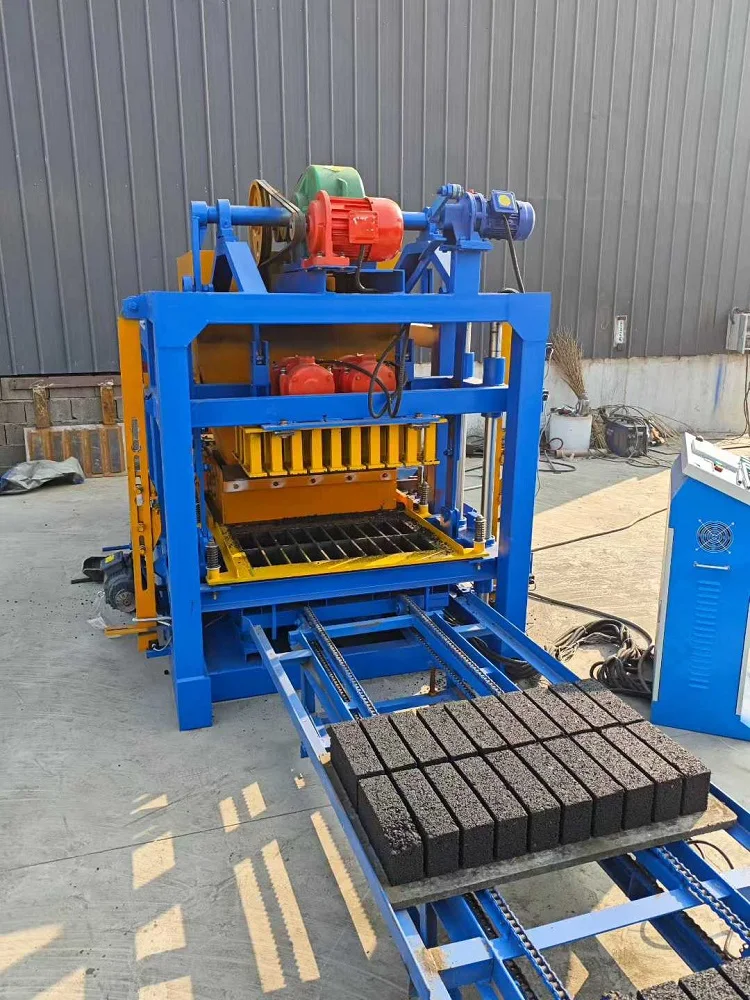
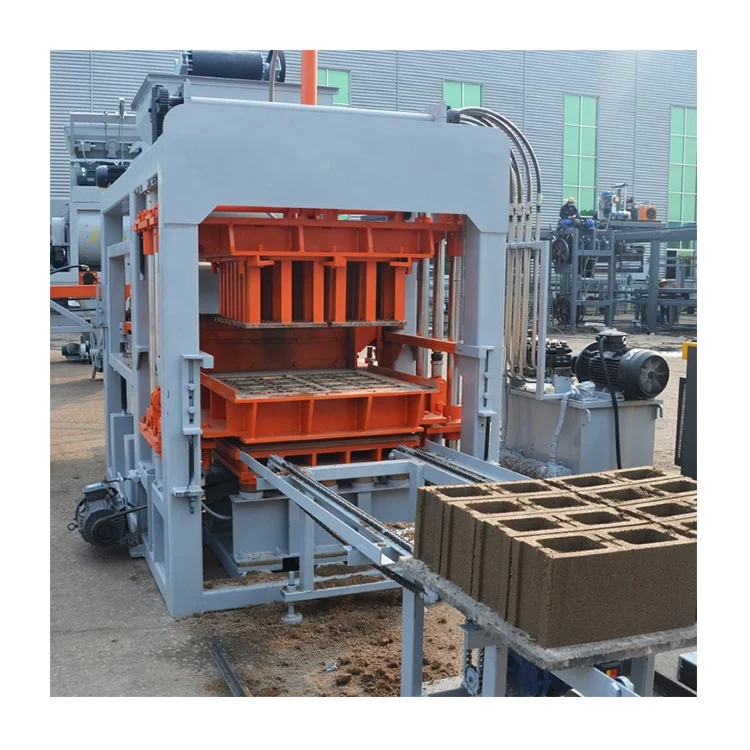
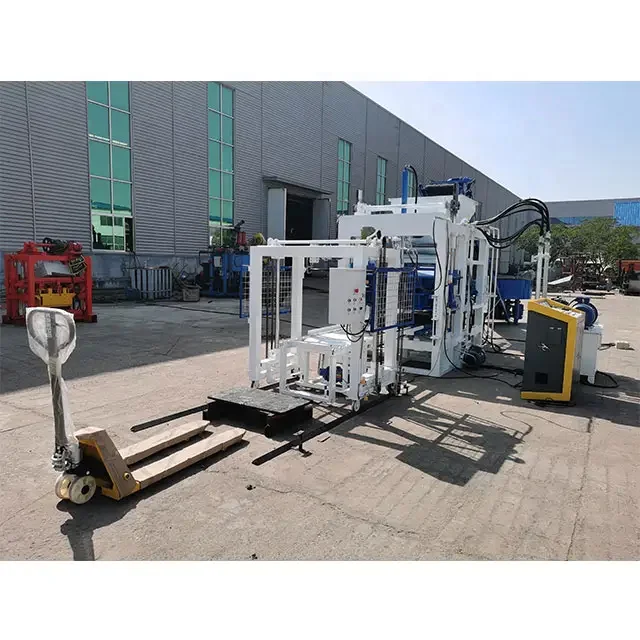
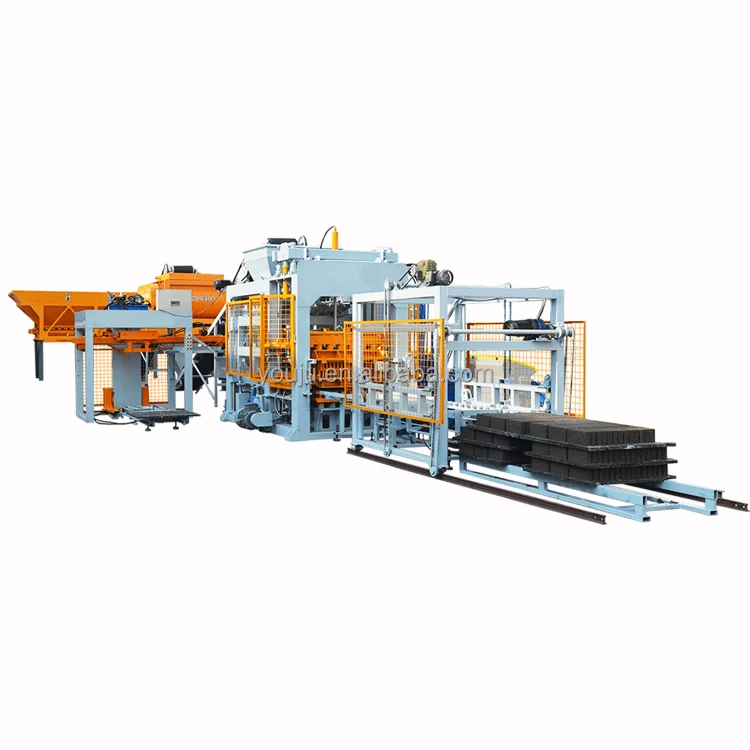
Controlled Automation — PLC logic sequences every pallet feed and stack cycle on the QT4-25 so operators supervise the line instead of manually handling output.
Technical Specifications
| Parameter | Value |
|---|---|
| Model | QT4-25 |
| Product Type | Automatic Concrete Block Making Machine |
| Control System | PLC controlled, fully automatic |
| Machine Power | 16.58 kW |
| Molding Cycle | 25 seconds |
| Output Capacity | 4600 pcs/8hours (basis not stated in source — confirm block format) |
| Machine Weight | 5000 kgs |
| Overall Dimensions | 6400 × 1500 × 2700 mm |
| Raw Materials | Concrete, sand, cement, fly ash, crushed stone, lime, water |
| Pallet Size | 850 × 480 mm |
| Voltage | According to local voltage (to be confirmed before production) |
| Vibration System | Vibration motor with reinforced vibration box |
| Hydraulic Pressure | Not hydraulic (mechanical vibration forming) |
| Motor Brand | Siemens motor |
| Automation Level | Fully automatic (automatic pallet feeding, material feeding and scraping, block stacking) |
| Warranty | One year |
Application Suitability
| Application | Material or Output |
|---|---|
| Hollow block production | Crushed stone, sand, cement, water mix |
| Solid brick and paver manufacturing | Concrete with fly ash or lime additives |
| Medium-scale block factory output | Mass production formats with automated stacking |
| On-site contractor block supply | Locally sourced aggregate and cement blends |
What the "Fully Automatic" Label Actually Covers on This Machine
An automatic concrete block making machine PLC controlled system is only as valuable as the tasks it genuinely removes from the operator’s hands.
I have stood on factory floors in Latin America where the press itself ran fine, but the pallets were still fed by hand and wet blocks were stacked manually at the end of the line. The PLC display said "automatic," yet three workers were doing what the quotation implied the machine would handle. The QT4-25 integrates pallet feeding, material feeding with scraping, and block stacking into one PLC-controlled sequence [NEED_CITE: scope of automation definitions in block machinery quotations]. That matters because it defines whether you are buying a press or buying a line.
Sequence Logic That Replaces Three Manual Stations
The PLC on the QT4-25 coordinates pallet advancement, material dosing, vibration compaction, and output stacking as a continuous loop. Each station waits for the previous step to confirm completion before the next cycle initiates. This sequencing eliminates the timing gaps that appear when operators manually trigger each phase, and it is where batch-to-batch consistency actually originates. The automatic concrete block making machine PLC controlled logic holds cycle intervals within a fixed range, so the 25-second molding cycle repeats without drift across a full shift.
Consistency Gains That Show Up in Block Weight, Not Just Count
When the material feed and scraping are PLC-timed rather than operator-paced, every mold cavity receives the same charge volume. Vibration duration stays constant because the timer does not depend on someone watching a clock. For a plant owner moving off semi-automatic operation, the visible difference is block weight variance narrowing across a production run [NEED_CITE: effect of automated material dosing on block density consistency]. That consistency is what block buyers and construction inspectors measure when they audit your output.
Reading the Specs That Define Your Daily Floor Operations
The 850 × 480 mm pallet size determines how many blocks form per cycle and how your curing yard must be laid out — fork truck aisle width, rack spacing, and stacking height all derive from this dimension. The 16.58 kW total power draw tells your electrician what dedicated circuit to pull and whether your existing transformer has headroom. The reinforced vibration box paired with a Siemens motor delivers the compaction force needed for consistent density, and because this is a mechanical vibration system rather than hydraulic, maintenance focuses on motor and bearing inspection rather than hydraulic fluid and seal replacement. The 6400 × 1500 × 2700 mm footprint defines the bay length you need, with clearance behind the stacker for pallet return or curing rack loading.
What Happens When the Control Language Gets Skipped
I once spent a day and a half at a Colombian block plant rewriting parameters on a PLC that arrived displaying Chinese — nobody at the factory had confirmed the interface language before shipping. The automatic stacker sat idle while operators who spoke only Spanish could not navigate the menus. A missed language confirmation delays commissioning and burns through the installer’s on-site days before production even starts [NEED_CITE: PLC interface language requirements for exported industrial machinery]. Voltage and frequency mismatches cause similar delays: a machine wound for the wrong supply will trip breakers or run motors at incorrect speed, altering vibration frequency and block density from day one.
Why the Configuration Conversation Matters Here
Every QT4-25 leaves the factory configured against the buyer’s confirmed voltage, frequency, and PLC display language rather than a default setting. The machine, mold, pallet, and stacking stations are specified as one matched system, so the automation scope in the quotation matches what arrives on site. The vibration force and molding cycle are evaluated against the buyer’s target block format and local aggregate, not a generic catalog setting. Custom mold design is available to match the block formats your market actually purchases. Installation support includes operator training on the PLC interface in the confirmed language, with wear parts and mold lists provided for ongoing supply.
Documentation & Verification
- Factory test record run on your confirmed block format before dispatch
- PLC language and voltage confirmation sheet signed off pre-production
- Electrical schematic with circuit identification matching your local standards
- Operation and maintenance manual in the confirmed operator language
- Wear parts and mold list with part numbers for reorder
Installation, Commissioning & Support
- Foundation pad poured level to accommodate the 6400 × 1500 mm machine footprint
- Dedicated circuit sized for the 16.58 kW total draw at your confirmed voltage and frequency
- PLC parameters loaded and verified against your block format during on-site commissioning
- Operator training covers full PLC sequence including pallet feed, dosing, stacking, and fault recovery
- First mold change practiced on site to confirm changeover procedure and tooling access
- Spare vibration motor and wear parts list reviewed before commissioning team departs
What to Prepare Before Requesting a Quote
Send your target block format and dimensions, the aggregate and cement sources available locally, and your site voltage and frequency. Include the curing yard layout you plan to use so pallet size and stacking output can be matched to your rack system. Confirm the PLC display language your operators need before the quotation stage.
Frequently Asked Questions
Q: How is the 4600 pcs/8hours capacity verified, and which block format does it assume?
A: That figure is listed in the source documentation without a stated block format or mix design. Before we quote, we calculate actual output per specific format — a 400 × 200 × 200 mm hollow block yields a different count per cycle than a solid paver. We provide a capacity table showing pieces per hour for each mold you plan to run.
Q: What does the PLC control automate, and what tasks still require an operator?
A: The PLC handles pallet feeding, material dosing and scraping, vibration cycle timing, and block stacking automatically. An operator monitors the line, clears occasional material jams, performs mold changes, and manages raw material replenishment at the hopper. Routine quality checks on block weight and dimensions remain a manual task.
Q: Can the voltage, frequency, and PLC interface language be confirmed before shipment?
A: Yes. We require written confirmation of all three before production begins. The PLC display language is set at the factory, and the electrical system is wired to your specified voltage and frequency. A confirmation sheet is signed off and included in the documentation package.
Q: What is the upgrade path from this machine to a fully hydraulic automatic line?
A: The QT4-25 uses mechanical vibration forming. A fully hydraulic system adds hydraulic pressure to the compaction stage, which improves density for certain block formats and allows higher vibration force ratings. The upgrade involves a different press frame and hydraulic power unit. We discuss this option if your block strength requirements exceed what mechanical vibration achieves with your local mix.
Q: How are mould change time and format flexibility handled on this automated system?
A: Mold changes on the QT4-25 require manual removal and repositioning of the mold box with standard tools. The time depends on operator familiarity and whether the mold clamping system is in good condition. We recommend practicing the first change during commissioning so your team establishes a baseline procedure for each format in your production plan.