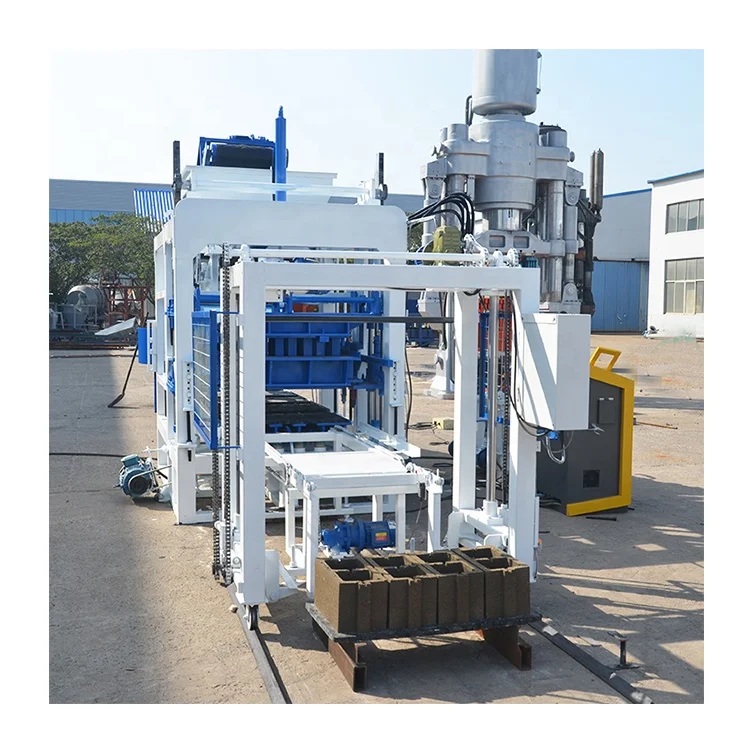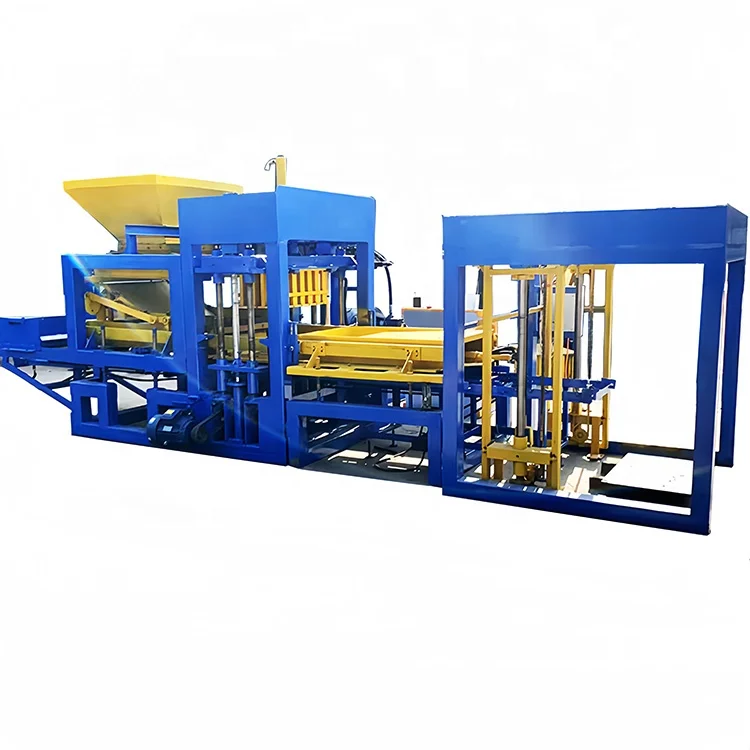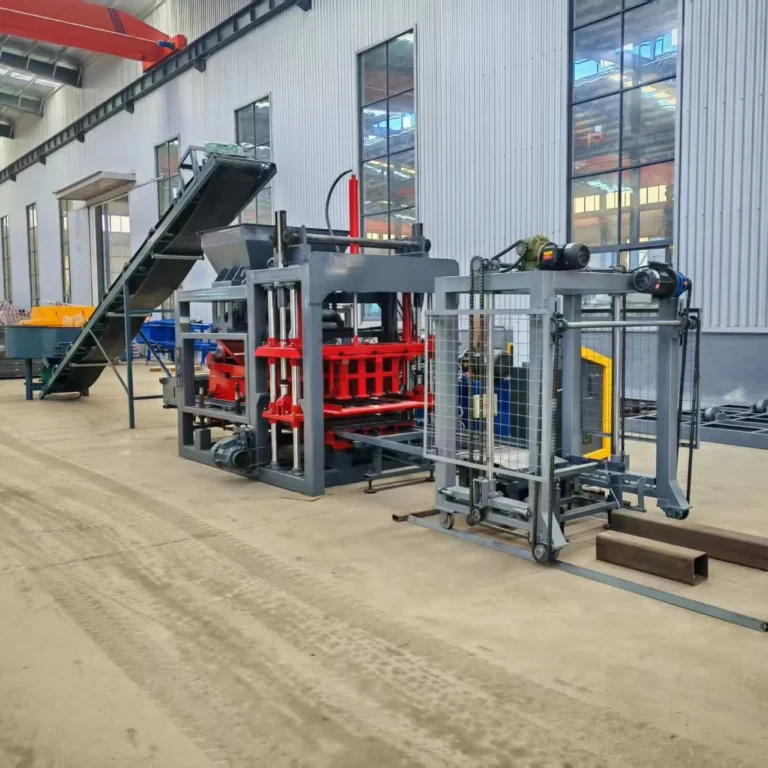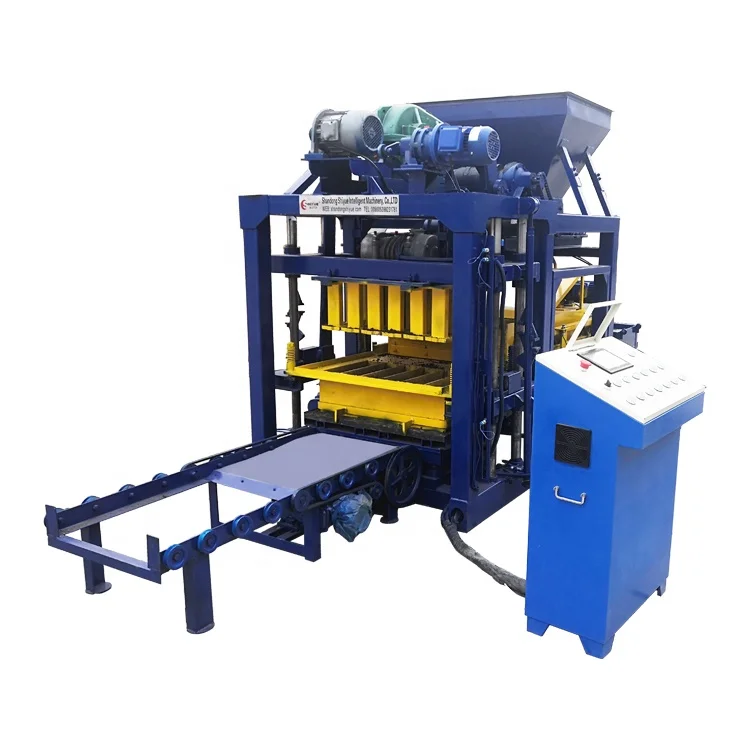
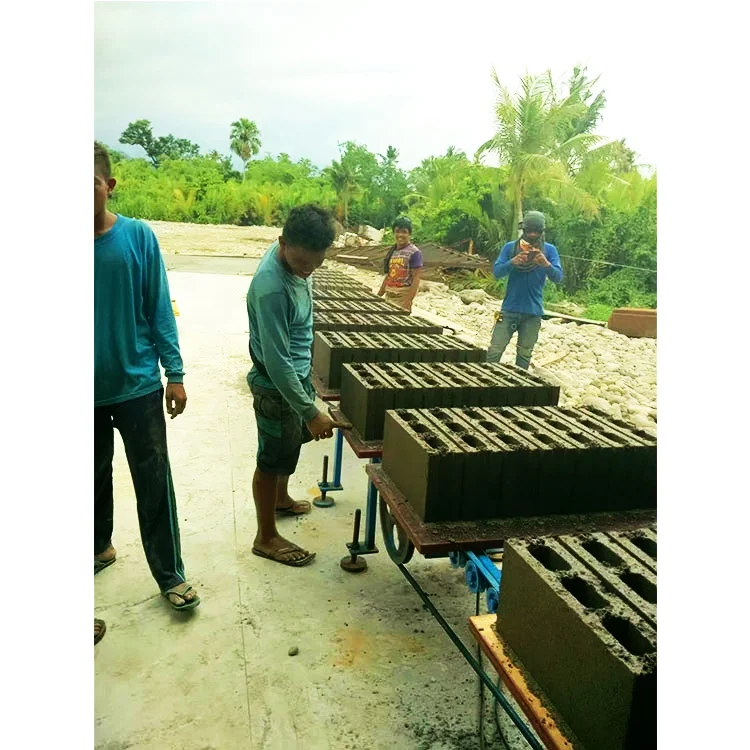


Description
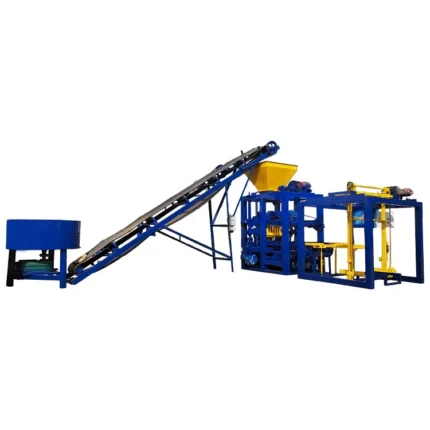
Configured as a matched system — the Qt4-25a is supplied with pallet size, control language and automation level locked to your actual curing area and grid, not a catalogue default.
Technical Specifications
| Parameter | Value |
|---|---|
| Model | Qt4-25a |
| Product Type | Automatic Concrete Block Making Machine |
| Overall Dimensions (L×W×H) | 7100 × 1600 × 2610 mm |
| Net Weight | 5800 kg |
| Rated Power | 27.5 kW |
| Voltage & Frequency | 380V or configurable to buyer grid (frequency to be confirmed) |
| Control System | PLC (brand and display language to be confirmed) |
| Vibration Force | 60 kN |
| Hydraulic Pressure | To be confirmed based on mix design |
| Pallet Size | 1020 × 850 × 40 mm |
| Pallet Material | Wood, PVC or steel (to be confirmed) |
| Automation Level | Automatic (degree of pallet feeding, stacking and cubing to be confirmed) |
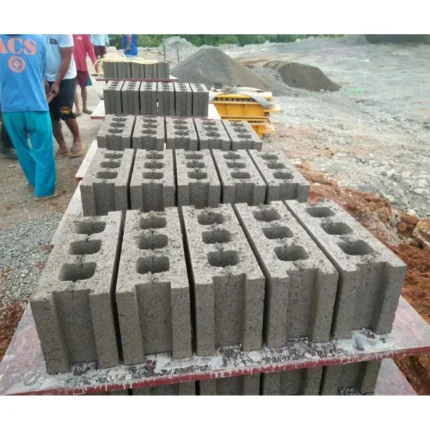
| Mould Formats & Output | 400×200×200 mm hollow block — 4 pcs/mould, 960 pcs/h, 7680 pcs/day (basis to be confirmed) 400×150×200 mm hollow block — 6 pcs/mould, 1440 pcs/h, 11520 pcs/day (basis to be confirmed) 225×112.5×53 mm solid brick — 16 pcs/mould, 3840 pcs/h, 30720 pcs/day (basis to be confirmed) |
| Mould Change Time | To be confirmed |
| Color Options | According to buyer request |
| Certification | ISO 9001:2008, CE |
| Warranty | 1 year |
Application Suitability
| Application | Material or Output |
|---|---|
| Hollow block production for masonry walls | Crushed stone, sand, cement and water mix designs |
| Solid brick manufacturing for load-bearing structures | Local aggregate blended with cement to target compressive strength |
| Paving and interlocking formats for hardscaping | Fine aggregate mixes with pigment addition where required |
| On-site block production for housing projects | Site-sourced aggregate matched to available cement grades |
Why the PLC Language and Voltage Must Be Set Before Crating
An automatic concrete block making machine PLC controlled in the wrong language stops being automatic the moment the first fault code appears.
In a plant outside Accra, I spent two days rewriting a control panel that had shipped with a Chinese interface because nobody had confirmed the display language before the machine left the factory. The operator could run the cycle, but when a proximity sensor drifted, the alarm screen was unreadable and the line sat dead for a shift. That same week, a 50 Hz machine was wired to a 60 Hz grid, pushing the vibration motor past its rated speed and cracking the mould box welds within a month [NEED_CITE: voltage and frequency standards by export market]. These are not manufacturing defects; they are configuration failures that happen when the order conversation skips the electrical details.
Repeatability Is What the PLC Actually Sells
The Qt4-25a replaces operator-dependent timing with fixed, programmable sequences. Every vibration burst, hydraulic press stroke and pallet advance follows the same duration cycle after cycle, removing the variation that causes block strength to drift between morning and afternoon production. The 60 kN vibration force only delivers consistent density when the PLC holds the cycle time steady against the same mix design [NEED_CITE: CE machinery directive requirements for industrial equipment].
Where Automation Actually Begins and Ends
The term "automatic" covers different scopes depending on the line configuration. On the Qt4-25a, it refers to the press cycle itself — PLC-controlled mould filling, vibration, pressing and demoulding. Pallet feeding from the magazine, wet product stacking off the press, and cured block cubing for dispatch are separate stations that may be manual, semi-automatic or fully automatic depending on what the buyer selects. Confirming exactly which stations are included prevents the situation where a plant expects hands-free operation and finds pallets still being moved by wheelbarrow.
Reading the Numbers Behind the Capacity Table
Vibration force and hydraulic pressure work together: the 60 kN vibration consolidates the mix in the mould while hydraulic pressure compacts it from above, and both must be matched to the buyer’s specific aggregate gradation and cement ratio. A high vibration setting with a coarse aggregate may produce surface spalling, while too little pressure with a fine sand mix leaves blocks that crumble at demoulding. The 1020 × 850 × 40 mm pallet size dictates the curing rack spacing and forklift tine width — if your existing racks are sized for a different pallet, the entire handling chain needs adjustment. The three output figures in the specification table assume a particular cycle time and shift length that must be recalculated against your actual working hours and target block format before the capacity claim means anything [NEED_CITE: block plant capacity calculation standards].
What Happens When Automation Is Assumed but Not Specified
A buyer who pays for an automatic line and receives a press with manual pallet handling faces an immediate bottleneck: the press cycle is faster than a worker can move wet pallets, so the machine sits idle between strokes. The quoted output drops, labour costs rise to match the gap, and the investment case unravels before the first container of blocks ships. Equally, a PLC locked to a single language forces the plant to keep one bilingual operator on every shift just to read alarm codes [NEED_CITE: industrial PLC language configuration requirements].
Why This Configuration Path Exists
Block machinery is the sole product focus, so the Qt4-25a is quoted as a system where the press, mould, pallet and handling equipment are specified together rather than assembled from separate suppliers. Configuration starts from the buyer’s actual mix design and local aggregate, not a catalogue default, which is why hydraulic pressure and vibration settings are confirmed during the order process. Mould formats are designed for the blocks the buyer’s market actually sells, including custom drawings where standard formats do not match local building codes. Automation level is selectable, allowing a buyer to start with PLC-controlled press cycling and add automatic pallet feeding and stacking as volume grows. Installation includes operator training on the specific PLC interface shipped, and a wear parts list covers the hydraulic and mould components most likely to need first replacement.
Documentation & Verification
- Machine specification sheet listing confirmed voltage, frequency and PLC language
- Capacity calculation stating block format, cycle time in seconds and shift hours assumed
- Mould drawing and format list for every block type included in the order
- Factory test record run on a mix design matching buyer’s local aggregate
- Hydraulic and electrical schematic in the confirmed PLC display language
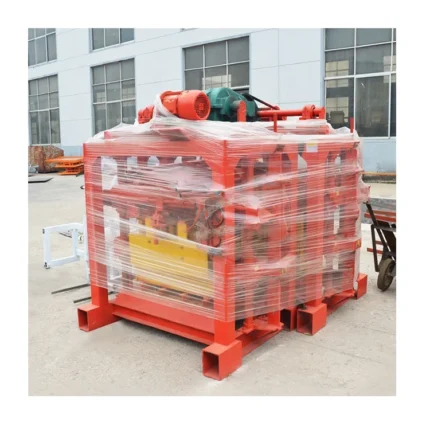
- Packing photographs showing dismantling state and container loading arrangement
Installation, Commissioning & Support
- Foundation plan sized to the 7100 × 1600 mm footprint and 5800 kg operating weight
- Dedicated 27.5 kW circuit with voltage and frequency matching the confirmed PLC and motor ratings
- Assembly state — fully assembled or SKD — confirmed before dispatch to match site lifting capacity
- First-run parameter setting on buyer’s actual mix to calibrate vibration force and hydraulic pressure
- Operator training on the shipped PLC interface language covering cycle start, fault reading and mould change
- Wear parts and mould list provided at commissioning for first replacement planning
What We Need to Size Your Line Correctly
Share the block formats your market buys, the daily output target for each format, and the shift hours you plan to run. Confirm your local grid voltage, frequency, and the language your operators read. Tell us what pallet handling, stacking and curing equipment you already have on site so the Qt4-25a automation level can be set to fill the gaps, not duplicate what is already there.
Frequently Asked Questions
Q: How is the daily output for each block format calculated on the Qt4-25a?
A: Each output figure assumes a specific block format, a cycle time measured in seconds, and a shift length in hours. These three variables must be confirmed against your target product and working schedule before the capacity number is meaningful. Request a written capacity calculation that states all three assumptions for every format you plan to produce.
Q: Which PLC brand is installed and what display languages can be loaded?
A: The PLC brand and available display languages are confirmed during the order process based on the buyer’s market and operator requirements. Remote diagnostics availability depends on the selected PLC model. Specify your preferred language and ask whether remote fault reading is supported before the panel is built.
Q: Does "automatic" on the Qt4-25a include pallet feeding, stacking and cubing?
A: The automatic designation covers the PLC-controlled press cycle — mould filling, vibration, pressing and demoulding. Pallet feeding from the magazine, wet product stacking and cured block cubing are separate stations configured to the buyer’s chosen automation level. Confirm exactly which stations are included in your quotation.
Q: How long does a mould change take and what is required to do it?
A: Mould change time depends on the format being removed and the one being installed, as well as whether the Qt4-25a is fitted with a quick-change fixture or a bolt-on system. Request the specific changeover time for your mould set and confirm what tools and lifting aids the operator will need on the shop floor.
Q: Can the machine start at one automation level and be upgraded later?
A: The Qt4-25a can be supplied with PLC-controlled press cycling and manual pallet handling, with automatic pallet feeding, stacking and cubing added as separate upgrades. The upgrade path and cost depend on which stations are being added and whether the original electrical panel was pre-wired for future expansion.