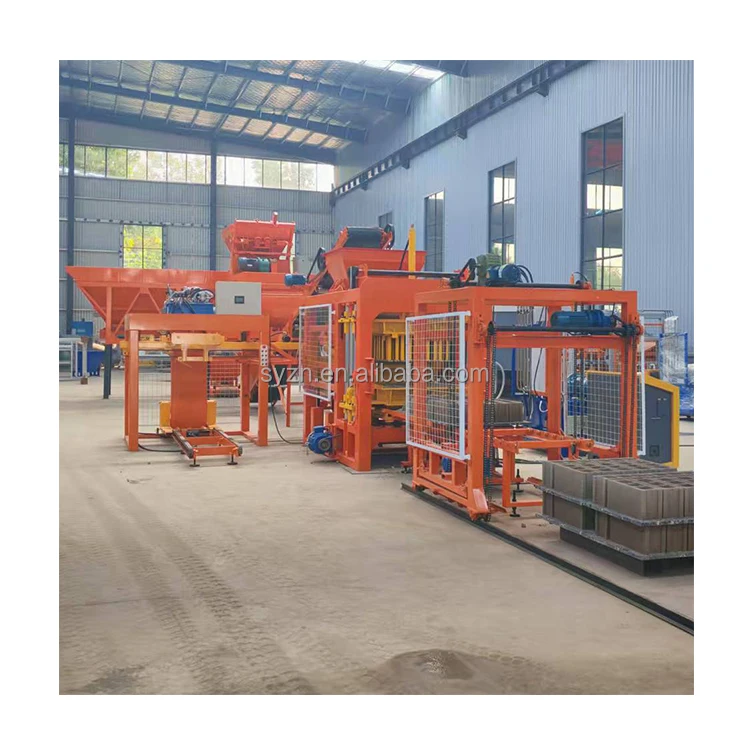


Description
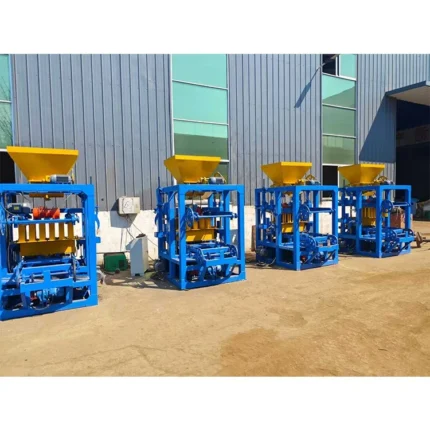
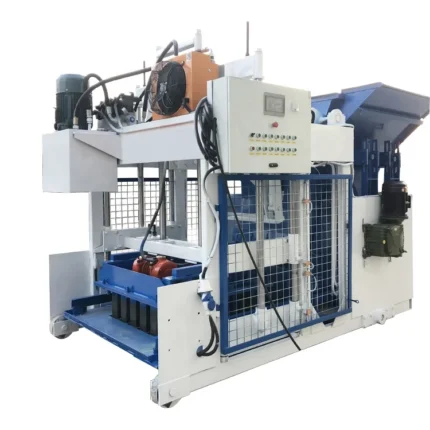
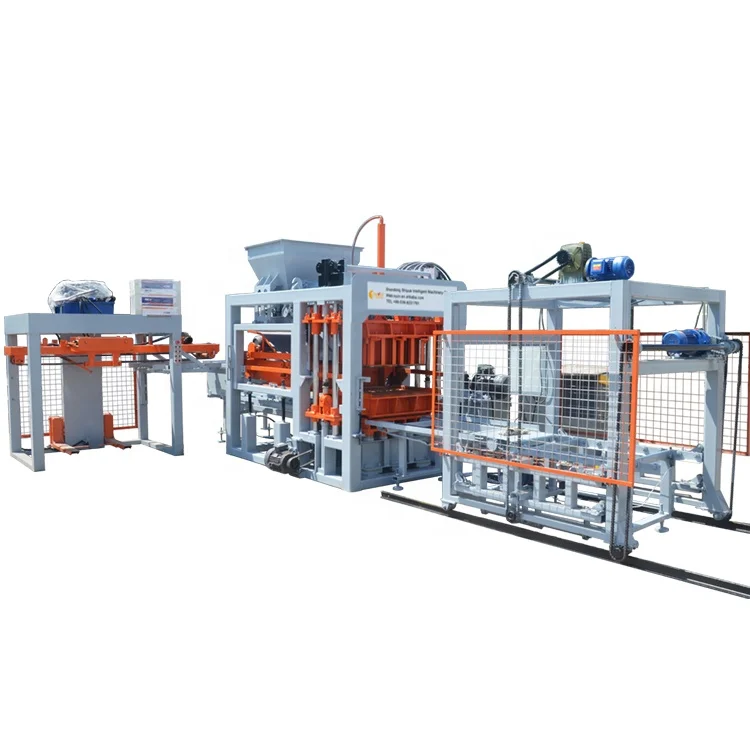
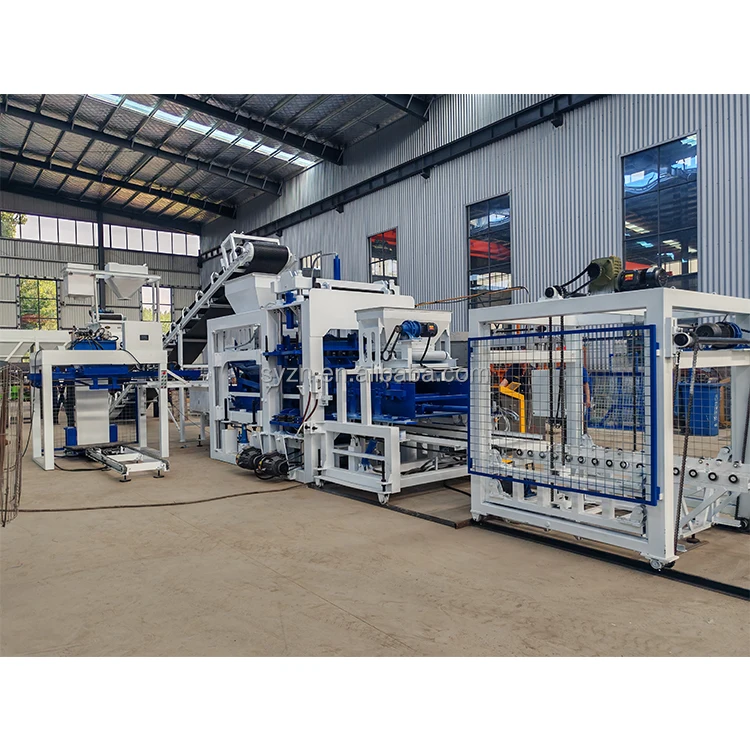
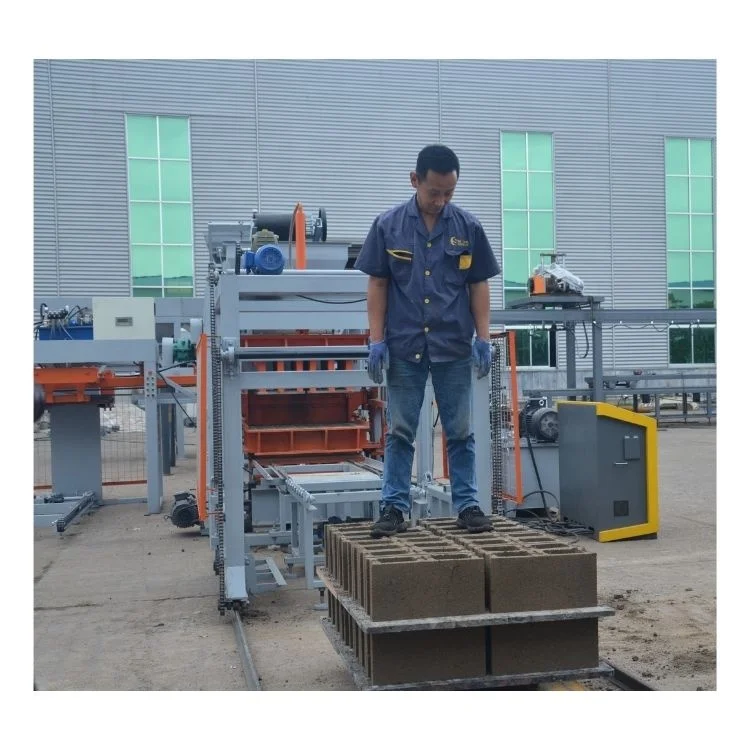
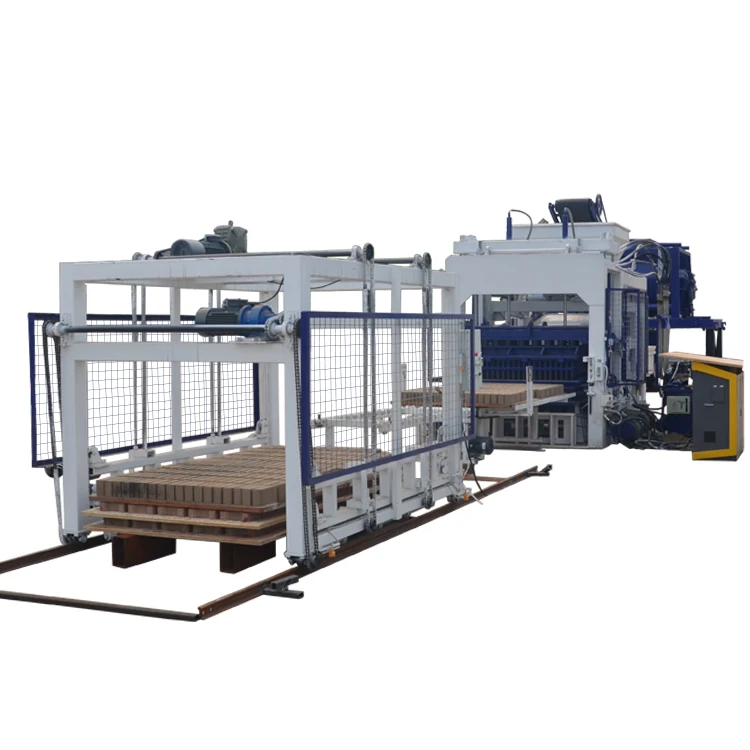
Recipe-Locked Moulding — the QT6-15 stores your exact mix parameters in the PLC, replacing operator guesswork with repeatable process logic that delivers the same block density cycle after cycle.
Technical Specifications
| Parameter | Value |
|---|---|
| Model | QT6-15 |
| Product Type | Automatic Hydraulic Block Making Machine |
| Overall Dimensions | 8200 × 1700 × 2950 mm |
| Total Mass | 7 T |
| Overall Power | 37 kW |
| Vibration Frequency | 0–60 Hz |
| Vibration Force | 45 kN |
| Vibration Form | Platform Vibration |
| Moulding Mode | Automatic loading with vibration moulding |
| Demolding Method | Hydraulic |
| Hydraulic System | Independent integrated hydraulic station |
| Pallet Size | 880 × 850 mm |
| Molding Cycle | 15–20 s |
| Control System | PLC with touch screen HMI and fault diagnosis |
| Automation Level | High (automatic loading, PLC process control, action interlock) |
| Block Compressive Strength | >15 MPa |
| Factory Area Required | 1200 m² |
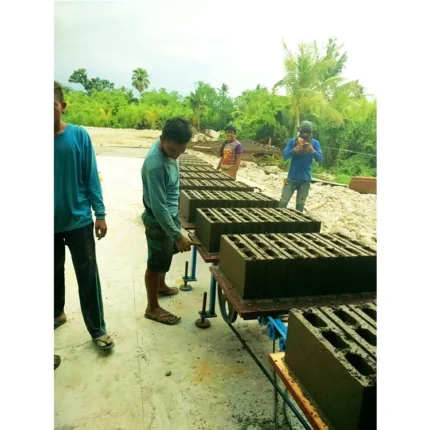
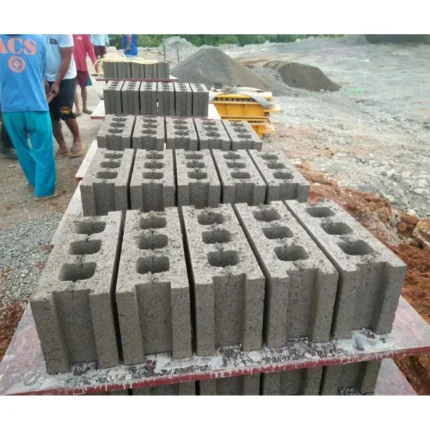
| Output Capacity | 8640–11520 pcs/8h based on 400×200×200 mm hollow block |
| Output Capacity | 11520–15360 pcs/8h based on 400×150×200 mm hollow block |
| Output Capacity | 46080–61440 pcs/8h based on 240×115×53 mm solid brick |
| Output Capacity | 17280–23040 pcs/8h based on 200×100×60 mm rectangular paver (cycle 20–25 s) |
| Output Capacity | 17280–23040 pcs/8h based on 225×112.5×60 mm zigzag paver (cycle 20–25 s) |
Application Suitability
| Application | Material or Output |
|---|---|
| Hollow block production | Crushed stone, fly ash, slag, and cement blends for structural walls |
| Solid brick manufacturing | Standard aggregate and cement mixes for load-bearing masonry |
| Rectangular paving brick | Dense aggregate and pigment mixes for driveways and walkways |
| Zigzag interlocking paver | High-density aggregate blends for heavy-traffic paving areas |
Why "High Output" Means Nothing Without a Block Format Attached
The PLC controlled automatic block making machine must be evaluated against the specific format your market actually buys, because cycle time shifts noticeably between hollow blocks and pavers.
Many buyers focus on a single headline capacity number without asking which block format that number assumes. A PLC controlled automatic block making machine might complete a hollow block cycle in 15–20 seconds but need 20–25 seconds for a dense paver. Over an eight-hour shift, that difference adds up to a meaningful gap between what was quoted and what actually ships on pallets. The real question is not how fast the press cycles in the abstract — it is how fast it cycles on the block you plan to sell tomorrow. [NEED_CITE: block production cycle time variance by format]
What the PLC Actually Removes from the Operator
In a semi-automatic plant, the operator decides how long to vibrate, when to feed the mould, and how much hydraulic pressure to apply. Those decisions shift with fatigue, shift changes, and raw material variability. The QT6-15 replaces that judgement with stored recipes: once you set the vibration duration, feed rate, and hydraulic sequence for a specific block format, the PLC controlled automatic block making machine executes the same sequence every cycle. Batch-to-batch compressive strength stays above 15 MPa because the process is no longer subject to human inconsistency.
Action Interlock and What It Prevents
The safe logic circuit inside the QT6-15 enforces an action interlock — the press will not initiate a moulding cycle if the pallet is out of position or the mould box is not fully seated. On a manual or semi-automatic line, an out-of-sequence operation can damage the mould, waste a batch of mix, or create a safety incident. The interlock logic removes those failure modes entirely. When a fault does occur, the built-in diagnosis system identifies the specific sensor or actuator responsible so your maintenance team addresses the real problem rather than swapping parts on guesswork. [NEED_CITE: PLC fault diagnosis in hydraulic block presses]
Reading the Specs That Actually Matter
Vibration force and hydraulic pressure work together to determine block density. The QT6-15 delivers 45 kN of vibration force at a frequency range of 0–60 Hz through platform vibration, while the independent hydraulic station maintains consistent pressure regardless of the main frame’s vibration and dust environment. This separation matters because a hydraulic station mounted directly on the vibrating frame suffers accelerated seal wear and pressure fluctuation — both of which reduce block strength over time. The 880 × 850 mm pallet size should be checked against your existing curing racks and forklift capacity, because a mismatch here creates a bottleneck downstream that no press speed can compensate for. The 37 kW total power rating requires a dedicated circuit; sharing a supply with other heavy equipment risks voltage drops that trigger PLC faults mid-cycle.
The Hidden Cost of a Misconfigured Control Panel
A PLC is only as useful as the language on its screen. I once saw a QT6-15 arrive at a plant in Ecuador with the touch screen still in Chinese. The local operator could not navigate the menu, so commissioning stalled until the language file was updated remotely — days of lost production over a configuration oversight that takes minutes to prevent. [NEED_CITE: commissioning delays caused by unconfirmed PLC language] Beyond language, the voltage and frequency must match your plant’s supply exactly; a 50 Hz motor running on 60 Hz power will overheat and fail prematurely, and the PLC itself may not boot on the wrong input voltage. These are not edge cases — they appear regularly in post-sale support logs.
Why Source the QT6-15 Here
Block machinery is our single focus, which means the QT6-15 press, mould, pallet, and handling equipment are specified as one matched system rather than assembled from unrelated suppliers. We configure the machine against your actual mix design and local aggregate, not a catalogue default, so the vibration and pressure settings match what you can actually source. Mould design covers the formats your market sells, including custom drawings when standard options fall short. The automation level is selectable — you can start with the QT6-15 as a standalone press and add automatic stacking and cubing later as your plant grows. Every unit ships with factory test records and voltage confirmation documented before it leaves the floor. [NEED_CITE: matched system specification in block production lines]
Documentation & Verification
- Machine specification sheet with cycle times stated per block format
- Hydraulic and electrical schematic including PLC I/O list
- Voltage, frequency, and HMI language confirmation record
- Factory test run on your specified block format before dispatch
- Pallet specification matched to curing rack and forklift dimensions
- Wear parts and mould list with replacement intervals
Installation, Commissioning & Support
- 1200 m² factory area required, including curing space around the QT6-15
- Dedicated 37 kW power circuit with confirmed voltage and frequency at your site
- Machine shipped dismantled for container loading with reassembly guidance on arrival
- PLC language and touch screen menu configured before dispatch to avoid day-one delays
- Operator training covers recipe storage, fault diagnosis navigation, and mould change procedure
- Hydraulic wear parts and mould spares identified with sourcing guidance
Before You Request a Quote
Tell us which block format your market demands most — hollow block, solid brick, or paver — and the daily volume you need to sustain. Confirm your plant’s voltage, frequency, and the language your operators will need on the PLC touch screen. If you already have curing racks and forklifts in place, share the pallet dimensions they accommodate so the QT6-15 is configured to fit your existing workflow rather than the other way around.
Frequently Asked Questions
Q: How does the PLC control system store and recall different block recipes?
A: The touch screen HMI lets you input and save process parameters — vibration duration, feed rate, hydraulic pressure sequence — for each block format. When you switch from hollow blocks to pavers, the operator selects the stored recipe and the PLC controlled automatic block making machine adjusts all cycle parameters automatically, removing manual recalibration and keeping batch consistency tight.
Q: What does the fault diagnosis system cover and how does it reduce downtime?
A: The system monitors sensor states and actuator responses across the moulding sequence. When a fault occurs, the HMI displays the specific component and error type rather than a generic alarm. Your maintenance team can go directly to the issue — a misaligned pallet sensor or a stuck hydraulic valve — instead of troubleshooting the entire press.
Q: Can the automation level be upgraded later from this press?
A: Yes. The QT6-15 is designed as a standalone press with high-level PLC control, but the automation scope can be expanded to include automatic pallet feeding, stacking, and cubing as your plant’s output and labour situation evolves. The PLC architecture supports these additions without replacing the core control system.
Q: How is the PLC display language confirmed and what options are available?
A: Language is confirmed during the order process before production begins. Available options cover the languages your operators will actually read on the factory floor. We verify this alongside voltage and frequency so the machine arrives ready to run on day one, not waiting for a remote software update.
Q: What cycle time should I expect for my specific block format?
A: Hollow blocks at 400×200×200 mm run a 15–20 second cycle, while denser paver formats typically require 20–25 seconds. The PLC maintains the set cycle consistently across the shift, so your realistic daily output is calculated from that confirmed cycle time multiplied by your planned operating hours, not from an optimistic single-format figure.