

Description
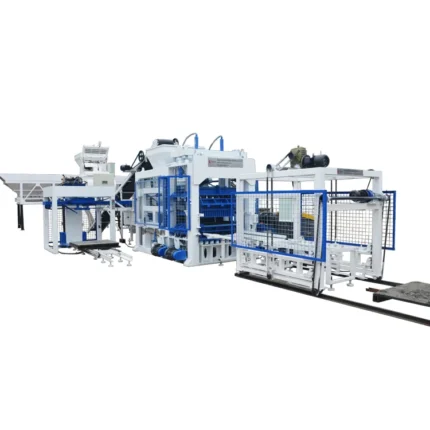
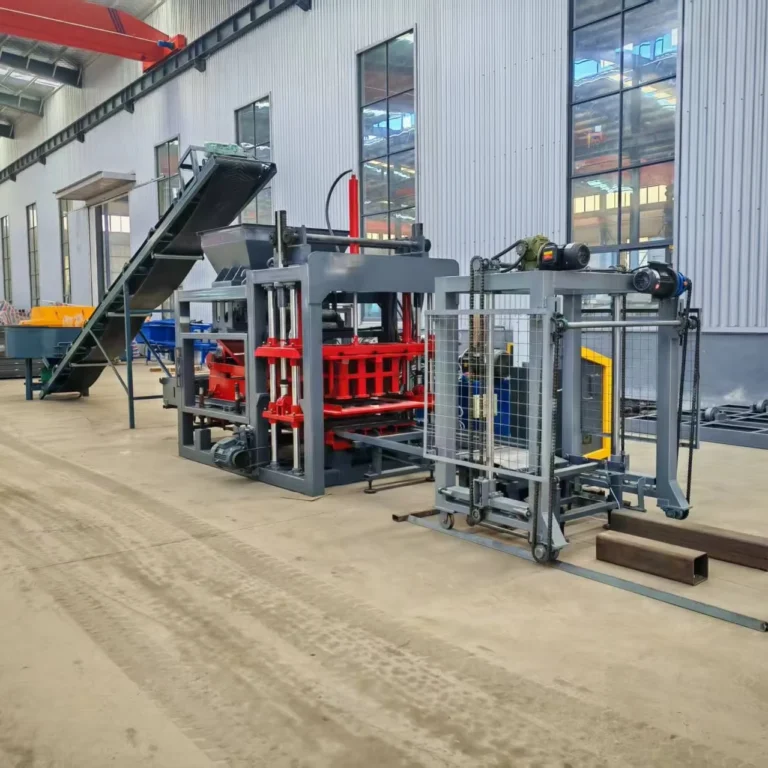
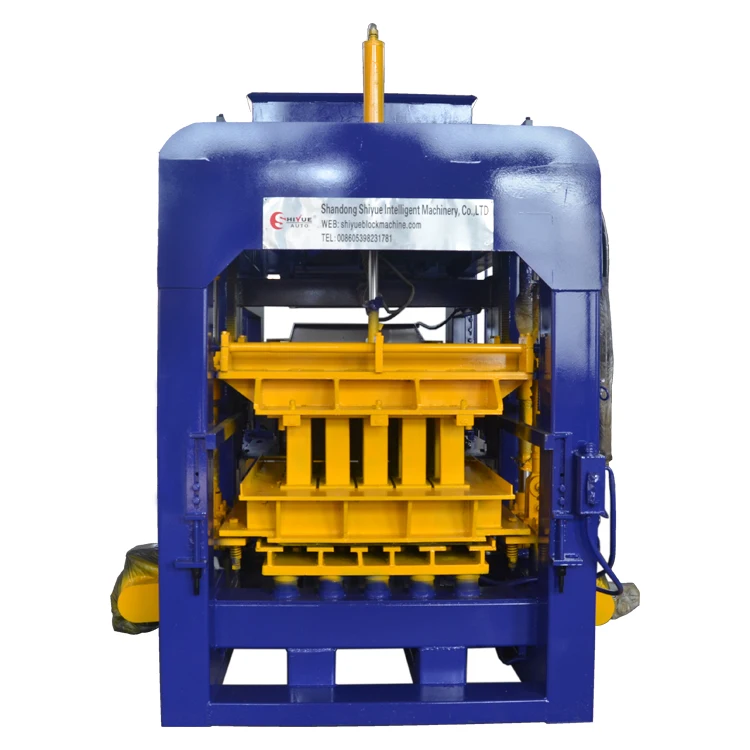
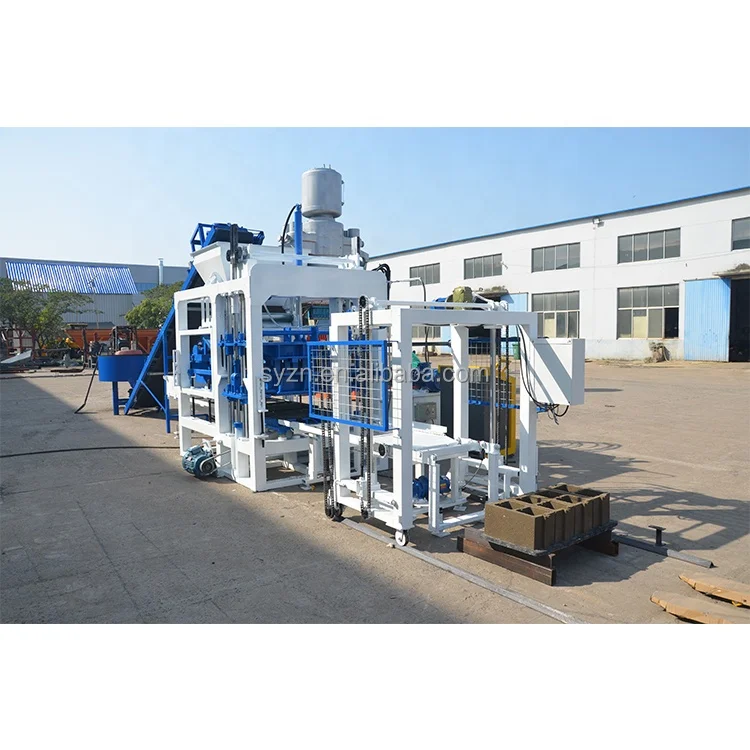
Matched System Integration — The QT6-15 pairs its PLC-controlled press with pallet handling and stacking configured as one coordinated line, so cycle times at each station align and the press never waits on upstream or downstream equipment.
Technical Specifications
| Parameter | Value |
|---|---|
| Model | QT6-15 |
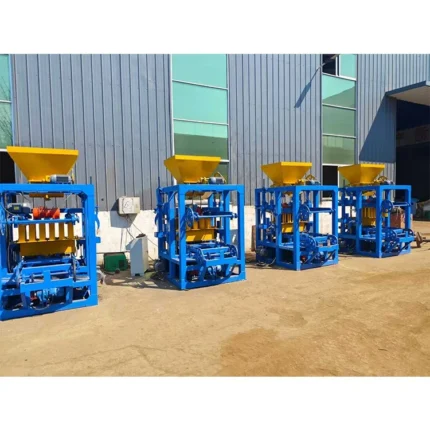
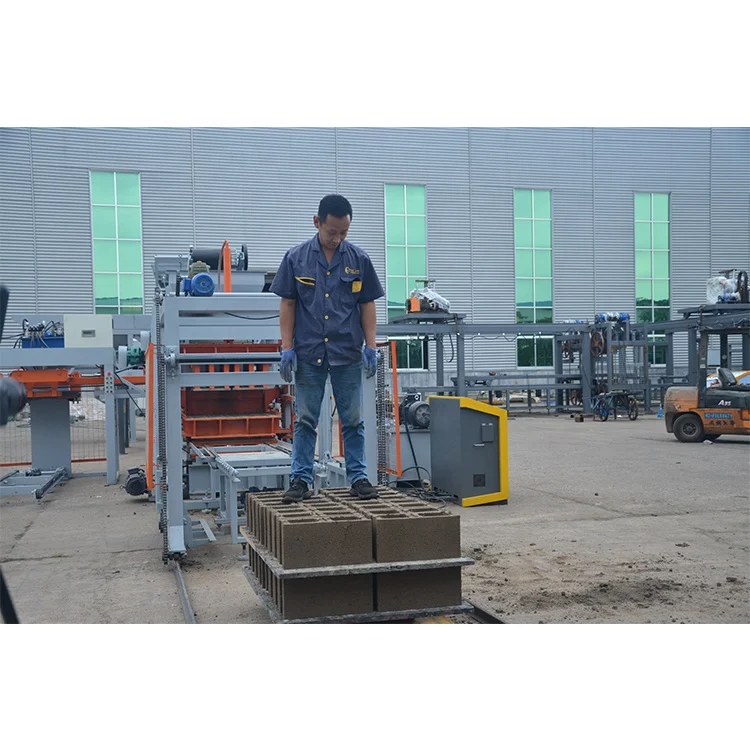
| Product Type | Hydraulic PLC Controlled Concrete Block Making Machine |
| Overall Dimensions (L×W×H) | 8200×1700×2950 mm |
| Total Mass | 7 T |
| Overall Power | 37 kW |
| Control System | PLC with touch screen HMI |
| Vibration Form | Platform Vibration |
| Vibration Frequency | 0–60 Hz (adjustable) |
| Vibration Force | 45 kN |
| Moulding Mode | Automatic loading, vibration moulding |
| Demolding Method | Hydraulic |
| Pallet Size | 880×850 mm |
| Molding Cycle | 15–20 s (format-dependent) |
| Hydraulic System | Independent integrated hydraulic station |
| Factory Area Required | 1200 m² |
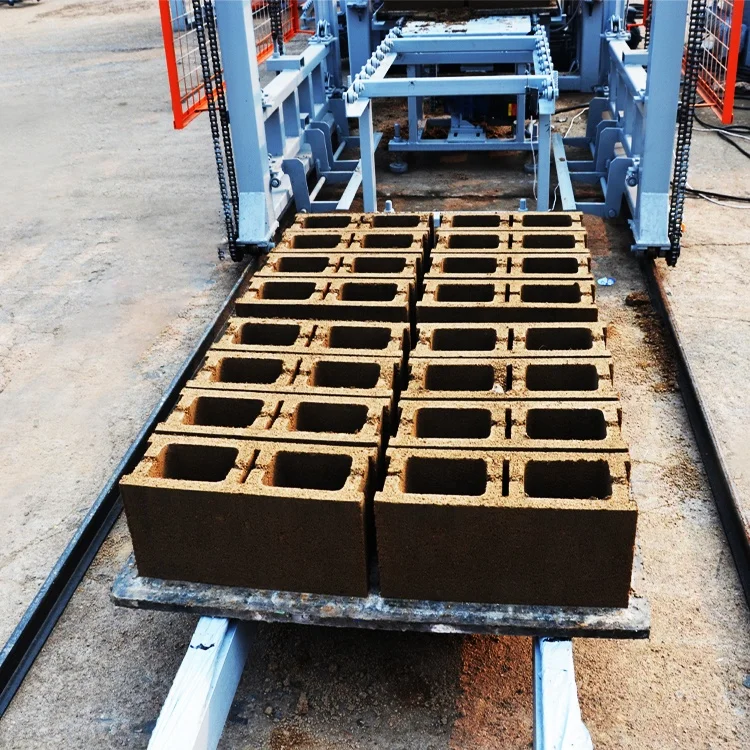
| Output — Hollow Block 400×200×200 mm | 1080–1440 pcs/h (6 pcs/mould, 15–20 s cycle) |
| Output — Hollow Block 400×150×200 mm | 1440–1920 pcs/h (8 pcs/mould, 15–20 s cycle) |
| Output — Solid Brick 240×115×53 mm | 5760–7680 pcs/h (32 pcs/mould, 15–20 s cycle) |
| Output — Rectangular Paving Brick 200×100×60 mm | 2160–2880 pcs/h (21 pcs/mould, 20–25 s cycle) |
| Output — Zigzag Paving Brick 225×112.5×60 mm | 2160–2880 pcs/h (15 pcs/mould, 20–25 s cycle) |
| Voltage & Frequency | Configurable — confirm before production (basis to be confirmed) |
| PLC Display Language | Configurable — confirm before production (basis to be confirmed) |
| Warranty | 1 year for the whole machine (excluding spare parts) |
Application Suitability
| Application | Material or Output |
|---|---|
| Hollow concrete block production | Crushed stone, sand, cement, fly ash blends |
| Solid brick manufacturing | Aggregate and cement mixes with waste ash or slag |
| Rectangular paving brick production | High-density concrete mixes for pedestrian and vehicular surfaces |
| Interlocking and zigzag paving brick | Pigmented concrete for decorative hard landscaping |
| Multicellular brick production | Lightweight aggregate blends for thermal insulation blocks |
What "Automatic" Really Means When the PLC Speaks a Language Your Operators Cannot Read
The automatic QT6-15 block machine delivers consistent production only when its control interface matches the people running it.
I spent two full days on a North African site watching a skilled operator stare at an Arabic HMI he could not read, unable to change a cycle parameter that would have taken thirty seconds in his own language. The machine was running, but it was not running correctly — and no one on site could tell the PLC what to do differently. Voltage mismatches cause similar standoffs: the automatic QT6-15 block machine arrives, the electrician opens the panel, and the supply does not match the motor rating. Commissioning stops until a transformer is sourced locally. [NEED_CITE: voltage and frequency standards by export market]
These are not rare edge cases. They happen on a meaningful share of international block machine installations where electrical and interface details were left to assumption rather than written confirmation before production.
How PLC Control Removes Operator Guesswork
The QT6-15’s PLC stores a complete parameter set for every block format the machine produces — vibration frequency, hydraulic pressure, cycle timing, and feed duration. When an operator selects a recipe on the touch screen HMI, the controller executes that stored sequence without manual adjustment between batches. This is what separates a PLC controlled concrete block making machine from relay-based semi-automatic presses where every mould change requires the operator to re-dial timing by feel.
Fault Diagnosis That Points Instead of Guessing
The integrated fault diagnosis system monitors sensor states and action interlocks throughout every cycle. When a proximity switch fails or a hydraulic valve sticks, the HMI displays the specific fault location rather than a generic alarm. This means the maintenance team traces the problem in minutes instead of walking the machine step by step. [NEED_CITE: PLC diagnostic standards in industrial block presses] For plants running multiple shifts, that difference compounds into hours of recovered production each month.
Reading the Numbers That Actually Matter
The QT6-15’s vibration force of 45 kN paired with adjustable frequency from 0 to 60 Hz lets the PLC match compaction intensity to the block format being produced. Dense paving bricks need sustained high-frequency vibration to achieve target compressive strength, while hollow blocks require a different energy profile to avoid cracking thin webs. The independent hydraulic station sits outside the vibration and dust zone, which protects valve spool tolerances and prevents pressure drift over thousands of cycles. Pallet size at 880×850 mm must align with the curing racks and forklift capacity already on site — a mismatch here creates a bottleneck no amount of press speed can fix.
The Cost of Skipping the Configuration Conversation
Buyers who confirm only the press model and skip the downstream conversation often discover at arrival that their curing racks cannot accept the pallet dimensions, or that the stacking station they assumed was included is actually a separate line item. Others find the PLC display language was set to a default that their operators cannot read, adding days to commissioning while the manufacturer arranges a remote re-flash. These are configuration failures, not machine failures — and every one of them is avoidable with a structured pre-production checklist. [NEED_CITE: common commissioning delays in exported concrete block machinery]
Why This Configuration Approach Works for Automation Buyers
Block machinery as a single focus means the QT6-15’s press, mould, pallet, and handling equipment are specified as one matched system rather than assembled from separate suppliers. Configuration is set against the buyer’s actual mix design, local aggregate, and target block format — not a catalogue default. Mould design covers the formats the buyer’s market actually sells, with custom drawings available. Automation level is selectable, so a buyer can start with semi-automatic pallet handling and add automatic stacking and cubing as volume grows. Installation and commissioning support includes operator training on the specific PLC interface and stored recipes.
Documentation & Verification
- Line layout showing pallet flow from press through stacking and curing rack handling
- Capacity calculation naming block format, pallet size, cycle time, and mould cavity count
- PLC program backup file on removable medium for local electrician access
- Voltage, frequency, and HMI language confirmation sheet signed before production
- Factory test record on the buyer’s specified block format before dispatch
Installation, Commissioning & Support
- Foundation plan accounting for the QT6-15’s 7 T mass and platform vibration isolation requirements
- Dedicated power circuit sized for the 37 kW total load at confirmed voltage and frequency
- PLC language and parameter verification on-site during first power-up sequence
- Operator training on HMI recipe selection, fault diagnosis display, and safe interlock logic
- Mould change procedure training covering hydraulic clamping and stored cycle recall
- Wear parts list with hydraulic seal and proximity switch part numbers for local sourcing
What to Include in Your Inquiry
To configure the QT6-15 correctly, share your target block formats with daily volume requirements, the raw materials and aggregate available locally, your site’s electrical supply specification including voltage and frequency, and the preferred language for the PLC touch screen display. If you are transitioning from semi-automatic operation, note your current pallet dimensions and curing rack layout so the line integration matches existing infrastructure.
Frequently Asked Questions
Q: How do I verify the real daily output of the QT6-15 for my specific block format?
A: Output varies significantly by format. The machine produces 1080–1440 hollow blocks per hour at 400×200×200 mm based on 6 cavities and a 15–20 second cycle, but switches to 2160–2880 paving bricks per hour at 200×100×60 mm with 21 cavities and a 20–25 second cycle. Request a written capacity calculation that names your exact format, pallet size, and cycle assumption.
Q: What PLC brand is used, and can the touch screen display my local language?
A: The PLC brand and HMI language are configurable and must be confirmed in writing before production begins. A display set to a language your operators cannot read will stall commissioning. Ask for the PLC program backup on a removable medium so your local electrician can service the control system independently.
Q: Can I start with semi-automatic operation and add automatic stacking later?
A: The QT6-15 supports staged automation. You can begin with manual or semi-automatic pallet handling and add automatic stacking and cubing as production volume justifies the investment. Confirm the upgrade path and interface compatibility during your initial configuration discussion.
Q: How does the PLC fault diagnosis system respond when a sensor fails?
A: The PLC monitors all proximity switches and action interlocks continuously. When a fault occurs, the HMI displays the specific sensor or valve location rather than a generic alarm, allowing your maintenance team to respond directly. Confirm with the manufacturer that the interlock logic documentation is included with your delivery package.
Q: Is the hydraulic station protected from vibration and dust at the press?
A: The QT6-15 uses an independent integrated hydraulic station physically separated from the main machine’s vibration and dust zone. This isolation protects valve precision and prevents pressure drift over extended production runs. Verify this layout against your plant’s environmental conditions during the configuration stage.