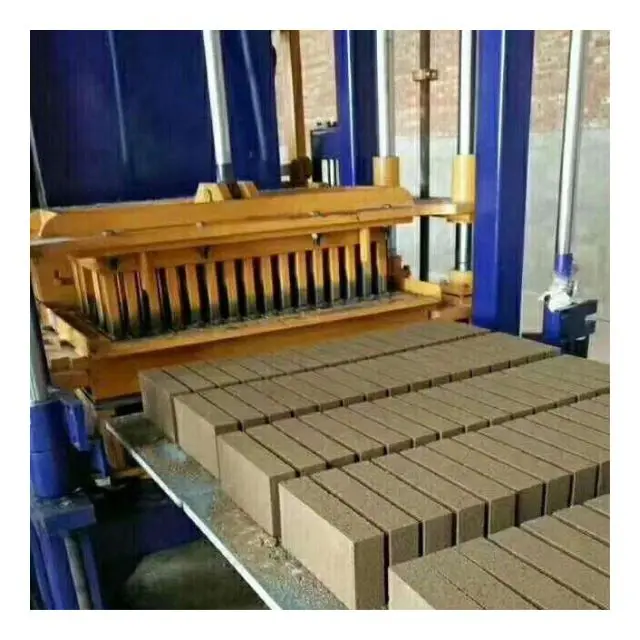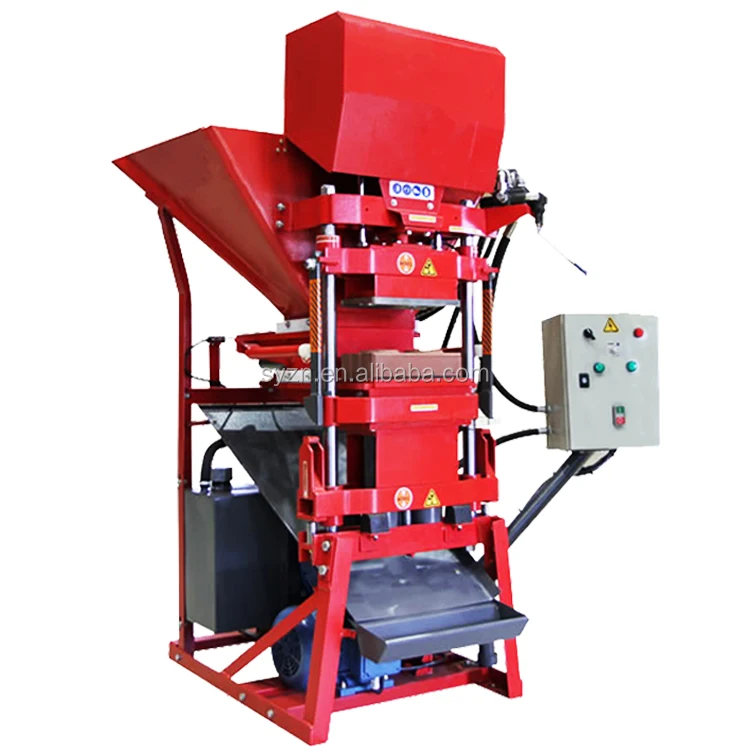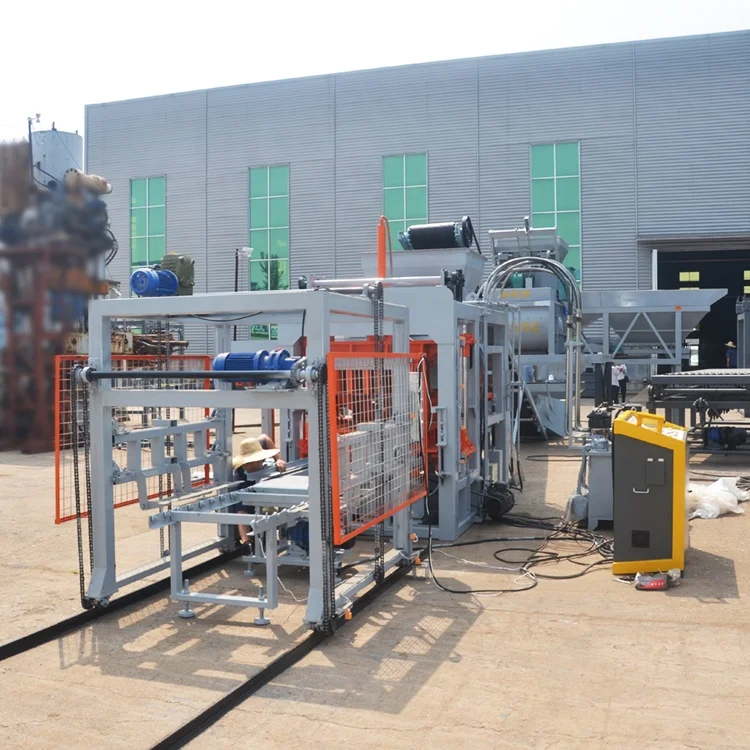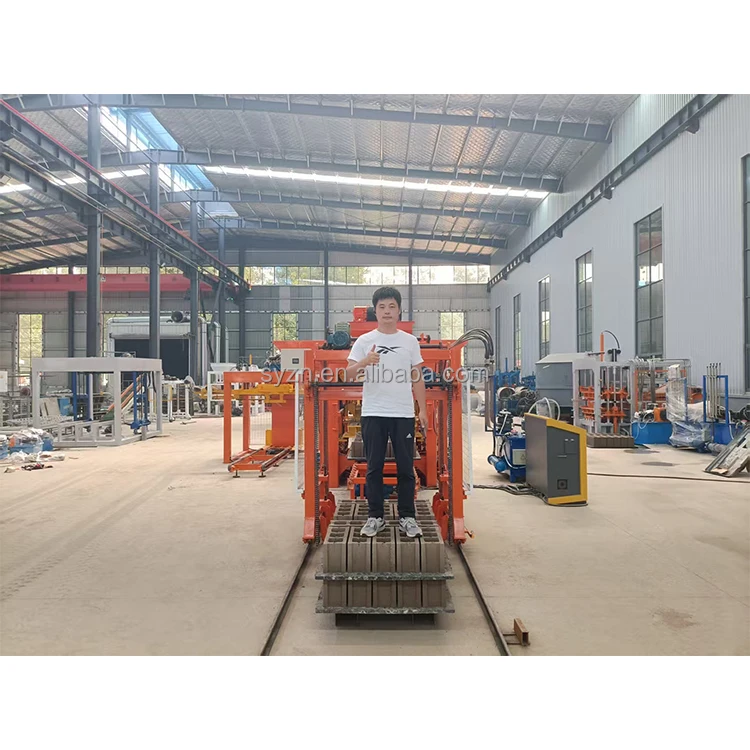
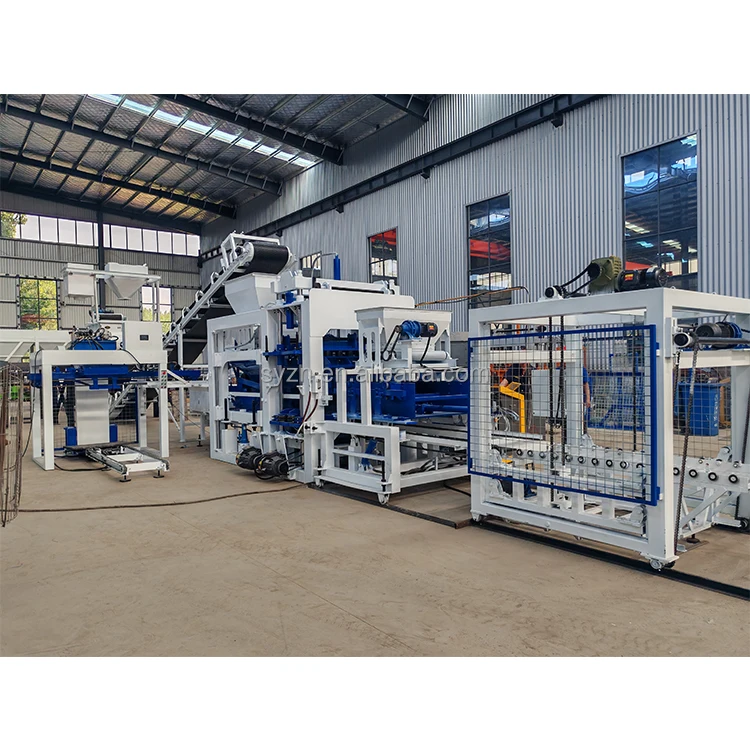


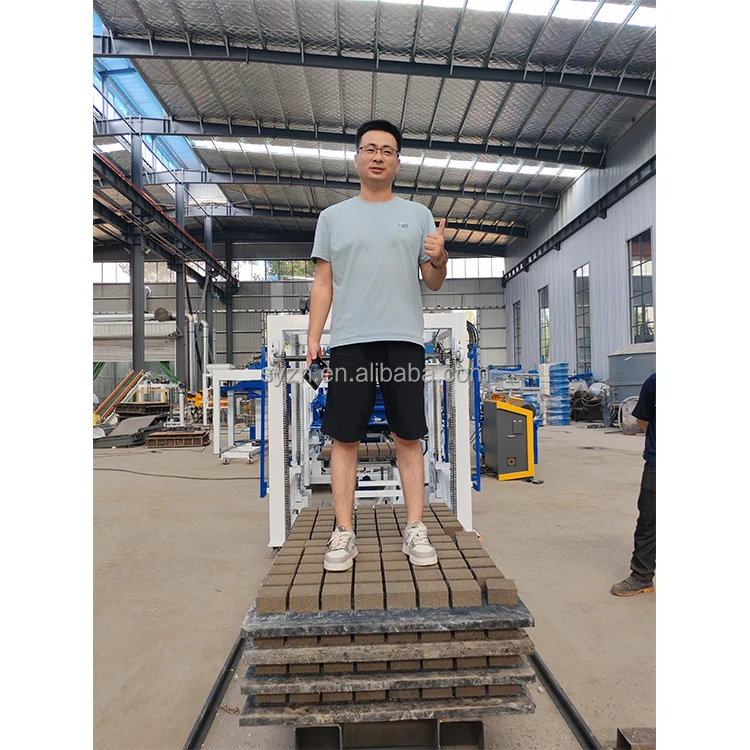
Description
Intelligent Control Architecture — Every cycle parameter on the QT8-15 is stored, recalled, and executed through a centralized PLC, eliminating operator guesswork from the block production process.
Technical Specifications
| Parameter | Value |
|---|---|
| Model | QT8-15 |
| Product Type | Automatic Concrete Block Making Machine |
| Overall Dimensions | 8300 x 1860 x 3000 mm |
| Rated Hydraulic Pressure | 32 MPa |
| Vibration Frequency | 2800–4500 RPM |
| Vibration Form | Platform Vibration |
| Pallet Size | 950 x 900 mm |
| Molding Cycle | 15–25 s (basis not stated in source) |
| Overall Power | 47 kW |
| Control System | PLC with touch screen human-computer interface |
| Automation Level | Automatic (pallet feeder, host, conveyor, hydraulic station, PLC) |
| Hydraulic Station | Independent integrated unit |
| Finished Block Strength | Up to 15 MPa |
| Support Equipment | JS750 mixer, 8 m belt conveyor, automatic stacker |
Application Suitability
| Application | Material or Output |
|---|---|
| Hollow block production | Crushed stone, cement, sand, and water mixtures |
| Solid block manufacturing | Dense aggregate blends for load-bearing walls |
| Paving block and kerbstone | High-strength concrete mixes with fine aggregates |
| Interlocking and porous brick | Specialized permeable or geometric mix designs |
Why "Fully Automatic" Sometimes Means Manually Stacked
The automation boundary must extend beyond the press itself to deliver genuine labour reduction.
Many plant owners invest in an automatic press only to find that raw material feeding, pallet circulation, and finished block stacking still require manual intervention. The result is a high-speed machine starved of materials or bottlenecked at the discharge end, with workers manually handling heavy pallets that the PLC controlled QT8-15 automatic block machine was designed to move autonomously. When the line rhythm breaks at any manual station, the entire cycle time degrades and batch consistency suffers. [NEED_CITE: bottleneck analysis in semi-automated production lines]
Centralized PLC Logic and Parameter Recall
The human-computer interface on this PLC controlled QT8-15 automatic block machine allows operators to adjust feeding times, vibration duration, and hydraulic pressure sequencing directly from the touch screen. Each block format requires a distinct combination of these variables, and the system stores them as named recipes. When a mould change occurs, the operator recalls the corresponding profile rather than manually recalibrating every limit switch and timer, which removes the most common source of batch-to-batch variation after a format switch.
Automatic Pallet Feeding and Stacker Synchronization
The pallet feeder and automatic stacker operate on signals from the central PLC, meaning the press never waits for a manual pallet insertion and finished blocks are stacked in configurable layers of three to six high. The stacker handles two pallets simultaneously, which keeps pace with the host machine cycle without requiring a dedicated worker at the discharge end. This synchronization is what separates a genuinely continuous automatic line from a press that still depends on floor crew timing for material flow. [NEED_CITE: synchronization requirements in automated concrete product lines]
Interpreting the Vibration and Pressure Envelope
The platform vibration system operates between 2800 and 4500 RPM, working in tandem with the 32 MPa hydraulic station to compact the concrete mix inside the mould cavity. Vibration frequency determines how effectively fine aggregates settle around coarse particles, while hydraulic pressure provides the static force that locks the matrix into its final density. The adjustable range allows the PLC to apply different vibration profiles depending on whether the machine is producing lightweight porous bricks or high-density paving blocks. The 950 x 900 mm pallet size defines the maximum mould footprint and must align with the curing rack dimensions and forklift capacity already present at the buyer’s facility.
The Hidden Cost of Undefined Automation Scope
When the quotation covers only the press and leaves pallet handling, stacking, and curing rack transfer to the buyer, the actual labour requirement on the factory floor remains unchanged. Operators still lift loaded pallets, and inconsistent manual stacking leads to block damage during the curing phase. Commissioning delays also surface when the control language on the touch screen does not match the operator’s working language, forcing a reliance on a single bilingual supervisor for every parameter adjustment. [NEED_CITE: commissioning delays caused by interface language mismatches]
Why Procurement Through This Channel Works
The machine, mould, pallet, and handling equipment are specified as one matched system rather than assembled from separate suppliers with incompatible signal protocols. Configuration is set against the buyer’s actual mix design and target block format, which ensures the PLC recipes are pre-loaded for the specific products the local market demands. Mould design covers the formats the buyer sells, including custom drawings when standard options do not fit the project specification. The automation level is selectable, so a plant can begin with semi-automatic pallet handling and add the stacker and feeder modules later as production volume justifies the investment. Installation support includes operator training on the touch screen interface and recipe management.
Documentation & Verification
- Factory test record showing cycle times on the buyer’s specified block format before dispatch
- PLC program backup and parameter sheet with all named recipes listed
- Hydraulic and electrical schematic matching the as-built control cabinet wiring
- Voltage, frequency, and touch screen language confirmation signed off prior to production
- Operation and maintenance manual covering PLC fault code troubleshooting
Installation, Commissioning & Support
- Foundation must accommodate the 8300 x 1860 mm footprint with level tolerance for platform vibration alignment
- Dedicated power circuit rated for 47 kW continuous draw with confirmed local voltage and frequency
- Machine ships in dismantled modules and requires reassembly of the hydraulic station and conveyor on site
- First-run commissioning includes PLC recipe validation against the buyer’s local aggregate and mix design
- Operator training covers touch screen navigation, recipe recall, and manual override procedures
- Wear parts list provided with mould and hydraulic seal replacement intervals
Preparing Your Inquiry
To move from a general specification to a confirmed line layout, the next step is sharing the target block formats, the required daily output per format, and the local voltage and frequency standard. The PLC display language preference and the dimensions of the existing curing area determine how the stacker and pallet system are configured before the machine enters production.
Frequently Asked Questions
Q: What does the PLC actually control on this line?
A: The PLC manages pallet feeding, material dosing timing, vibration frequency and duration, hydraulic press sequencing, block conveying, and stacker layer counting. Manual intervention is limited to mould changes and routine maintenance. Any step requiring operator input is handled through the touch screen with stored parameters.
Q: Can the touch screen language be changed before the machine ships?
A: Yes, the interface language is confirmed during the order stage and loaded before the control cabinet leaves the factory. Changing the language after arrival requires a technician visit or a remote software upload, which delays commissioning unnecessarily.
Q: How does the automatic stacker integrate with existing curing workflows?
A: The stacker places two pallets at a time in configurable layers of three to six high, depending on block height. The stacking height must match the clearance of the curing racks and the lifting capacity of the forklift used to transport racks into the curing area.
Q: What is involved in upgrading from semi-automatic to full automatic later?
A: The upgrade path typically adds the automatic pallet feeder, block conveyor, and stacker modules. The PLC cabinet on the QT8-15 is designed to accommodate these additions, but the electrical panel must be pre-wired with spare I/O channels during the initial build to avoid a full cabinet replacement.