Description
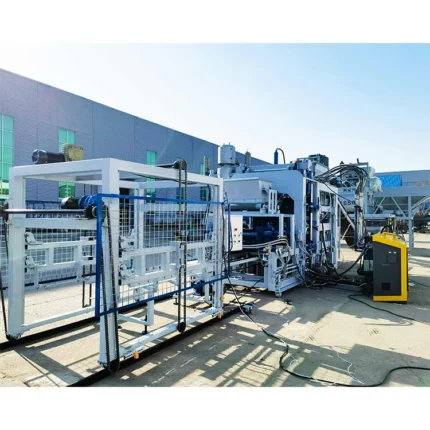
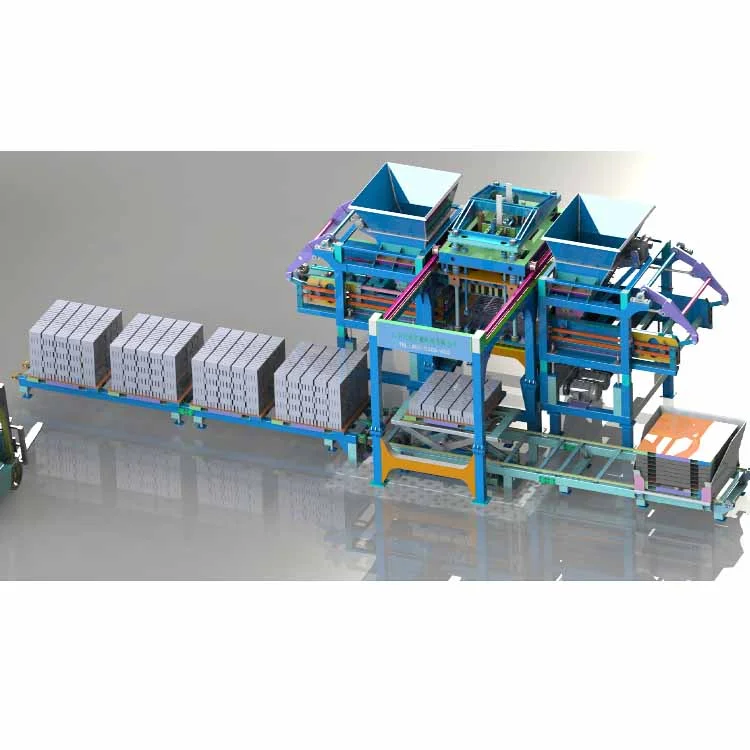
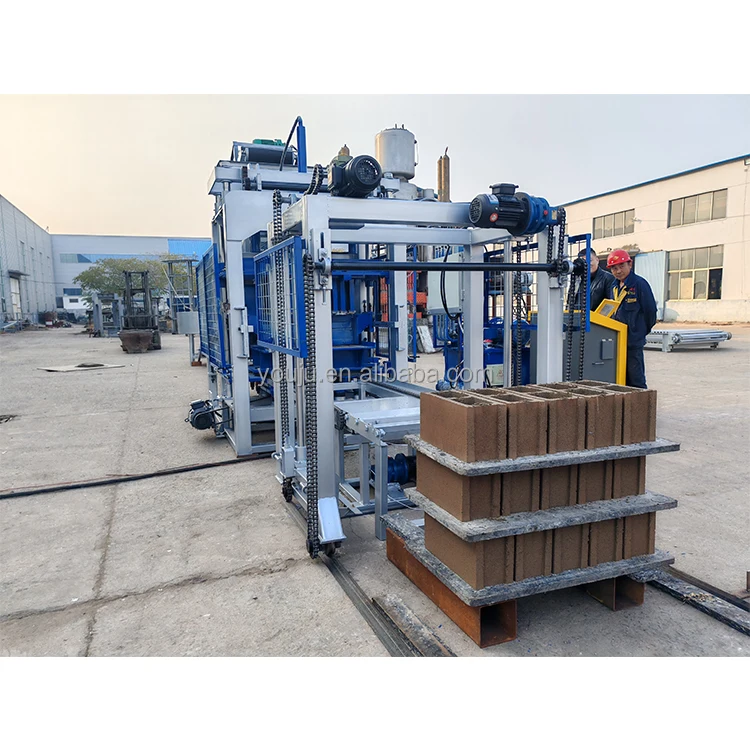
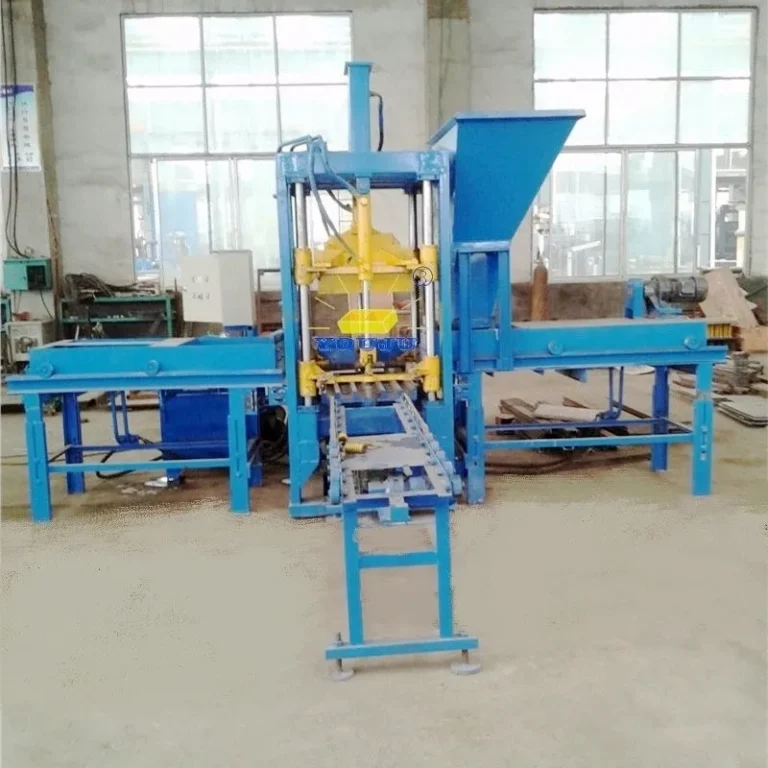
Matched system integration — the QTF3-20 press, double-layer feeder, pallet system, and PLC are specified as one coordinated line rather than assembled from separate suppliers, reducing interface mismatches during commissioning.
Technical Specifications
| Parameter | Value |
|---|---|
| Model | QTF3-20 |
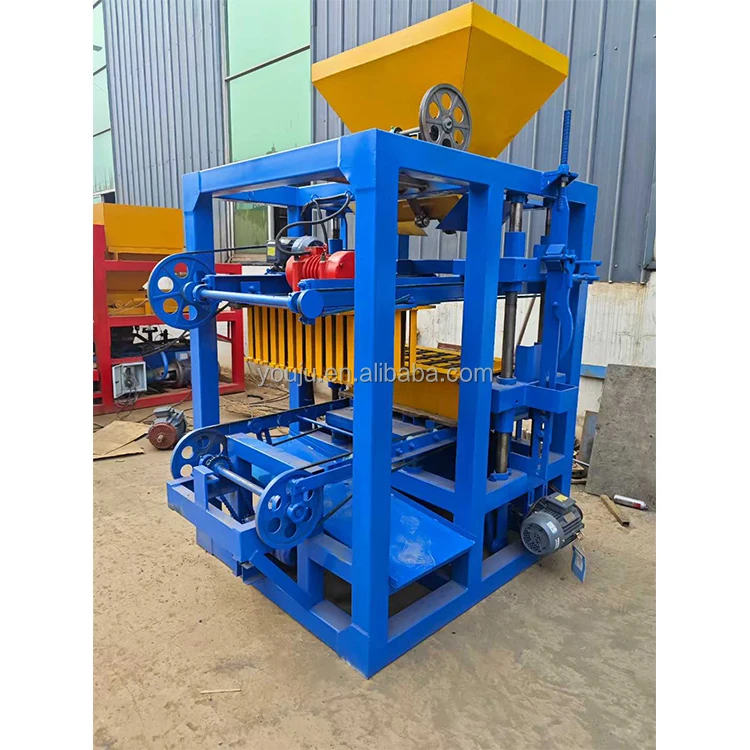
| Product Type | Stationary Hydraulic Block Making Machine |
| Overall Dimensions (L×W×H) | 4000×3500×2300 mm |
| Total Mass | 2870 kg |
| Total Power | 17.5 kW |
| Vibration Form | Platform Vibration |
| Drive System | Combined mechanic, electric, hydraulic, and high-frequency vibration |
| Control System | PLC with no-contact proximity switch monitoring |
| Hydraulic System | Integrated hydraulic drive for host machine |
| Layer Capability | Double layer (base material + color surface) |
| Host Machine Frame | #12 U-bar welded overall frame structure |
| Included Stations | Pallet feeder, block conveyor, color material machine |
| Line Configuration | Can form a simple line with JQ350 mixer and 8 m belt conveyor |
| Output Capacity | 4320 pcs/day (basis not stated in source — confirm block format and cycle time) |
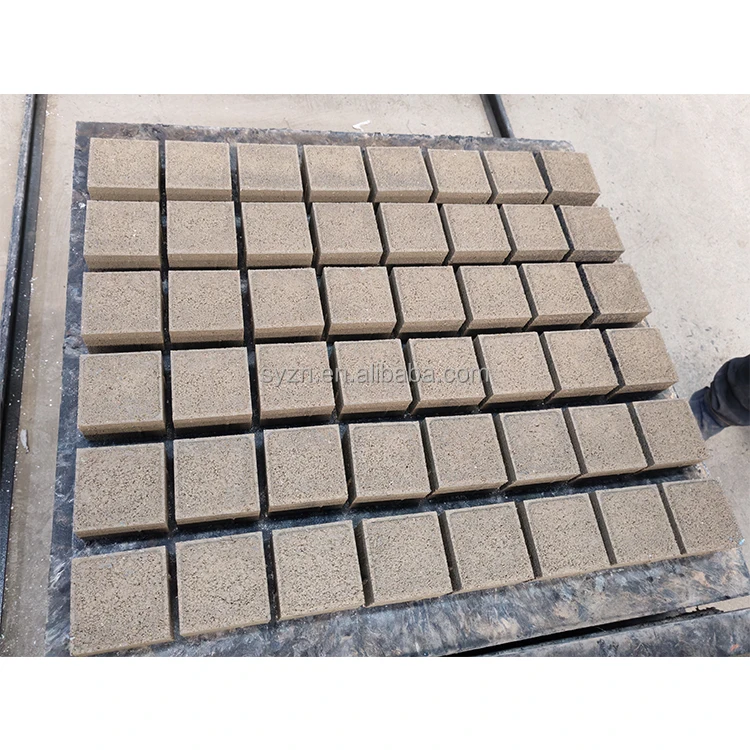
| Mould Format Options | Environmental brick, interlock brick, color pavers, park grass brick, hollow brick, porous brick, standard brick |
| Raw Materials | Cement, sand, fly ash, coarse aggregate, slag |
| Electrical Components | Sourced from German or established Chinese brands |
| Voltage & Frequency | Configurable to destination site (to be confirmed before production) |
| PLC Display Language | Configurable (to be confirmed before production) |
Application Suitability
| Application | Material or Output |
|---|---|
| Hollow block production for load-bearing and partition walls | Cement, sand, and coarse aggregate mixes |
| Interlocking brick for retaining walls and landscape projects | Cement and fly ash blends with angular aggregate |
| Color paving brick for sidewalks and public plazas | Double-layer feed with pigmented surface material over standard base |
| Park grass brick for permeable parking surfaces | Coarse aggregate with open-void mix design |
| Porous brick for sponge-city drainage compliance | Gap-graded aggregate with controlled cement content |
| Standard solid brick for infill and non-structural masonry | Fly ash and sand with standard cement ratios |
What the QTF3-20 Output Figure Does Not Tell You
Real daily throughput depends entirely on which block format you run and how the cycle parameters match your aggregate.
Capacity numbers on spec sheets often assume an ideal format under lab conditions. When the same automatic PLC controlled stationary block making machine runs a large hollow block instead of a small solid paver, the cycle time stretches and pallet turnover slows. I once stood at a trade show in Bogotá where a buyer had signed off on a daily capacity number without asking which block it was based on. The machine arrived, ran his primary hollow format, and output dropped noticeably from what he had planned his contracts around [NEED_CITE: capacity calculation standards for concrete block machinery].
PLC Control as the Operator’s Memory
The QTF3-20 uses a PLC system with no-contact proximity switches to monitor each stage of the press cycle. This means the press does not rely on an operator judging when to advance from vibration to demoulding. The sequence is stored and repeatable, so batch-to-batch density stays within a narrow band across shifts. For a plant owner moving from manual operation, this removes the largest source of inconsistency — human timing under fatigue.
The Double-Layer Advantage for Color Paver Lines
Double-layer feeding lets the automatic PLC controlled stationary block making machine lay a standard base material and then a thin pigmented surface layer in the same cycle. Without this, color pavers require either through-body pigment mixed into the entire batch, which raises material cost, or a separate facing machine added downstream. The QTF3-20 integrates the color material machine within the same station footprint, keeping the line compact.
Reading the Specs That Shape Your Daily Output
The 17.5 kW total power rating must cover both the hydraulic pump and the vibration motor simultaneously. On a combined mechanic-electric-hydraulic-vibration drive, the power split between hydraulic pressure and vibration force determines how densely the block is compacted and how quickly the mould fills. The #12 U-bar welded frame absorbs sustained vibration without fatigue cracking over long production runs, which matters when the press cycles hundreds of times per shift. Pallet feeder inclusion means the press does not sit idle waiting for manual pallet placement, though the stacking method downstream still determines whether cured blocks are handled manually or automatically [NEED_CITE: vibration force and hydraulic pressure matching for block density]. The mould format range — from hollow brick to color pavers to park grass brick — means the same press serves multiple market segments, but each format change involves its own cycle time and pallet turnover rate.
When the Wrong Configuration Reaches the Site
If the PLC display language is not confirmed before the machine leaves the factory, commissioning stalls while the operator struggles with an unfamiliar interface. If the voltage and frequency do not match the destination site, the electrical components cannot be energized until a transformer arrives. These are not engineering failures — they are communication gaps that cost weeks on site. I have seen machines sit on pallets at the port because the buyer never received a voltage confirmation form [NEED_CITE: voltage and frequency standards by export market].
Why Source This Automatic PLC Controlled Stationary Block Making Machine Here
Block machinery is the sole product focus, so the QTF3-20 press, moulds, pallets, and handling equipment are specified as a matched set rather than pulled from unrelated catalogs. Configuration is set against the buyer’s actual mix design and local aggregate, not a generic default. Mould design covers the formats the buyer’s market actually sells, with custom drawings available. The semi-automatic base configuration leaves a defined upgrade path toward full stacking and cubing automation as production scales. Installation support includes on-site commissioning and operator training tied to the buyer’s specific block formats.
Documentation & Verification
- Machine specification sheet with confirmed voltage, frequency, and PLC language
- Mould drawing and format list covering all ordered block types
- Hydraulic and electrical schematic for local maintenance teams
- Line layout showing QTF3-20 placement with JQ350 mixer and 8 m conveyor
- Factory test record run on your target block format before dispatch
- Operation and maintenance manual with format-specific cycle time data
Installation, Commissioning & Support
- Foundation plan sized to the 4000×3500 mm footprint and 2870 kg mass with vibration isolation
- Dedicated electrical circuit rated for the 17.5 kW total power draw at confirmed voltage and frequency
- PLC display language set and verified before the machine leaves the factory
- On-site commissioning with parameter calibration against local aggregate and mix design
- Operator training covering mould change procedure for each ordered format
- Wear parts and mould availability list provided with the shipment documentation
What We Need to Configure Your QTF3-20
To size the line correctly, share the specific block formats you plan to produce and the target daily volume for each. Confirm your local aggregate type, cement source, and whether you need color paver capability through the double-layer system. Provide the site voltage, frequency, and preferred PLC display language so the electrical and control systems are built to match before dispatch.
Frequently Asked Questions
Q: How is the stated output of 4320 pieces per day calculated, and which block format does it assume?
A: That figure is quoted without a specific block format in the source data. Real throughput varies significantly between a small solid brick and a large hollow block because cycle time and pallet turnover differ. Before ordering, request a capacity calculation that names the exact format, dimensions, and assumed cycle time so you can plan against your actual product mix.
Q: Can the PLC display language be configured to our operator’s language before shipment?
A: Yes, the PLC display language is configurable and should be confirmed during the order stage. Providing the preferred language before production starts avoids commissioning delays where the operator cannot navigate menus. This confirmation is part of the standard pre-production documentation checklist.
Q: What is the upgrade path from the QTF3-20 semi-automatic base to fully automatic stacking?
A: The QTF3-20 can start as a semi-automatic press with manual pallet handling downstream and later add automatic stacking and cubing stations. The PLC architecture and pallet system are designed to accept these additions without replacing the host machine. The upgrade path should be discussed at inquiry stage so the base wiring and pallet spacing accommodate future automation.
Q: How are vibration force and hydraulic pressure matched to our local aggregate?
A: The combined mechanic-electric-hydraulic-vibration drive allows both parameters to be adjusted independently during commissioning. The service team calibrates pressure and vibration against your specific mix design and aggregate gradation to achieve the required block density and strength. This calibration is performed on site after the machine is installed.
Q: What voltage and frequency options are available, and how is this confirmed?
A: Voltage and frequency are configurable to match the destination site electrical supply. The exact values must be confirmed during the order stage, before production begins. A written confirmation document is exchanged so the electrical components and motor ratings are built to your site specification, preventing delays at commissioning.