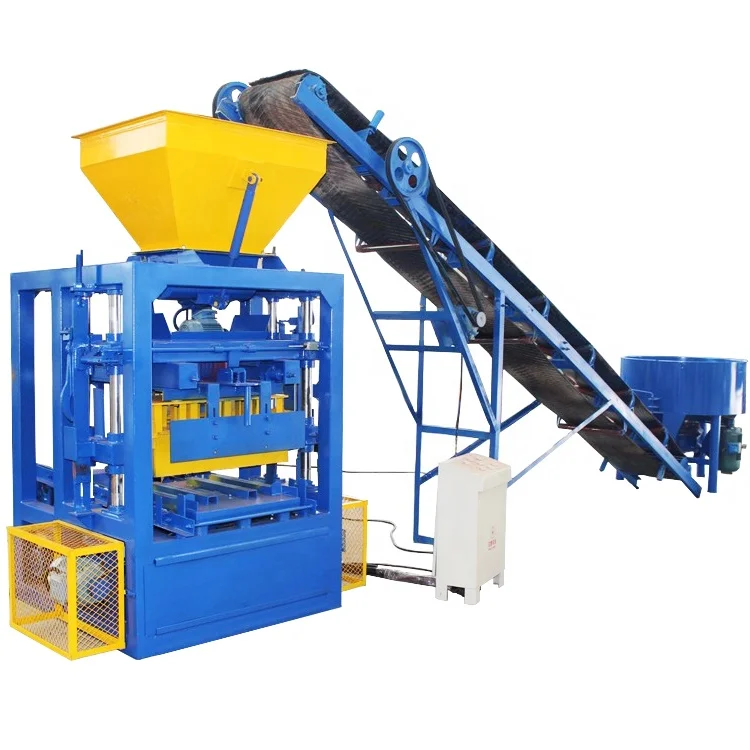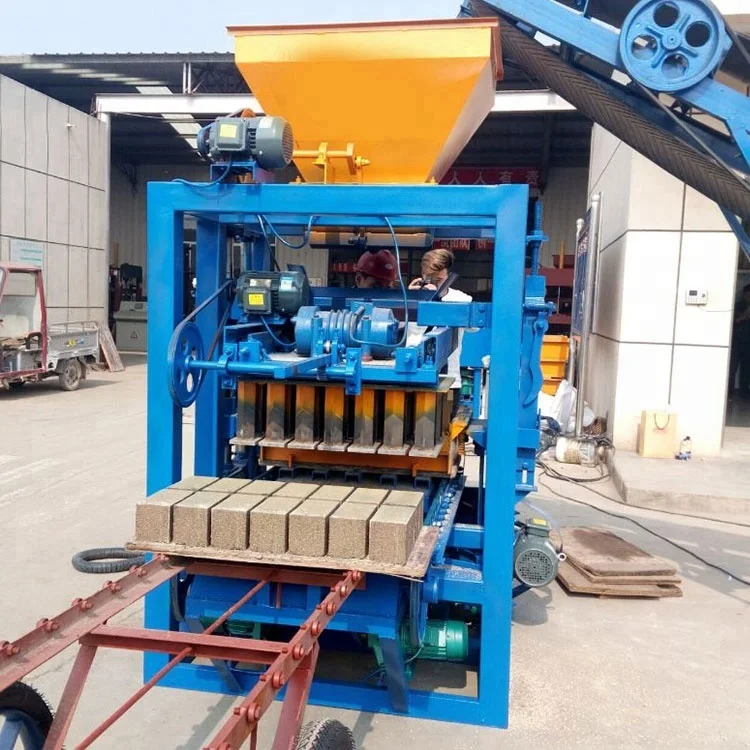


Description
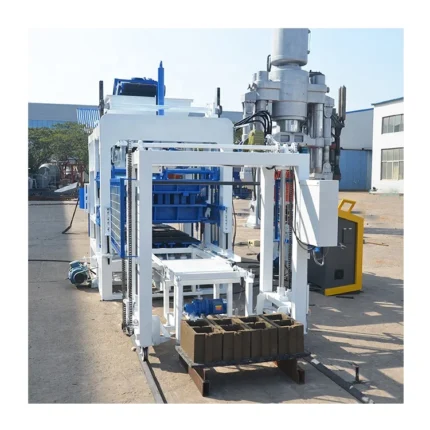
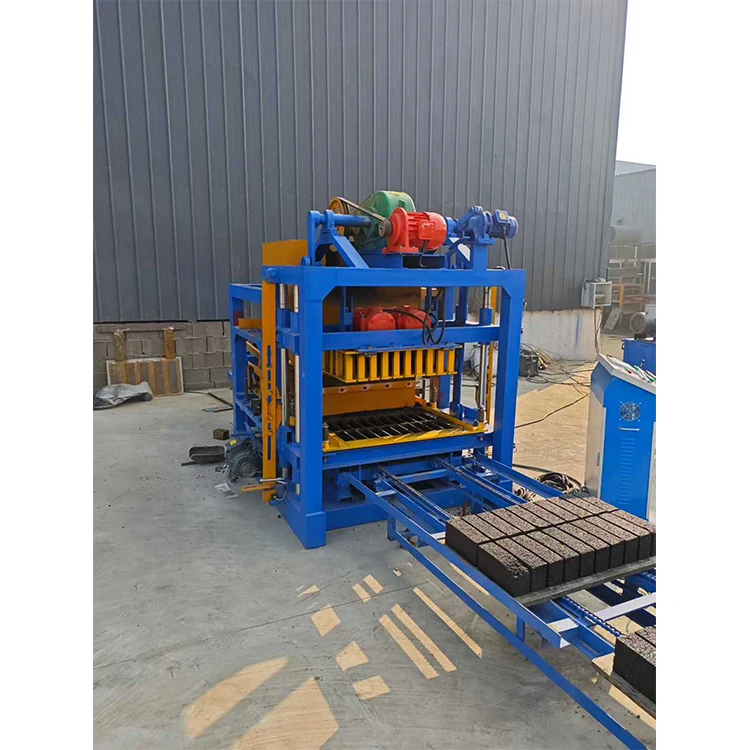
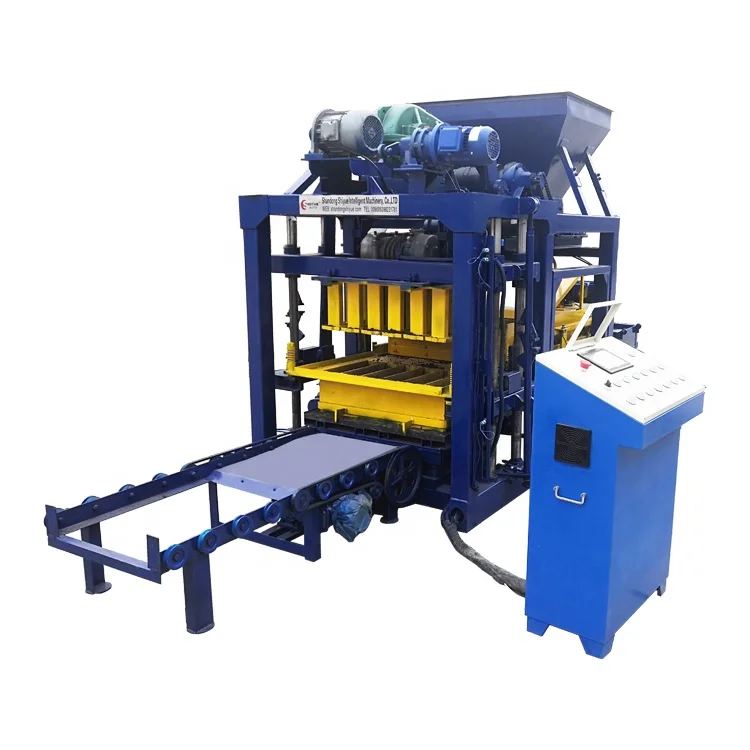
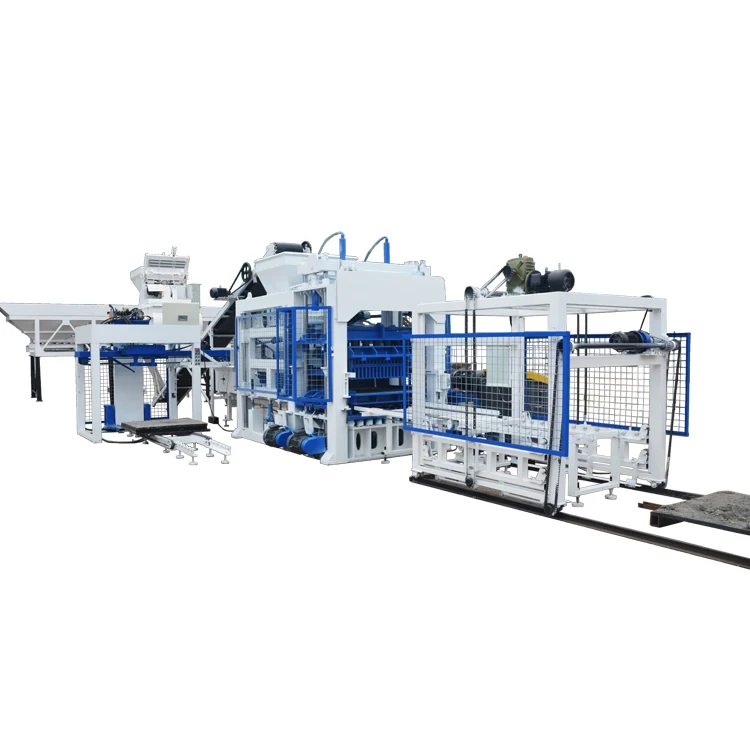
Frequency converting control across all motors — the QTJ4-24 semi-automatic block machine allows vibration tuning to match your specific mix design and local aggregate, removing inconsistency between batches without requiring a full automatic line investment.
Technical Specifications
| Parameter | Value |
|---|---|
| Model | QTJ4-24 |
| Product Type | Semi-Automatic Concrete Block Making Machine |
| Overall Dimensions (L×W×H) | 2060×1730×2580 mm |
| Main Vibration Form | Platform vibration |
| Vibration Frequency | 4200 r/min |
| Exciting Force | 35.5 kN |
| Rated Pressure | 15 MPa |
| Pallet Size | 880×480×38 mm |
| Molding Cycle | 26 s (basis to be confirmed for specific block format) |
| Rated Power | 14.25 kW |
| Control System | Electro-mechanical integration with frequency converting control |
| Voltage & Frequency | 380V, 3-phase, 50Hz (customizable to local voltage) |
| Mould Format | Exchangeable moulds |
| Automation Level | Semi-automatic with upgrade path |
| Warranty | 1 year (excluding wearing parts) |
Application Suitability
| Application | Material or Output |
|---|---|
| Hollow block production for residential and commercial wall construction | Concrete mix with crushed stone, sand, and cement |
| Solid block manufacturing for load-bearing structures | Dense aggregate mix with cement binder |
| Paving block and road block production for municipal and private projects | High-strength concrete with fine and coarse aggregate |
| On-site block manufacturing for construction contractors | Locally sourced aggregate and cement at project locations |
What the 26-Second Molding Cycle Actually Means for Your Output
Cycle time only translates to daily capacity when paired with the specific block format, pallet handling speed, and curing logistics you will actually run.
I once watched a buyer in West Africa quote a machine based on its headline cycle figure, then discover at commissioning that his hollow block format needed a longer press dwell, and manual pallet transfer added seconds the quotation never accounted for. The daily output fell well short of his project schedule. When a semi-automatic press like the QTJ4-24 is specified, the molding cycle of 26 seconds applies to one particular mould configuration under controlled conditions. Your real throughput depends on which format you run, how fast your operators move pallets in and out, and whether your curing area can absorb the output without bottlenecking. This is why an automatic block machine PLC controlled QTJ4-24 must be evaluated against your actual product mix, not a catalogue optimum [NEED_CITE: block machine capacity calculation methods by format].
How Frequency Converting Vibration Changes Block Density Consistency
The platform vibration system on this automatic block machine PLC controlled QTJ4-24 operates on a frequency converting principle rather than fixed-speed motor drive. Low-frequency vibration holds the mould steady during filling, then high-frequency vibration compacts the concrete during pressing. This two-stage approach keeps amplitude stable across cycles, which means block density stays uniform from the first pallet of the morning to the last. Fixed-speed vibration tends to lose amplitude as the motor heats up over a shift, producing softer blocks by afternoon.
The Semi-Automatic Starting Point and Where It Leads
Many buyers enter block production with a semi-automatic press because it keeps capital outlay manageable while still delivering consistent compaction. The QTJ4-24 sits in this tier: pallet handling and stacking are done manually, but the press cycle itself is controlled through the electro-mechanical integration panel. When volume grows, the same press can be fitted with automatic pallet feeding and stacking modules, converting the line without replacing the core machine. This upgrade path is something I always discuss with buyers who are unsure whether their market will sustain a fully automatic line from day one. It removes the risk of over-investing before demand is proven [NEED_CITE: semi-automatic to automatic block line upgrade practices].
Reading the Specs That Actually Determine Block Strength
The rated pressure of 15 MPa and exciting force of 35.5 kN together define the compaction energy delivered to the concrete inside the mould. Higher pressure forces aggregate particles closer together, while vibration frequency of 4200 r/min ensures the mix settles into every corner of the mould cavity. If your local aggregate is angular and poorly graded, you may need to adjust the mix water content to let the vibration energy penetrate fully — otherwise the block surface will look dense but the core remains loose. The pallet size of 880×480×38 mm determines how many blocks fit per cycle, and this dimension must match the curing racks and forklift tines already in your yard. Buying a machine with a pallet size your existing handling equipment cannot accommodate is a mistake I have seen more than once at commissioning. The 14.25 kW rated power is modest for a machine in this output tier, which keeps operating costs contained, but it also means the electrical supply at your site must be stable — voltage drops under load will reduce vibration force and produce weak blocks without any visible alarm on the control panel.
When the Wrong Configuration Costs You a Full Shift
A buyer who specifies a QTJ4-24 without confirming the mould change procedure may find that switching from hollow block to paving block format consumes most of a working shift. The exchangeable mould system is designed for format flexibility, but if the bolt pattern and alignment procedure are not practiced, the downtime cancels out the revenue from the second product line. I have also seen situations where the control language was left at factory default, and the local operator could not read the fault codes on the display. Commissioning stalled until someone could translate every screen. These are not engineering failures — they are specification oversights that surface only when the machine is on your floor [NEED_CITE: industrial machinery commissioning language and voltage verification].
Why Buyers Specify Through This Channel
Every QTJ4-24 leaving the factory is configured against the buyer’s actual mix design and local aggregate, not pulled from a default catalogue setting. The mould is selected for the formats your market sells, and custom mould drawings are available when standard options do not match. Voltage, frequency, and PLC display language are confirmed before production begins, so the machine arrives ready to run rather than waiting for an electrician and a translator. Pallet size is matched to your existing curing racks and forklift equipment. The automation level is selectable — you can start with manual pallet handling and add automatic stacking later without replacing the press. Installation support includes operator training on the frequency converting control system, mould change procedure, and routine maintenance of hydraulic and vibration components.
Documentation & Verification
- Machine specification sheet confirming voltage, frequency, and control language for your site
- Mould drawing and format list showing block dimensions per exchangeable mould set
- Pallet specification matching 880×480×38 mm size to your curing rack and forklift setup
- Factory test record run on your target block format before dispatch
- Hydraulic and electrical schematic for local maintenance teams
- Operation and maintenance manual in your confirmed language
Installation, Commissioning & Support
- Foundation pad leveled to within tolerance for 2060×1730×2580 mm footprint
- Dedicated 3-phase circuit rated above 14.25 kW with confirmed voltage and frequency
- Platform vibration alignment checked after transit before first production run
- PLC display language and fault code translation verified at commissioning
- Operator training on frequency converting control, mould exchange, and pallet loading
- Wear parts and hydraulic seal list supplied with recommended replacement intervals
What to Include in Your Inquiry
Send your target block formats with dimensions, your local aggregate type and gradation, and your daily output requirement so the capacity calculation can be stated per format. Confirm your site voltage, frequency, and preferred control display language to avoid delays at commissioning. If you already have curing racks and forklifts on site, include the pallet dimensions they accept so the pallet specification can be matched before the order is placed.
Frequently Asked Questions
Q: How is the 26-second molding cycle verified across different block formats?
A: The 26-second cycle applies to one specific mould configuration under test conditions. Each block format — hollow, solid, paving — requires its own cycle time measurement because fill depth, vibration dwell, and press stroke differ. Request a capacity calculation stated per format so your daily output estimate reflects the actual products you will run.
Q: Can the voltage and control language be customized for my country?
A: Voltage and frequency are confirmed before production to match your local electrical grid standard. The PLC display language is set to your preference during assembly. Both parameters are locked in the order confirmation so the machine arrives commissioning-ready without requiring on-site electrical modification or language translation.
Q: What automation upgrades are available after initial semi-automatic installation?
A: The QTJ4-24 semi-automatic base supports addition of automatic pallet feeding, stacking, and cubing modules as your volume grows. The press itself remains unchanged — only the material handling stations around it are added. This lets you start with lower capital outlay and scale the line when market demand justifies the investment.
Q: How does the frequency converting system affect power consumption and motor life?
A: Frequency converting control adjusts motor speed to the stage of the cycle rather than running at full speed continuously. This reduces electrical draw during standby and low-load phases. Motors also experience less thermal stress over a shift, which extends bearing and winding life compared to fixed-speed drives running the same duty cycle.
Q: Which wearing parts need replacement first, and what is the lead time for spares?
A: Hydraulic seals, vibration motor bearings, and mould liner plates experience the most wear during normal production. A wear parts list with part numbers is supplied before shipment so you can order spares in advance. Lead times for standard replacement items are typically measured in weeks depending on your location and shipping method.