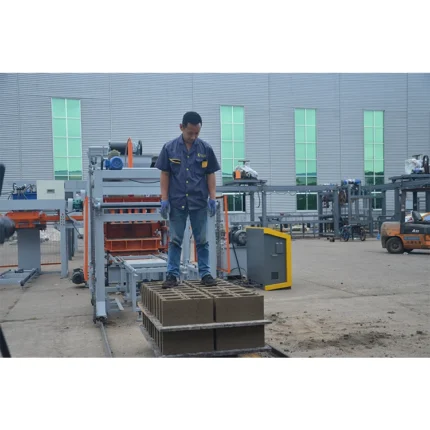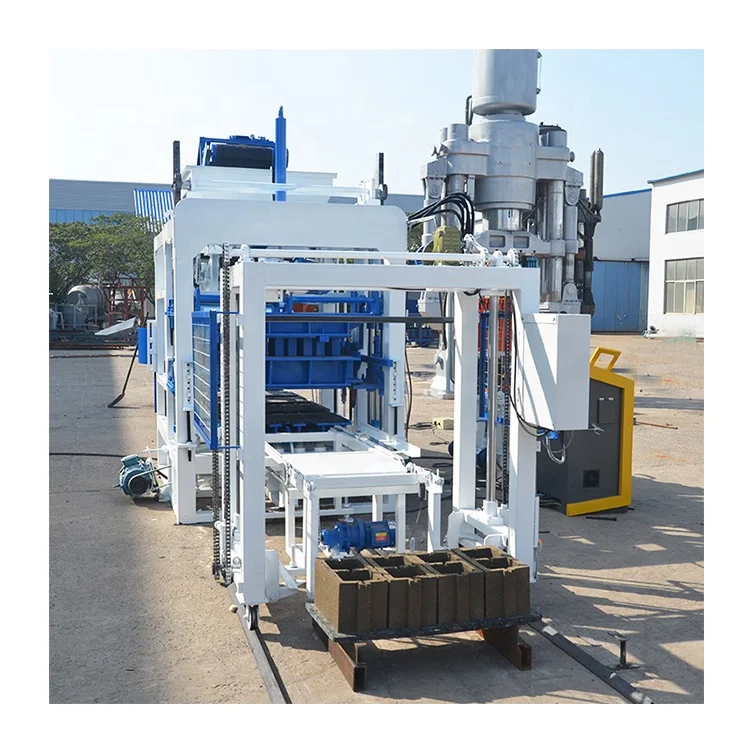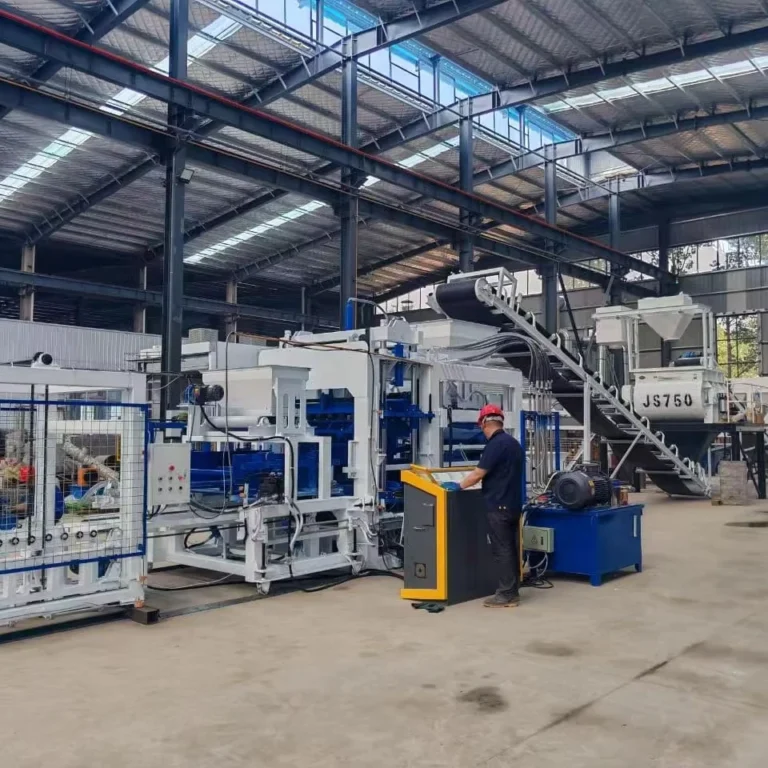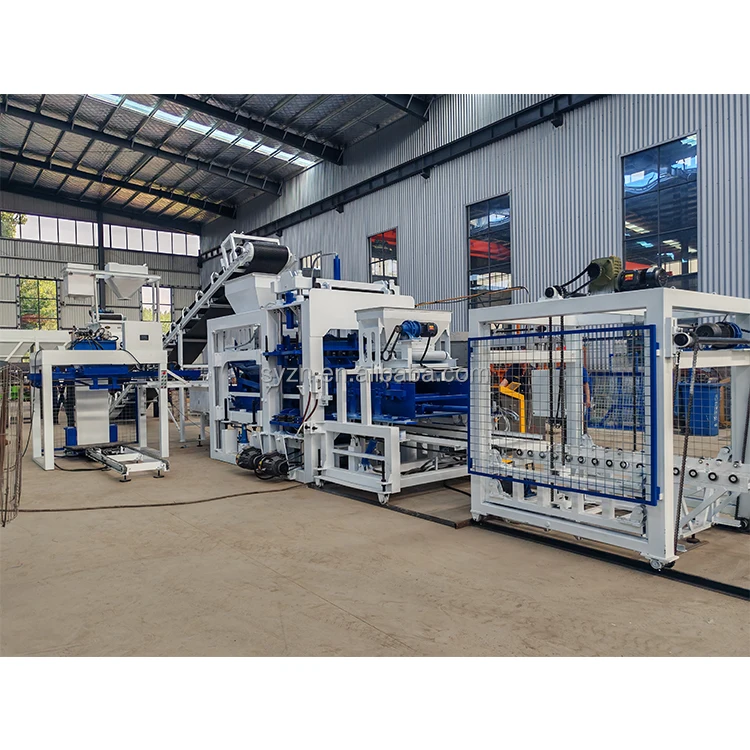
Description
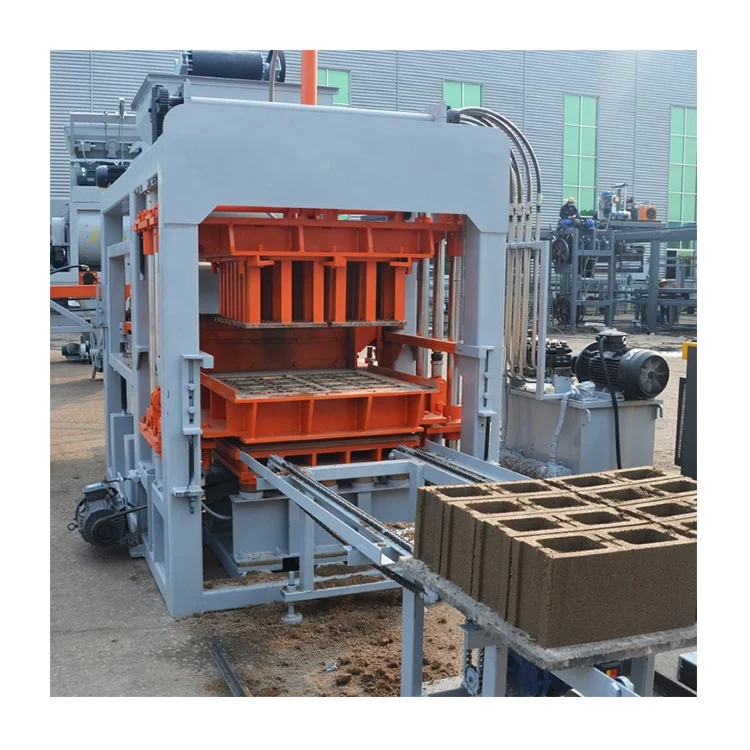
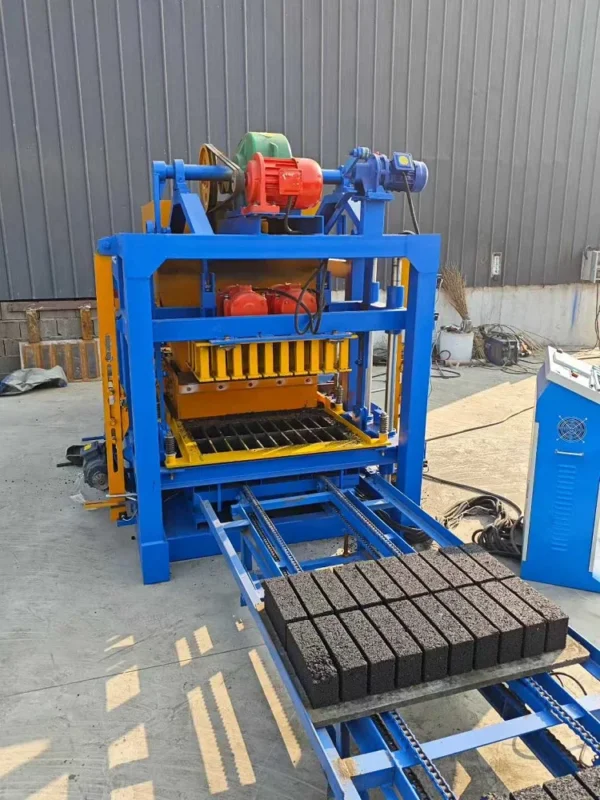
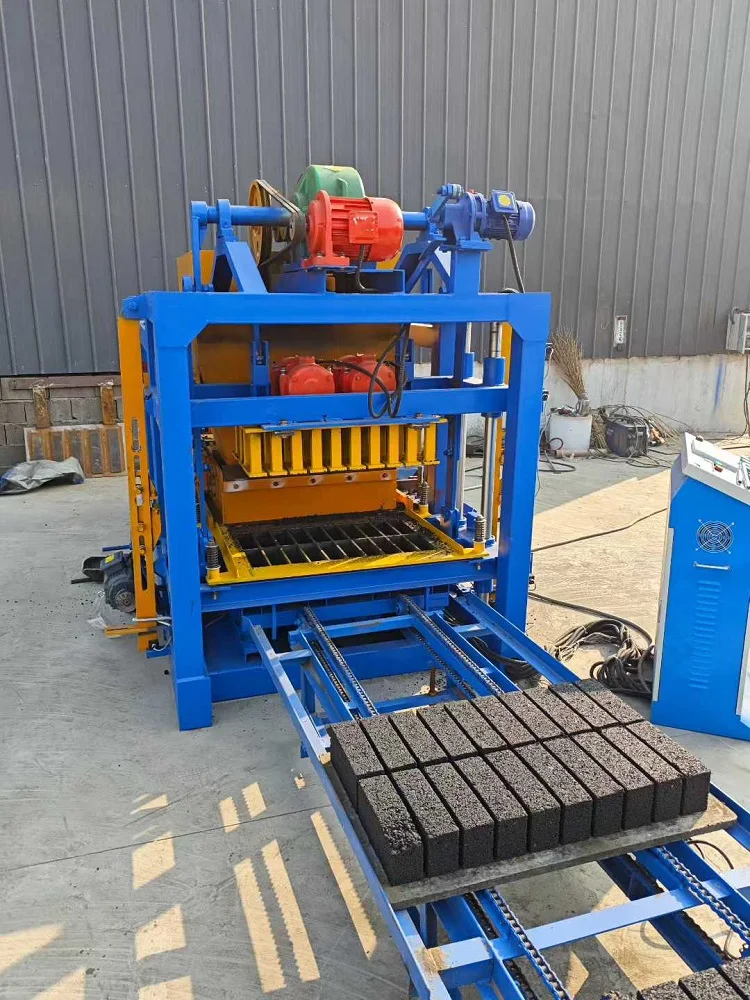
Configuration matched to your actual mix — the QTJ4-25 automatic concrete block making machine PLC controlled is sized against the buyer’s aggregate, target format, and site layout rather than shipped as a catalogue default.
Technical Specifications
| Parameter | Value |
|---|---|
| Model | QTJ4-25 |
| Product Type | Automatic Concrete Block Making Machine |
| Rated Power | 16.58 kW |
| Control System | PLC controlled fully automatic |
| Molding Cycle | 25 seconds |
| Output Capacity | 4600 pcs / 8 hours (basis not stated in source — confirm block format, material, and thickness) |
| Net Weight | 5000 kg |
| Overall Dimensions | 6400 × 1500 × 2700 mm |
| Raw Materials | Concrete, sand, cement, fly ash, crushed stone, lime, water |
| Pallet Size | 850 × 480 mm |
| Voltage | Configurable according to local voltage (exact V/Hz must be confirmed before order) |
| Automation Level | Full automatic — pallet feeding, material feeding and scraping, block stacking |
| Vibration System | Vibration motor paired with large vibration box (non-hydraulic) |
| Frame Construction | Thickened steel |
| Motor Brand | Siemens motor |
| Block Formats | Hollow blocks, solid blocks/bricks, paver stones |
Application Suitability
| Application | Material or Output |
|---|---|
| Medium-sized hollow block production | Crushed stone and cement blends targeting load-bearing wall construction |
| Solid brick runs for local masonry markets | Sand, fly ash, and cement mixes for residential building supply |
| Paving stone batches for contractors | Interlocking paver formats using aggregate and cement on 850 × 480 mm pallets |
| First plant setups for entrepreneurs | Multi-format production from a single automated line with PLC sequencing |
What "4600 Blocks per Shift" Really Means on the Shop Floor
The number only holds when the block format, mix design, and cycle time all align with the calculation behind it.
I once quoted an African client a shift output based on a sample catalogue figure, and on the first production day his local aggregate had higher clay content than the test sample. The vibration frequency was not adjusted, moulds clogged twice, and daily output dropped sharply. That experience shaped how I now approach every inquiry: send me a sample of your local sand and stone before we confirm any capacity number. When buyers skip this step, the automatic concrete block making machine PLC controlled may cycle perfectly on paper but deliver far less on the ground [NEED_CITE: aggregate variability and its effect on block compaction density].
Removing the Operator from the Cycle Loop
The PLC control panel on this automatic concrete block making machine PLC controlled sequences pallet feeding, material dosing, scraping, vibration, and block stacking without manual triggers. Each stage is timed to the next, so the press never sits idle waiting for a pallet or a scraper pass. This consistency matters most during long shifts when operator fatigue introduces variation into manual or semi-automatic lines.
Where Automation Ends and Planning Begins
Full automation on the QTJ4-25 covers the press cycle and immediate handling — pallet in, block out, stack formed. What it does not replace is the upstream material preparation or the downstream curing logistics. Buyers sometimes assume that a PLC-controlled line solves curing rack congestion or forklift bottlenecks, but those require separate station planning. The 850 × 480 mm pallet dimension must be checked against your existing curing area layout and the forklift tine width already on site [NEED_CITE: pallet and curing area coordination in block plant design].
Vibration Without Hydraulics — What the Compaction System Actually Does
The QTJ4-25 uses a vibration motor coupled to a large vibration box rather than a hydraulic press cylinder. This design concentrates compaction energy through mechanical vibration, which suits medium-density hollow blocks and pavers where extreme hydraulic pressure is not required. The thickened steel frame absorbs and contains that vibration, preventing resonance transfer to adjacent stations. The Siemens motor specification means replacement or service can typically be sourced through local industrial distributors rather than waiting for an overseas shipment. The 25-second molding cycle is the mechanical baseline; actual throughput depends on pallet return speed and the block height being formed — taller hollow blocks may require longer vibration dwell within that window.
Pallet Size, Forklift Compatibility, and the Hidden Handoff Cost
A pallet dimension that does not match your curing racks means every stack must be rehandled manually before it enters the curing zone. The 850 × 480 mm pallets on the QTJ4-25 are sized for medium-format blocks, but if your existing racks were built around a different pallet standard, the mismatch creates a second handling step that erases the labour savings the automation was meant to deliver [NEED_CITE: pallet standardisation and manual rehandling costs in block plants].
Why Source This Machine Through a Single-System Approach
Block machinery is the only product line here, so the press, moulds, pallets, and handling equipment are specified as one matched set rather than assembled from unrelated suppliers. The configuration is set against your actual mix design and local aggregate, not a generic catalogue entry. Mould design covers the formats your market sells, with custom drawings available when standard options do not fit. The automation level on the QTJ4-25 can be selected at purchase and expanded later, letting a buyer start with core PLC functions and add cubing or curing rack handling when volume justifies it. Installation support includes on-site commissioning and operator training so the first production run happens under guidance, not guesswork.
Documentation & Verification
- Capacity calculation stating the exact block format and cycle assumption behind the output figure
- Machine specification sheet covering power, dimensions, and vibration system details
- PLC control schematic with I/O mapping for local electrician reference
- Voltage and control language confirmation record signed before production begins
- Factory test record run on your specified block format before dispatch
- Operation and maintenance manual with wear parts and mould replacement intervals
Installation, Commissioning & Support
- Foundation must support 5000 kg static load across the 6400 × 1500 mm footprint with level tolerance confirmed
- Dedicated power circuit required for 16.58 kW draw; exact voltage and frequency confirmed in writing before wiring
- Machine ships dismantled for container loading; reassembly and alignment completed on site during commissioning
- PLC display language set to operator preference before first production run
- Operator training covers mould change procedure, vibration adjustment, and daily maintenance checkpoints
- Wear parts list provided with recommended replacement intervals for vibration box liners and scraper blades
Before You Send an Inquiry
To configure the QTJ4-25 accurately, share the specific block formats your market demands along with target daily volumes and the dimensions of each format. Include a sample or lab report of your local sand and aggregate so the vibration parameters can be matched to your material. Confirm your site voltage, frequency, and the PLC display language your operators need, and note the pallet dimensions your existing curing area and forklifts are built around.
Frequently Asked Questions
Q: How do I verify the real daily output of the QTJ4-25?
A: Request a capacity calculation that names the exact block dimensions, material mix, and cycle time behind the 4600 pcs per 8 hours figure. Without that breakdown, the number is a reference point, not a commitment. Output shifts noticeably between a standard hollow block and a thinner solid brick format.
Q: What must be confirmed about voltage and PLC language before shipping?
A: The exact voltage, frequency, and PLC display language must be agreed in writing before production starts. If these are left to assumption, the machine may arrive with a control panel your operators cannot read or a motor winding that does not match your local supply, delaying commissioning by weeks.
Q: What does the QTJ4-25 automate, and what can be added later?
A: The machine automates pallet feeding, material dosing and scraping, vibration cycling, and block stacking. Upgrades such as automatic cubing or curing rack handling can be added when production volume justifies the investment, provided the PLC supports expansion modules.
Q: How does PLC control maintain consistency across different block formats?
A: The PLC stores cycle parameters for each mould installed, adjusting vibration duration, material feed volume, and press timing to match the block being produced. This removes the guesswork operators face when switching formats manually and reduces batch-to-batch density variation.
Q: Will the 850 × 480 mm pallets fit my existing curing area?
A: Compare the pallet dimensions to your curing rack spacing and forklift tine width before confirming the order. A mismatch forces manual rehandling between the stacker and the curing zone, adding labour back into a process the automation was meant to simplify.