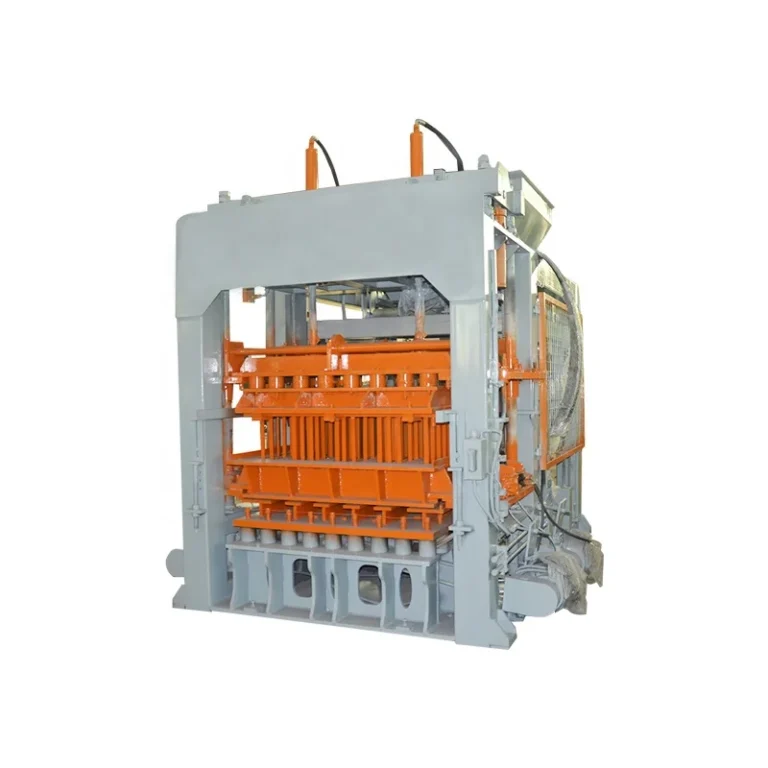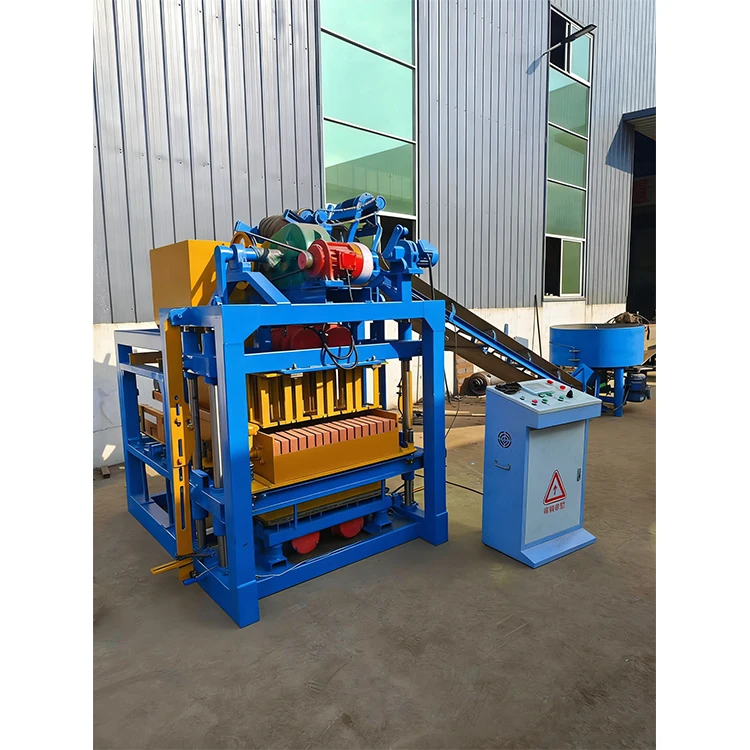


Description
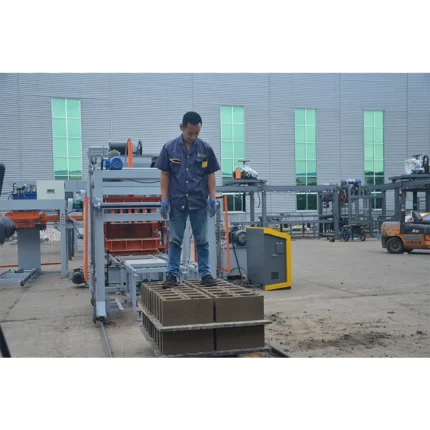
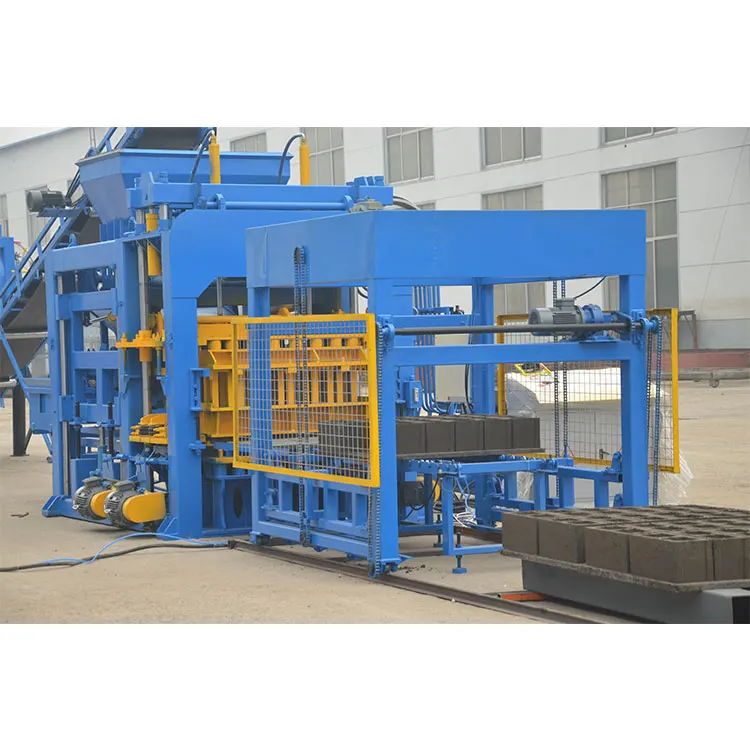
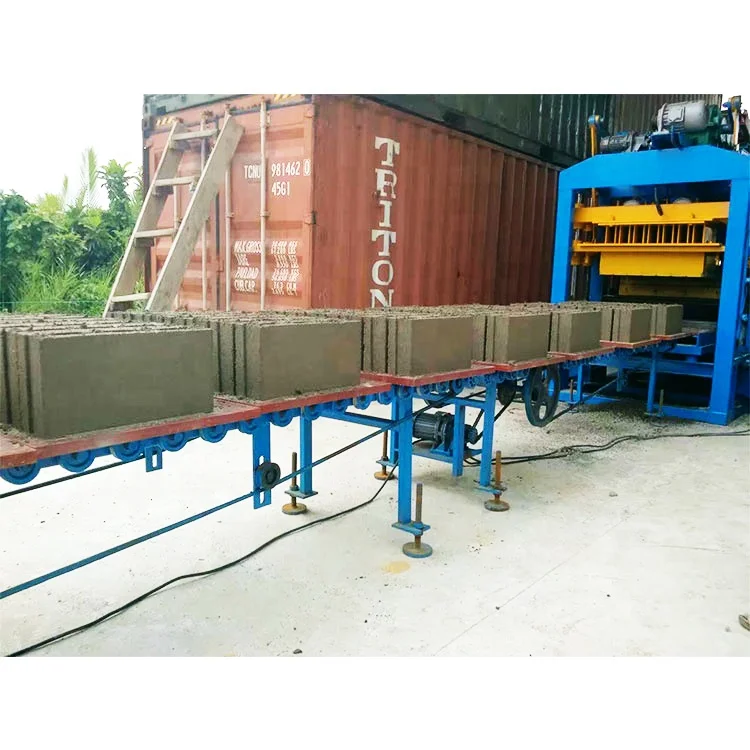
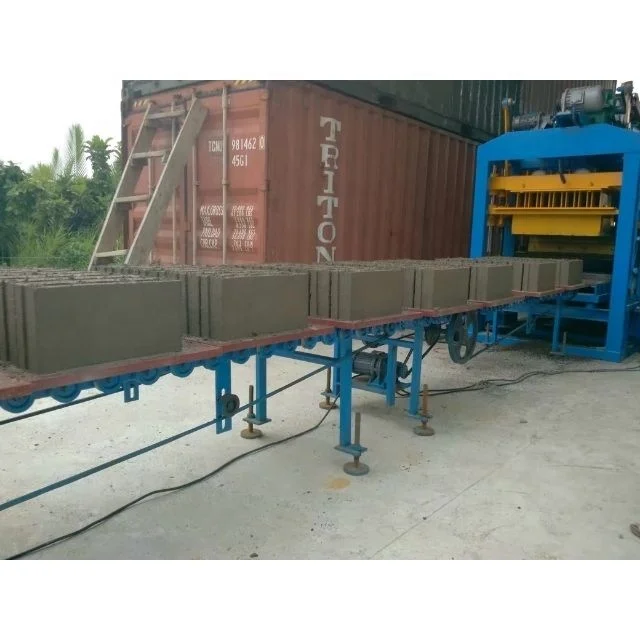
Integrated Automation Design — The QTJ4-25 automatic concrete block making machine PLC controlled system governs pallet feeding, material scraping, and block stacking as one continuous sequence, eliminating manual intervention between cycles.
Technical Specifications
| Parameter | Value |
|---|---|
| Model | QTJ4-25 |
| Product Type | Automatic Concrete Block Making Machine |
| Control System | PLC controlled, fully automatic |
| Pressure Type | Mechanical vibration (non-hydraulic) |
| Vibration System | Vibration motor with large vibration box |
| Machine Power | 16.58 kW |
| Molding Cycle | 25 seconds |
| Output Capacity | 4600 pcs / 8 hours (basis not stated in source — confirm block format, material and thickness) |
| Machine Weight | 5000 kg |
| Overall Dimensions (L×W×H) | 6400 × 1500 × 2700 mm |
| Pallet Size | 850 × 480 mm |
| Raw Materials | Concrete, sand, cement, fly ash, crushed stone, lime, water |
| Voltage | Configured to buyer’s local voltage (exact value to be confirmed) |
| Motor Brand | Siemens |
| Automation Level | Fully automatic — pallet feeding, material feeding and scraping, block stacking |
| Frame Construction | Thickened steel |
| Block Formats Supported | Hollow blocks, solid blocks/bricks, paver stone bricks |
| Warranty | One year with free parts supply during warranty period |
Application Suitability
| Application | Material or Output |
|---|---|
| Hollow block production for medium-sized factories | Crushed stone, sand, cement and fly ash blends |
| Solid brick manufacturing for building projects | Concrete and sand mixes with fine aggregate |
| Paver stone production for walkways and yards | Cement-bound crushed stone with pigmented surface layers |
| On-site block production for housing developments | Locally sourced aggregate matched to regional mix designs |
What "4600 Pieces Per 8 Hours" Actually Means for Your Line
Capacity figures without a stated block format give a false sense of daily throughput.
When a quotation says an automatic concrete block making machine PLC controlled system produces 4600 pieces in an eight-hour shift, the first question should be which block format that number assumes. A 400×200×200mm hollow block and a 200×100×60mm paver occupy vastly different mould cavities and curing space, so the same cycle time yields very different piece counts. I have watched buyers sign off on capacity numbers that looked strong on paper, only to discover on the first production day that their actual target format cuts the quoted figure in half. [NEED_CITE: block format assumptions in capacity quotations across the industry]
How the PLC Governs the Full Cycle
The PLC on the QTJ4-25 does not simply trigger the press. It sequences pallet feeding, material distribution, vibration duration, scraping and block stacking as one linked program. Each sub-step has a defined time window, so if the pallet feeder lags, the press waits rather than pressing onto an empty or misaligned pallet. This closed-loop sequencing is what separates a genuinely automatic concrete block making machine PLC controlled line from a press with bolted-on conveyors that still require an operator to intervene at every transition.
Consistency Across Shifts and Operators
Manual and semi-automatic plants rely heavily on the operator’s rhythm. A tired crew at the end of a shift feeds material unevenly, shortens vibration time, or stacks blocks before they have set. Because the PLC locks every timing parameter into the program, the 25-second molding cycle repeats identically whether it is the morning run or the last hour before shutdown. Block density and dimensional tolerance stay within the same band all day, which matters when your blocks must pass a compressive strength test at the curing yard. [NEED_CITE: impact of operator variability on block compressive strength]
Reading the Specs That Matter on the Shop Floor
The 16.58 kW total power figure tells you the electrical load the plant must supply on a dedicated circuit — undersizing that circuit causes voltage drop during vibration peaks, which directly weakens block compaction. The 850 × 480 mm pallet size determines how many blocks sit on one board and therefore how your curing racks and forklift must be configured; ordering pallets that do not match your existing rack spacing creates a bottleneck the press itself cannot solve. The mechanical vibration system, driven by a large vibration box rather than hydraulic pressure, means compaction force comes from frequency and amplitude rather than tonnage — this suits leaner mix designs with lower cement content but requires the mix moisture to stay within a narrow range for consistent results. The thickened steel frame absorbs the continuous vibration load over years of operation, preventing the structural fatigue that loosens mould alignment on lighter frames.
The Hidden Cost of Skipping Configuration Checks
Buyers who confirm price before confirming voltage and control language regularly face a second round of costs after arrival. A machine wired for 380V/50Hz shipped to a 220V/60Hz market will not start, and rewiring on site delays commissioning by weeks. Similarly, a PLC display locked to a language the local operators cannot read turns every fault code into a guessing game. I once saw a fully automatic line sit idle for three days because the control panel shipped in Chinese while the plant was in the Philippines — the hardware was fine, but nobody could navigate the menus. [NEED_CITE: voltage and frequency standards by export market]
Why Buyers Spec the Full Line Here
Block machinery is the single focus of the manufacturing team behind the QTJ4-25, so the press, mould, pallet and stacking equipment are specified as one matched system rather than sourced from separate vendors and forced to work together. Configuration is set against your actual mix design and local aggregate, not a catalogue default, which means the vibration parameters and material feed rate are adjusted before the machine leaves the factory. Mould design covers the formats your market actually sells, including custom drawings when standard cavity layouts do not fit. The automation level is selectable — a buyer can start with the automatic pallet and stacking functions and add cubing later without replacing the press. Installation support includes on-site commissioning and operator training so the PLC programs are verified with your real materials before the engineering team leaves.
Documentation & Verification
- Line layout and capacity calculation stating the exact block format assumed for the QTJ4-25
- Machine specification sheet with confirmed voltage, frequency and PLC display language
- Mould drawing and format list for hollow, solid and paver cavities
- Hydraulic and electrical schematic matching the as-built QTJ4-25 configuration
- Factory test record demonstrating cycle time and block quality on your specified format
- Operation and maintenance manual with wear parts and mould replacement intervals
Installation, Commissioning & Support
- Foundation pad sized for the 6400 × 1500 mm footprint with vibration isolation
- Dedicated power circuit rated for the 16.58 kW load at the confirmed local voltage
- Machine dismantled into press frame, pallet feeder and stacker for container loading
- PLC program verified on site with your raw materials before full-speed production begins
- Operator training on mould change procedures across hollow, solid and paver formats
- Wear parts and mould list supplied with quotation so first replacements ship with the machine
What to Prepare Before Requesting a Quotation
To size the QTJ4-25 and its supporting line accurately, share the block formats you plan to produce with dimensions and target daily volume for each. Provide your local voltage, frequency and the preferred PLC display language so the electrical cabinet and control panel are configured before dispatch. If you already have curing racks, forklifts or a mixer in place, send the pallet dimensions and equipment specs so the automatic stacking and pallet feeding stations integrate without modification.
Frequently Asked Questions
Q: How is the 4600 pcs/8h capacity calculated — which block format does it assume?
A: The 4600-piece figure is calculated on a 25-second molding cycle over an eight-hour shift, but the specific block format, size and wall thickness behind that number must be confirmed before quoting. Different cavity layouts yield very different piece counts from the same cycle time, so we state capacity per format in the proposal.
Q: What automation functions does the QTJ4-25 include beyond the press itself?
A: The system covers automatic pallet feeding, material feeding and scraping, and block stacking — removing manual handling at each of those stations. Cubing and curing rack handling are configurable additions depending on your plant layout and throughput target.
Q: Can the PLC display language and voltage be matched to my local standard?
A: Yes. Voltage, frequency and PLC interface language are confirmed in writing before production starts. The electrical cabinet is built and tested to those specifications so the machine powers on correctly the day it arrives at your site.
Q: What is the upgrade path if I start semi-automatic and want full automation later?
A: The QTJ4-25 platform allows you to begin with automatic pallet feeding and stacking, then add cubing and remote diagnostics modules later. The PLC architecture supports these additions without replacing the main press or rewriting the base program.
Q: How long does a mould change take, and what formats can one machine produce?
A: Mould change time depends on the cavity size and locking mechanism, but the system is designed so a trained operator can swap between hollow, solid and paver moulds within a single shift. Each format requires its own mould, and custom cavity layouts can be designed from your drawings.