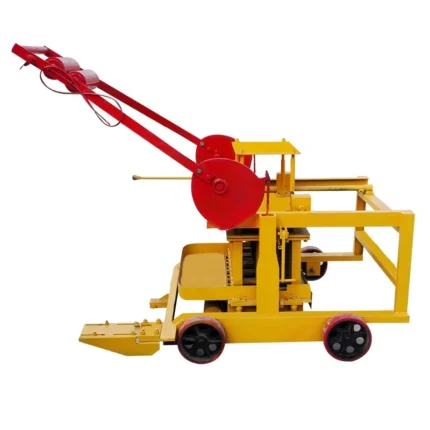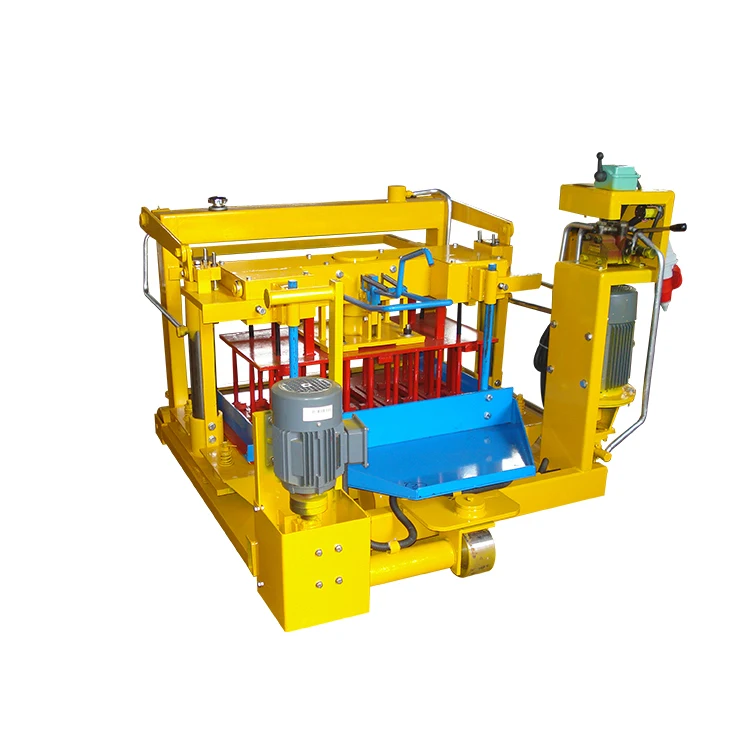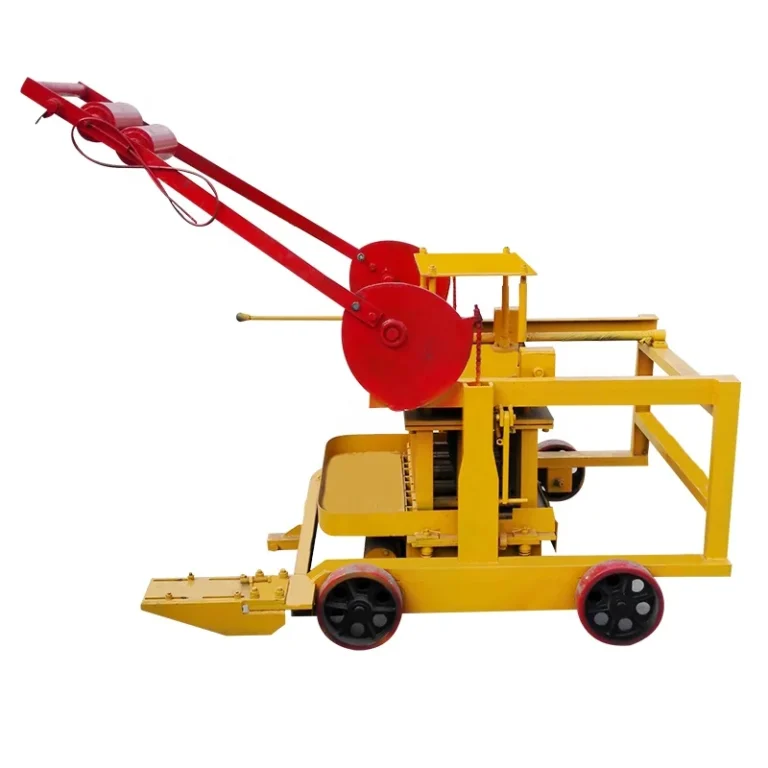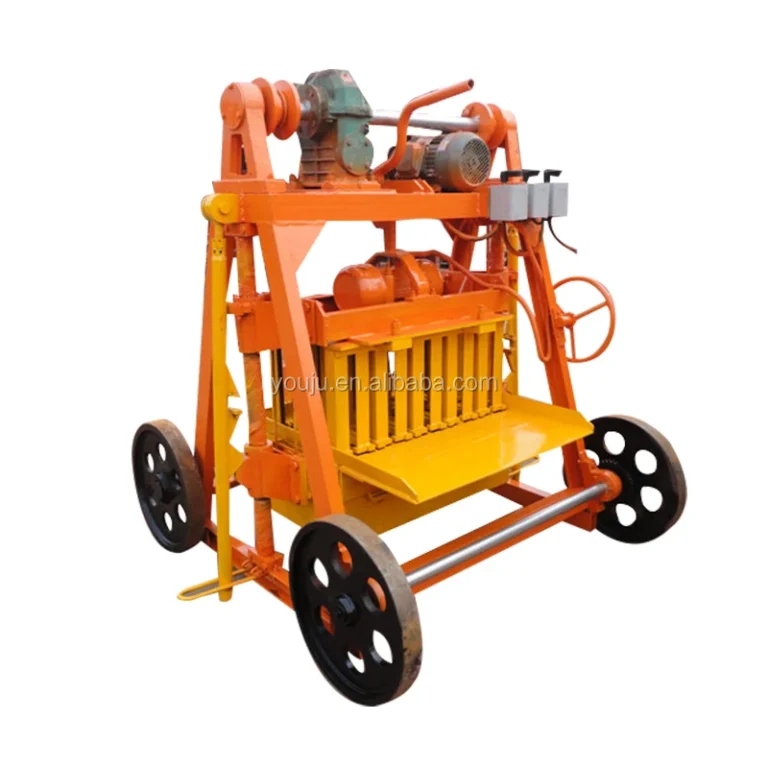
Description
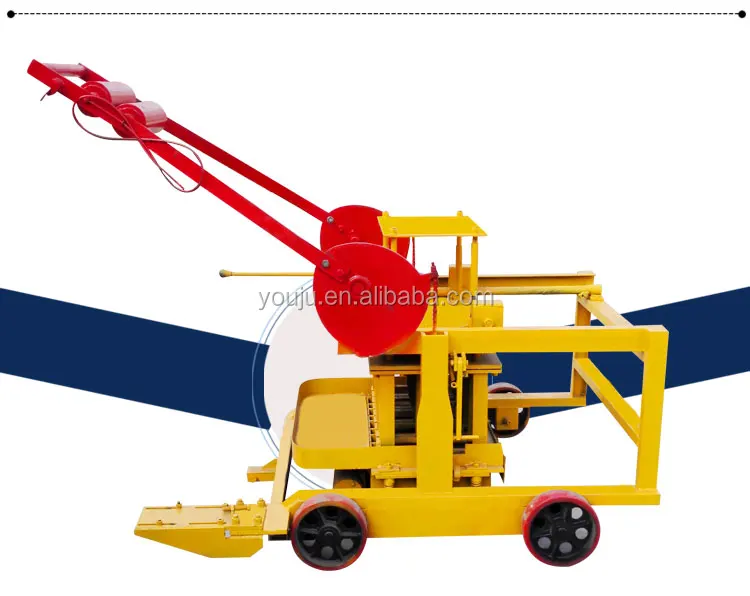
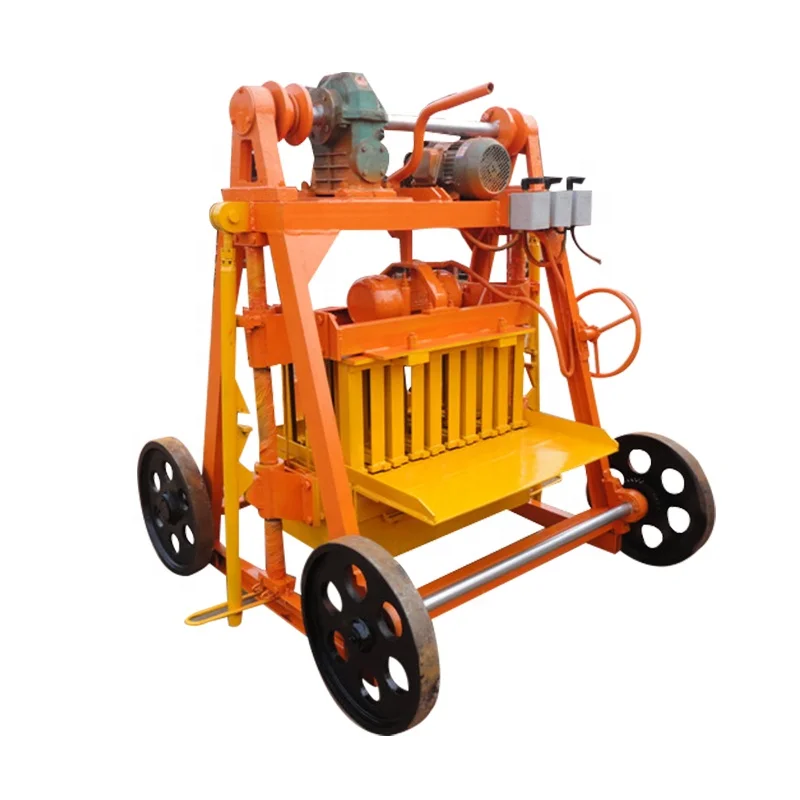
Matched System Design — machine, mould and curing layout specified as one package rather than sourced separately, so the QMJ4-45 egg laying block machine arrives ready to run your actual mix.
Technical Specifications
| Parameter | Value |
|---|---|
| Model | QMJ4-45 |
| Product Type | Egg Laying Block Making Machine |
| Molding Capacity | 4 pcs/mould (400×200×200mm hollow block) |
| Vibration Frequency | 2400 r/min |
| Vibration Method | Mould vibration |
| Molding Cycle | 40–45 s |
| Hollow Block Output (400×200×200mm) | 3000 pcs/day (8-hour shift, 4 pcs/mould, 40–45s cycle) |
| Hollow Block Output (400×150×200mm) | 3500 pcs/day (8-hour shift, 5 pcs/mould, 40–45s cycle) |
| Hollow Block Output (400×120×200mm) | 4500 pcs/day (8-hour shift, 6 pcs/mould, 40–45s cycle) |
| Demould Method | Manual |
| Turning Method | Manual |
| Total Power | 6 kW |
| Power Source | Diesel / Petrol engine |
| Automation Level | Manual (egg-laying / mobile type) |
| Pallet Requirement | Not required (blocks laid directly on ground) |
| Hydraulic Pressure | Not applicable (vibration-only forming) |
| Warranty | One year for the whole machine |
Application Suitability
| Application | Material or Output |
|---|---|
| On-site hollow block production | Crushed stone, sand, cement and water mixed locally |
| Remote construction project supply | Diesel-powered operation without grid electricity |
| Small-scale block manufacturing startup | 400×200×200mm, 400×150×200mm and 400×120×200mm hollow blocks |
| Satellite production for existing plants | Mobile deployment to secondary or rural project sites |
What "3000 Blocks per Day" Actually Means on the QMJ4-45
The quoted daily output assumes a specific block format, an eight-hour shift, and a 40–45 second cycle — change any one of those and the number changes with it.
Suppliers often quote the highest possible figure from the smallest block size, leaving buyers to discover on site that their primary market format produces considerably fewer units per shift. I have watched contractors plan an entire project timeline around a capacity number that was never valid for the block they intended to sell. The automatic egg laying block making machine must be evaluated against the format your buyers actually pay for, not the one that looks best in a brochure [NEED_CITE: block format assumptions in capacity quotations].
Control Upgrades and Consistency Gains
The QMJ4-45 ships as a fully manual egg-laying unit, but the platform supports a path toward semi-automatic operation. Adding a PLC controlled mobile block machine configuration introduces repeatable cycle timing and reduces the operator variables that cause block-to-block density differences. This matters most when a site rotates through multiple shifts or employs less experienced crews.
Vibration Force Meets Local Aggregate
Every region has different sand grading, stone dust availability and cement brands. The mould vibration system at 2400 r/min must be matched to the specific mix design the buyer can actually source. A setting that works for river sand may leave blocks under-compacted when the local material is crushed granite dust. We configure the vibration profile against the buyer’s own aggregate sample before the machine leaves the factory.
Reading the Specs That Matter
The 6 kW total power rating reflects an engine-driven system with no grid dependency, which defines where the machine can operate and how the fuel supply must be planned on site. The 40–45 second molding cycle applies across all three hollow block formats, meaning the daily output differences come entirely from the number of cavities per mould rather than a faster press stroke [NEED_CITE: cycle time consistency in vibration-only forming]. Mould vibration as the sole compaction method — with no hydraulic pressure stage — places greater importance on mix moisture control and aggregate grading to achieve target block strength.
When the Wrong Configuration Costs You Weeks
A machine set up for a mix the buyer cannot source locally forces a material substitution that changes water demand, curing time and final block weight. I once spent two weeks on a site in West Africa adjusting vibration frequency and moisture ratios because the local red soil behaved nothing like the test material used at the factory. Blocks that cracked in the sun were blamed on the equipment, when the real issue was a configuration that ignored the ground they were standing on [NEED_CITE: aggregate variation and block cracking in tropical climates].
Why Source This Machine Here
Block machinery is the single focus of this operation, so the QMJ4-45 is specified as part of a matched system — machine, mould and curing layout — rather than assembled from separate vendors. The automation level is selectable, allowing a buyer to start with fully manual egg-laying and move toward PLC-assisted control when production volume justifies the investment. Mould design covers the formats the buyer’s local market actually demands, including custom drawings when standard sizes do not match regional building codes. Installation and commissioning support includes operator training so the crew understands mix adjustment and vibration tuning from the first day.
Documentation & Verification
- Line layout showing curing area and block movement flow for your site dimensions
- Capacity calculation sheet stating the block format assumed for each output tier
- Mould drawing and format list confirming which hollow block sizes ship with the machine
- Factory test record documenting cycle time and block density achieved before dispatch
- Operation and maintenance manual covering engine service intervals and mould change steps
Installation, Commissioning & Support
- Level ground preparation with no fixed foundation required for the 6 kW engine-driven unit
- Diesel or petrol fuel supply arranged on site before the machine arrives
- Mould installed and vibration frequency verified against the buyer’s local mix during commissioning
- Operator training on mix moisture control, cycle timing and manual demould technique
- Wear parts list provided with recommended reorder intervals for vibration components and mould liners
Preparing Your Inquiry
Tell us which hollow block format your market buys most, what aggregate and cement you can source locally, and whether your site has grid electricity or needs the engine-driven configuration. Share your target daily output for that specific block size and the curing space you have available. If you plan to add automation later, mention that so the upgrade path can be built into the initial specification.
Frequently Asked Questions
Q: How is the daily output verified and which block format does it assume?
A: The stated output of 3000 to 4500 pieces per day depends entirely on the hollow block format selected. The 3000-piece figure assumes 400×200×200mm blocks at four per mould over an eight-hour shift, while 4500 assumes the smaller 400×120×200mm format at six per mould. We provide a capacity calculation sheet that names the exact format behind every number in the quotation.
Q: What automation options exist and how do they affect block consistency?
A: The QMJ4-45 ships as a manual egg-laying machine, but a PLC controlled mobile block machine upgrade is available. This introduces repeatable cycle timing, reduces operator-driven variation in vibration duration, and improves batch-to-batch density consistency. The upgrade can be specified at order or added later as production volume grows.
Q: Can the machine be configured for my local aggregate and mix design?
A: Yes. Before production, we ask for details on your locally available sand, stone dust, cement type and water quality. The vibration frequency and recommended moisture range are then adjusted to match that specific mix. This prevents the common problem where blocks crack or crumble because the machine was set for a material the buyer cannot actually source.
Q: What is involved in changing moulds between block formats on site?
A: Mould change on the QMJ4-45 is a manual process. The mould is unbolted, lifted off and replaced with the alternate format. We include the tools and step-by-step procedure so a two-person crew can complete the change without specialised equipment. Mould drawings are provided for every format included in your order.