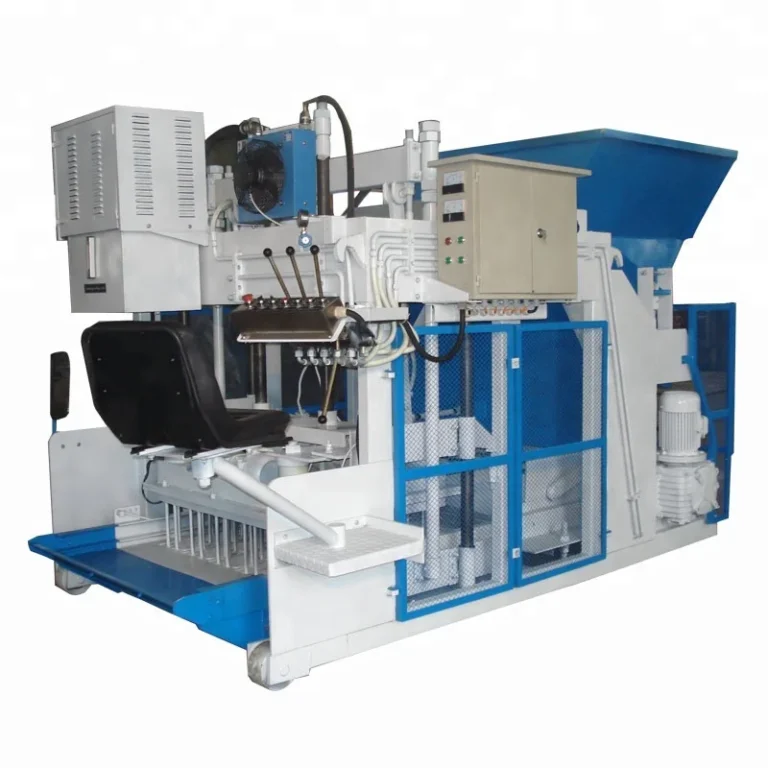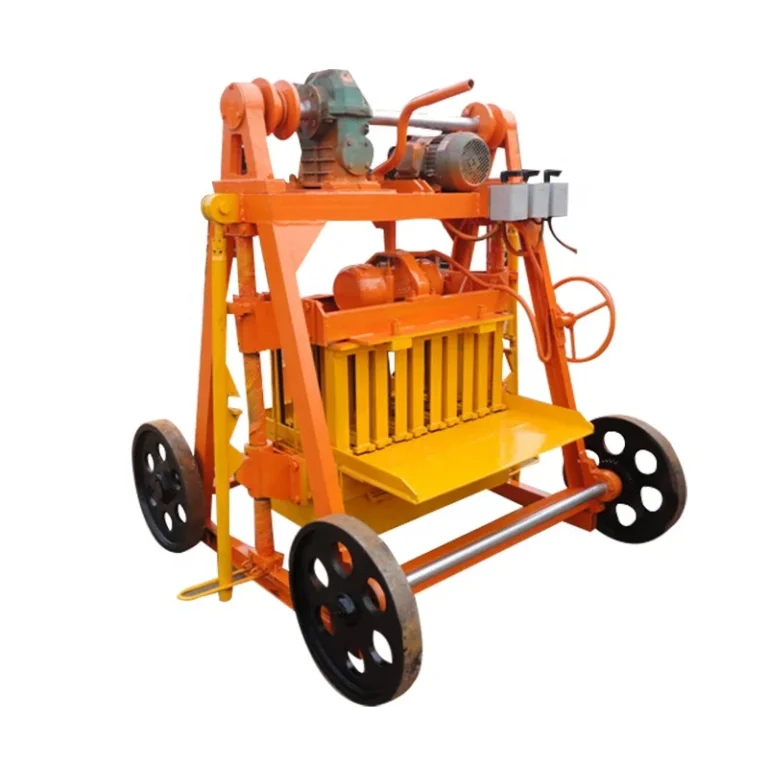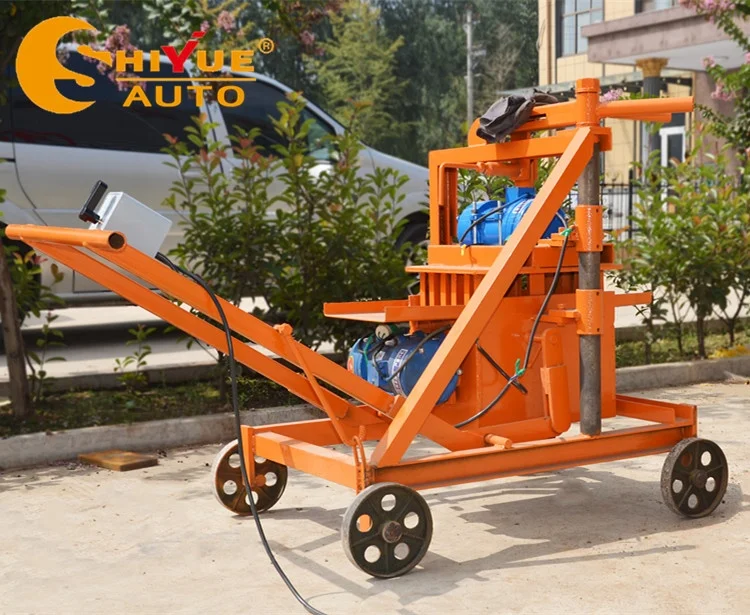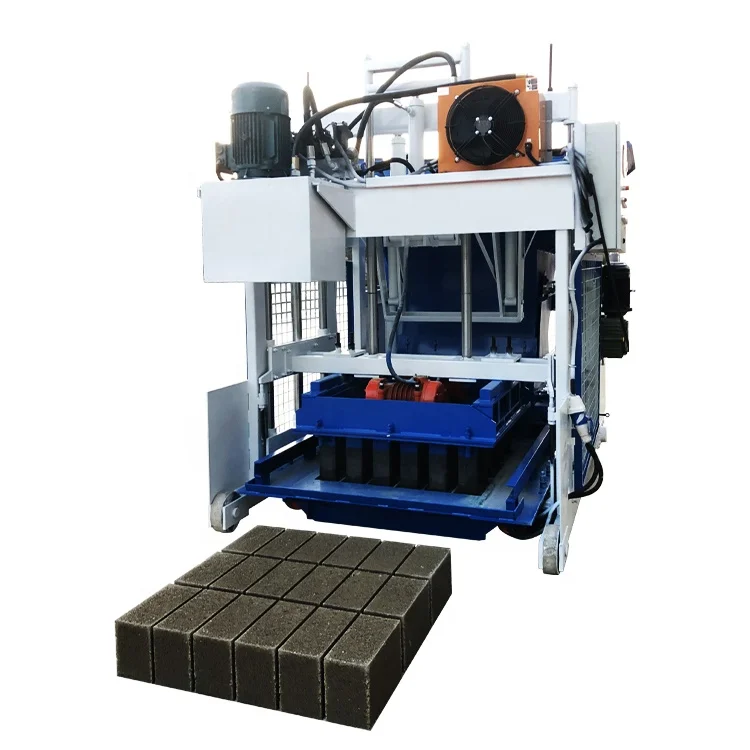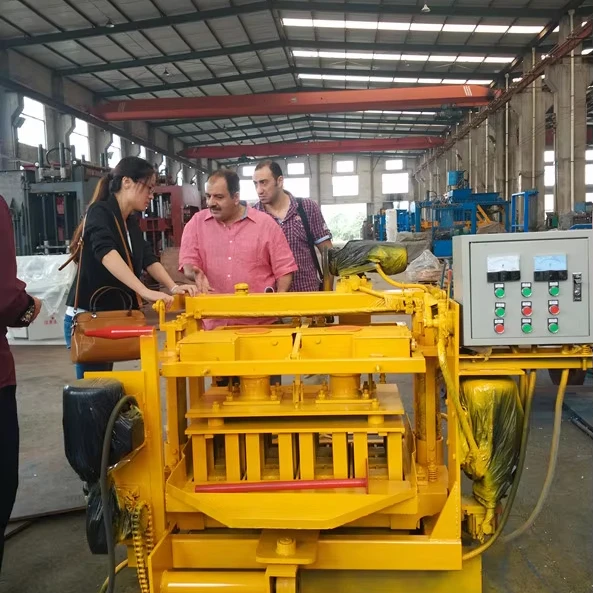


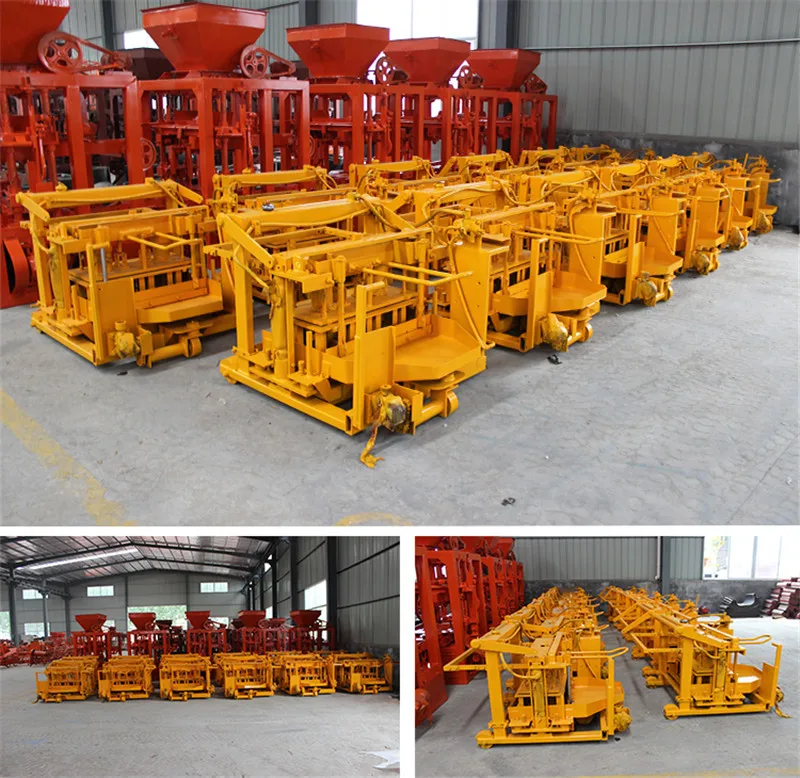
Description
Intelligent Control Focus — every QMY4-30 mobile egg-laying block machine leaving our line is checked for PLC language, voltage and frequency alignment before crating, because automation only works if the operator can read the screen.
Technical Specifications
| Parameter | Value |
|---|---|
| Model | QMY4-30 |
| Product Type | Mobile Egg-Laying Concrete Block Making Machine |
| Machine Operation | Semi-automatic |
| Molding Cycle Time | 30 seconds |
| Rated Power | 5 kW |
| Voltage & Frequency | Configurable to buyer’s site supply (basis to be confirmed) |
| Overall Dimensions | 1200 × 1200 × 1100 mm |
| Net Weight | 950 kg |
| Mould System | Changeable moulds for hollow block and solid brick formats |
| Output Capacity (400×200×200 mm hollow block) | 4 pcs/mould, 480 pcs/h, 3,840 pcs/8 h |
| Output Capacity (400×150×200 mm hollow block) | 5 pcs/mould, 600 pcs/h, 4,800 pcs/8 h |
| Output Capacity (400×100×200 mm hollow block) | 7 pcs/mould, 840 pcs/h, 6,720 pcs/8 h |
| Raw Materials | Cement, sand, crushed stones, slag |
| Pallet Requirement | Not applicable — blocks laid directly on ground |
| Stacking Method | Manual curing on ground after egg-laying |
| Warranty | 5 years |
Application Suitability
| Application | Material or Output |
|---|---|
| On-site block production for construction contractors | Hollow blocks from cement, sand and crushed stone laid directly on compacted ground |
| Start-up block yards with limited capital | Solid bricks and hollow blocks without pallet or curing rack investment |
| Remote housing and development projects | Local production using site-available aggregates, eliminating transport costs |
| Building material distributors serving temporary sites | Mobile deployment across multiple job locations with minimal setup |
What the "30-Second Cycle" Actually Means on Your Site
A 30-second cycle holds only when your mix design, aggregate gradation and operator rhythm match the machine’s vibration and feeding parameters.
Many buyers receive a mobile block machine and discover within the first week that the quoted cycle time slips when local sand is finer or coarser than the factory test mix. Vibration force and hydraulic pressure must be matched to the actual raw materials available at the job site, not a laboratory default. When the mix is wrong, the semi-automatic QMY4-30 still completes its mechanical stroke, but block density varies and curing times lengthen, erasing the throughput advantage you expected. [NEED_CITE: effect of aggregate gradation on concrete block density and cycle consistency]
How Semi-Automatic Control Removes Operator Guesswork
On a fully manual egg-laying block machine, cycle consistency depends entirely on the operator counting seconds and pulling the lever at the right moment. The QMY4-30 moves those timing decisions into the control system, holding the vibration and molding phases to a repeatable 30-second window. For a start-up yard employing local labour with limited block-making experience, this removes the largest source of batch-to-batch variation. The automatic mobile block machine concept here is not about replacing workers — it is about giving them a rhythm the machine enforces.
The Language and Voltage Check That Most Mobile Machine Orders Skip
Buyers focus on mould count and output figures, then discover on delivery day that the PLC touchscreen displays in a language the crew cannot read, or that the voltage rating does not match the site generator. The QMY4-30’s 5 kW rated power must be matched to the correct phase and frequency before the unit is wired. A control panel locked to the wrong language delays commissioning while the supplier arranges a remote firmware update, and on a project deadline that lost week cannot be recovered. [NEED_CITE: frequency and voltage standards across West African and Southeast Asian construction sites]
Reading the Numbers That Matter for Egg-Laying Production
The 30-second molding cycle drives the headline output, but actual daily production depends on the block format you run. At 400×200×200 mm, the QMY4-30 produces 3,840 hollow blocks per 8-hour shift, while switching to the narrower 400×100×200 mm format raises that figure to 6,720 pieces on the same cycle. The difference is mould cavity count, not speed. Rated power of 5 kW is modest because the egg-laying design eliminates the pallet conveyor and stacker motors that stationary lines require. The 1200 × 1200 × 1100 mm footprint lets a single operator walk the machine across a prepared ground slab, laying blocks in rows without a forklift or pallet return system.
What Happens When the Control Language Is Wrong
A mobile block machine sitting idle on a Nigerian job site because the PLC display shows Chinese or an unfamiliar European language is a scene that repeats far too often. Local workers hesitate to press buttons they cannot read, the site foreman calls the supplier across time zones, and commissioning stalls while firmware files are emailed and loaded. This is not a software inconvenience — it is a week of lost production on a contract with penalty clauses. The QMY4-30’s control interface must be confirmed to the buyer’s required language before dispatch, and that confirmation should be in writing, not assumed. [NEED_CITE: PLC interface language requirements for industrial machinery export contracts]
Why Procurement from a Control-Focused Supplier Changes the Arrival Experience
Configuration here starts with your actual mix design and target block format, not a catalogue default pulled from a different market. The mould drawing and format list are confirmed against the block sizes your local construction industry specifies, so the machine arrives producing what your customers buy. Automation level is selectable — a buyer can start with the semi-automatic QMY4-30 and plan an upgrade path as production volume justifies additional handling equipment. Every unit undergoes a factory test with the buyer’s specified voltage and control language before packing photographs are issued. Documentation includes the hydraulic and electrical schematic, operation manual and a wear parts list that lets you plan the first replacement order before it becomes urgent.
Documentation & Verification
- Factory test record run on your specified hollow block format before dispatch
- Mould drawing and format list confirming each supplied cavity dimension
- Voltage, frequency and PLC language confirmation sheet signed before crating
- Hydraulic and electrical schematic for on-site troubleshooting by your electrician
- Operation and maintenance manual with wear parts list and replacement intervals
Installation, Commissioning & Support
- Ground slab must be level and compacted to support the 950 kg machine weight during egg-laying travel
- Dedicated 5 kW circuit at confirmed voltage and frequency with correct phase wiring
- Delivered as a single assembled unit, requiring only mould mounting and electrical connection on site
- First-day commissioning includes cycle timing verification with your local aggregate and cement
- Operator training covers mould change procedure, daily lubrication points and semi-automatic control sequence
- Wear parts list supplied at delivery to support the first replacement order planning
Before You Send an Inquiry
Please specify the hollow block and solid brick formats your local market requires, along with the daily output you need to meet contract timelines. Confirm your site voltage, frequency and whether you operate a generator or grid connection. Let us know the raw materials you can source locally — cement type, sand gradation and available aggregate — so the PLC controlled egg-laying block machine configuration matches your actual conditions rather than a generic default.
Frequently Asked Questions
Q: How does my local mix design affect the 30-second cycle time?
A: The 30-second cycle is achieved with a specific aggregate gradation and cement ratio during factory testing. If your local sand is significantly finer or your crushed stone has a different moisture absorption rate, cycle time and block density may shift. We configure vibration force and timing against your actual material samples before confirming final output figures.
Q: Can the QMY4-30 be upgraded to include automatic batching later?
A: The semi-automatic configuration can be integrated with an upstream batching and mixing system as your production volume grows. The upgrade path depends on your site layout and available space for a raw material feeding station. We discuss this at the quotation stage so the electrical and control architecture allows future expansion.
Q: What control interface languages are available for the PLC?
A: The control language is configured before shipment based on your written confirmation. We have supplied units with English, Spanish, French, Arabic and Russian interfaces. This is verified during the factory test and documented in the pre-shipment confirmation sheet to prevent commissioning delays.
Q: Which block formats come with standard moulds, and can I order custom sizes?
A: Standard moulds cover common hollow block dimensions including 400×200×200 mm, 400×150×200 mm and 400×100×200 mm, plus solid brick formats. Custom moulds are manufactured to your drawings for formats specific to your local building codes. Mould change time and cavity count vary by format and are confirmed in the proposal.
Q: What operator training is provided after a mobile egg-laying machine arrives?
A: On-site commissioning includes operator training covering the semi-automatic control sequence, mould change procedure, daily maintenance checkpoints and safe operating practices. Training is conducted in a language your team understands, and the operation manual is provided in your confirmed language to support ongoing reference.