

QT12-15 Block Machine Manufacturer for Norway Import
A CE sticker is not a passport.
Importing a solid block machine to Norway requires full compliance with the EU Machinery Directive, specific cold-climate hydraulic adaptations, and verified technical documentation, rather than just competitive pricing. A Solid Block Machine Import Norway strategy must prioritize these regulatory and environmental factors to avoid costly port delays and operational failures in sub-zero temperatures.
I once stood on a freezing dock in Oslo, watching a container sit idle for weeks because the customs broker could not locate the specific EMC test reports within the technical file. The machine itself was robust, but the paperwork was treated as an afterthought. That delay cost the buyer more in storage fees than the initial shipping bill. Later, I saw another unit fail to start in Northern Scandinavia because standard hydraulic oil had turned into sludge at minus fifteen degrees. These were not manufacturing defects; they were planning oversights. When sourcing a Solid Block Machine Import Norway, the focus must shift from simple acquisition to integrated compliance and climate readiness.
The following guide breaks down the critical checkpoints for Norwegian buyers, drawing from field experiences where documentation gaps and temperature mismatches caused significant disruptions.
Why Is CE Certification Non-Negotiable for Norway?
CE marking is a legal declaration, not a marketing badge.
Many buyers assume that a CE logo on the nameplate is sufficient for customs clearance. In reality, Norwegian authorities and EU border controls require a complete Technical Construction File (TCF) that proves compliance with the Machinery Directive and Electromagnetic Compatibility (EMC) standards. [NEED_CITE: EU Machinery Directive compliance requirements for imported industrial equipment] Without this file, even a perfectly functioning machine can be held at the port indefinitely.
| Compliance Element | Basic Supplier Claim | Verified Requirement for Norway |
|---|---|---|
| Declaration of Conformity | PDF sent via email | Signed original with authorized representative details |
| Risk Assessment | Generic template | Machine-specific analysis covering all moving parts |
| EMC Test Report | Not provided | Lab-certified report for PLC and motor drives |
| Technical File | Partial drawings | Full schematic, hydraulic diagrams, and component lists |
| Noise Emission Data | Estimated value | Measured dB levels per ISO standards |
A client importing a large automated line faced a month-long delay because their supplier only provided a generic certificate. The customs officer requested the specific risk assessment for the palletizer section, which was missing. Once the correct documents were air-freighted, clearance took only days. This highlights that when evaluating a Solid Block Machine Import Norway, the completeness of the documentation package is as critical as the hardware itself.
How Does Cold Climate Affect Block Machine Performance?
Standard hydraulic systems fail below freezing without adaptation.
Norway’s winter conditions demand more than just a heated warehouse. The hydraulic system is the heart of any block machine, and standard mineral oils thicken significantly in cold weather, leading to pump cavitation and slow cycle times. [NEED_CITE: Hydraulic fluid viscosity behavior at low temperatures] I recall a project in Northern Scandinavia where the operator reported severe startup delays every morning. The issue was not the machine’s design but the use of standard ISO 46 hydraulic oil. Switching to a synthetic low-viscosity fluid and installing tank heaters resolved the issue entirely.
When selecting a Solid Block Machine Import Norway, buyers must specify cold-climate specifications. This includes requesting synthetic hydraulic oils with a high viscosity index, electrical cabinet heaters to prevent condensation on PLC boards, and steel grades with verified toughness at low temperatures. Standard configurations often overlook these details, assuming the machine will operate in a temperate environment.
| Component | Standard Configuration | Cold-Climate Adaptation |
|---|---|---|
| Hydraulic Oil | Mineral ISO 46/68 | Synthetic low-viscosity grade |
| Electrical Cabinet | Passive ventilation | Active heating and dehumidification |
| Steel Structure | Standard carbon steel | Low-temperature toughened steel |
| Seals and Hoses | Standard rubber | Cold-resistant elastomers |
| Startup Procedure | Manual warm-up | Automated pre-heating cycle |
These adaptations are not optional extras for Nordic operations; they are essential for maintaining production continuity. A Solid Block Machine Import Norway plan must include these specs in the initial purchase order to avoid retrofits later.
What Are the Key Logistics Challenges for Heavy Machinery?
Improper packing leads to damage and higher handling costs.
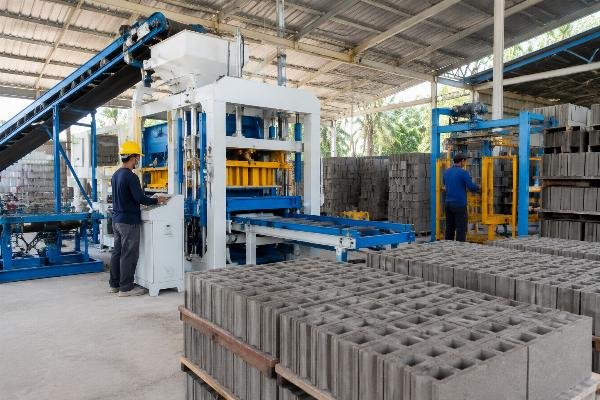
Shipping a QT12-15 or similar large automatic block machine to Norway involves complex logistics. These machines are too large for standard containers in one piece and require careful disassembly. [NEED_CITE: Best practices for shipping heavy industrial machinery via Ro-Ro and Breakbulk] I have seen cases where poorly secured components shifted during transit, causing misalignment in the vibration table frame. This required extensive on-site recalibration, delaying the start of production.
Proper disassembly plans are crucial. The main frame, mold box, and hydraulic station should be packed separately with clear labeling. Using breakbulk or Ro-Ro shipping can reduce the risk of damage compared to multiple container loads, but it requires precise weight distribution calculations. Buyers should request a detailed packing list and loading plan from the manufacturer before shipment.
For a Solid Block Machine Import Norway, logistics planning should begin before the machine is built. Confirming the port capabilities in Oslo or other entry points ensures that the chosen shipping method aligns with local handling equipment. This proactive approach minimizes the risk of unexpected fees and delays.
Which Technical Specs Ensure Long-Term Reliability?
Component quality dictates maintenance frequency and lifespan.
Beyond climate and compliance, the internal components of the machine determine its long-term reliability. PLC brands, motor efficiency, and steel thickness are key indicators of quality. [NEED_CITE: Industrial PLC reliability standards for continuous operation] A machine with a reputable PLC system and high-efficiency motors will offer better stability and lower energy costs over time.
I once inspected a machine where the PLC control panel failed due to frequency variance. The local power grid had slight fluctuations, and the variable frequency drive (VFD) was not configured for stable 50Hz operation. Customizing the VFD settings and adding a voltage stabilizer solved the problem. This experience underscores the importance of verifying electrical compatibility with local grid conditions.
| Technical Spec | Impact on Reliability | Recommendation |
|---|---|---|
| PLC Brand | Control stability and diagnostic ease | Choose established global brands |
| Motor Efficiency | Energy consumption and heat generation | IE3 or higher efficiency rating |
| Steel Thickness | Structural integrity under vibration | Verify thickness of main frame and mold box |
| VFD Configuration | Power stability and motor protection | Customize for local grid frequency and voltage |
| Hydraulic Pump Type | Pressure consistency and noise level | Opt for piston pumps for high-pressure stability |
When sourcing a Solid Block Machine Import Norway, buyers should request detailed spec sheets for these components. Verifying these details ensures that the machine can handle the rigorous demands of continuous production in a Nordic environment.
Conclusion
Compliance and climate readiness are the foundations of successful import.
Importing block machinery to Norway is not just about finding a low price; it is about ensuring legal entry and operational resilience. By prioritizing CE documentation, cold-climate hydraulic adaptations, and robust technical specs, buyers can avoid common pitfalls. A well-planned Solid Block Machine Import Norway strategy turns potential risks into reliable production assets.
Leave a Reply