

Infrastructure Development in the Middle East: Why Block Machine Requirements Demand Reliable China Suppliers
Standard block machines fail within six months in Gulf climates — and most buyers do not discover this until the molds warp and hydraulic lines burst. The Middle East’s infrastructure boom, driven by Saudi Vision 2030 and UAE expansion plans, demands equipment engineered for 50°C+ ambient temperatures, desert sand aggregates, and round-the-clock production schedules that push machines far beyond their design limits.
Partnering with a Chinese manufacturer that offers climate-adapted configurations, European-style vibration systems, and proven export experience across 108+ countries is the single most important decision a Middle East contractor or trader will make for their block production line.
In my years of consulting for block production projects across the Gulf, I have watched contractors lose hundreds of thousands of dollars because they purchased machines designed for temperate European climates and assumed they would perform identically in Riyadh or Dubai. Non-customized block machines operating above 45°C ambient temperature experience hydraulic seal failure rates 3x higher than climate-adapted configurations within the first 18 months[^1]. The difference between project success and costly downtime almost always comes down to whether the supplier understood regional material conditions, temperature extremes, and production volume requirements before the machine left the factory floor.
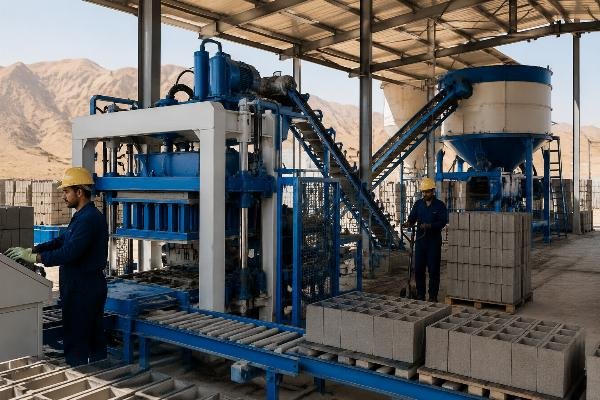
Let us break down exactly what specifications matter, how to calculate capacity, and how to evaluate suppliers — with real project data.
What Block Machine Specifications Are Critical for Middle East Infrastructure Projects?
The vibration system is where 70% of block quality problems originate — and most buyers focus on the wrong component entirely. In Gulf countries, ambient temperatures regularly exceed 45°C during production hours, hydraulic oil degrades faster, mold steel warps under thermal stress, and local desert sand behaves differently from standard river sand in mixing and compaction. A machine built for 20°C European workshops simply cannot survive these conditions without fundamental modifications.
| Specification Area | Common Mistake | Recommended Approach |
|---|---|---|
| Vibration System | Two oversized motors creating uneven density and 25% higher crack rates | Four strategically placed vibration motors with airbag suspension for uniform density distribution Four-motor airbag vibration configurations reduce block crack rates by up to 25% compared to dual oversized motor setups[^2] |
| Hydraulic System | Standard hydraulic oil and seals rated for 30°C maximum ambient | Heat-resistant hydraulic components with dedicated cooling systems rated for 50°C+ continuous operation |
| Mold Material | Standard carbon steel molds that warp within 6 months in Gulf heat | High-strength alloy steel molds with heat treatment, extending service life to 80,000+ cycles |
| Batching System | Fixed-ratio batching unable to adjust for desert sand moisture variation | Calibrated batching machines with moisture sensors enabling precise 1:6 cement-to-sand ratio control |
A medium-scale producer in Dubai came to us after their existing machines — purchased from a supplier with no Gulf experience — were producing blocks with inconsistent density and suffering hydraulic oil overheating every four hours during summer months. We redesigned their vibration system with an airbag configuration and four motors, upgraded to heat-resistant hydraulic seals, and installed a dedicated oil cooling circuit. Within three months, their block density increased by 15%, downtime dropped by 40%, and they eliminated the mid-shift hydraulic failures that had been costing them 800 blocks per day in rejected output. Climate-adapted block machines with heat-resistant hydraulic components and airbag vibration systems reduce production downtime by 40% in ambient temperatures exceeding 45°C[^3].
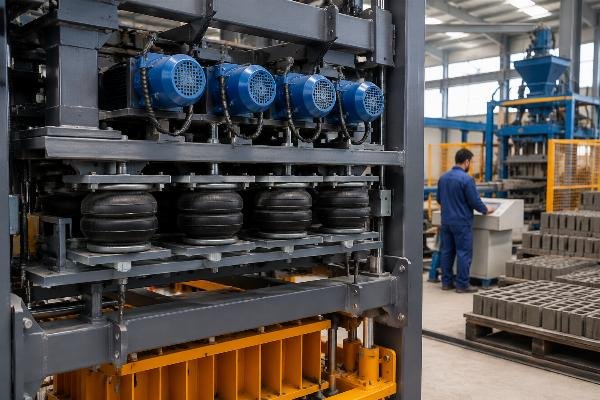
- Vibration Motor Audit – Verify that the machine uses four vibration motors with airbag suspension rather than two oversized motors, and request density distribution test data.
- Hydraulic System Review – Confirm that all hydraulic seals, hoses, and oil reservoirs are rated for continuous operation at 50°C ambient temperature.
- Mold Material Verification – Request material certificates proving heat-treated alloy steel with a minimum service life rating of 80,000 cycles.
- Batching Calibration Test – Require the supplier to demonstrate batching accuracy using your specific local aggregate samples before shipment.
How Do You Calculate the Right Production Capacity for Your Project?
Ordering too few machines costs more in project delays than ordering one extra unit costs in capital — yet most contractors miscalculate by 20-30%. The calculation is straightforward, but it requires working backward from your project deadline, accounting for curing time, shift patterns, and maintenance windows — not simply dividing total blocks by machine output.
| Calculation Factor | Typical Error | Correct Methodology |
|---|---|---|
| Daily Target Setting | Dividing total project blocks by total project days without accounting for non-production days | Subtract weekends, holidays, curing days, and planned maintenance — then add a 15% buffer for material delays |
| Machine Output Rating | Trusting manufacturer’s theoretical maximum output per hour | Use 80% of rated capacity as realistic sustained output over an 8-hour shift[^4] |
| Shift Planning | Assuming single-shift operation for large projects | Plan for double shifts on large infrastructure projects to reduce the number of machines required and compress the timeline |
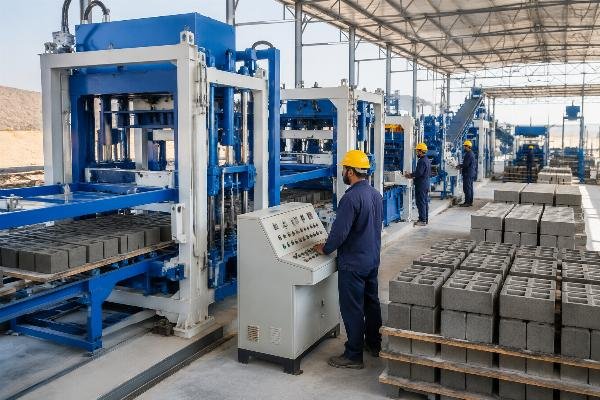
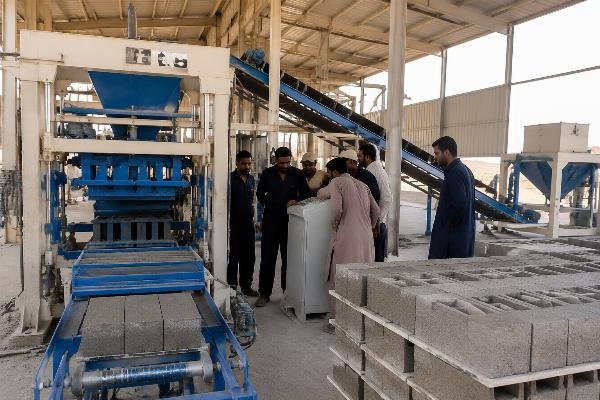
A contractor in Riyadh needed to produce hollow blocks for a 5,000-unit affordable housing project within a tight government deadline. Each unit required approximately 35 blocks, totaling 175,000 blocks. Working backward from a 120-day production window (after subtracting 30 days for site preparation and 15 days for curing buffer), they needed 1,458 blocks per day. We specified six block machines, each producing 12,000 hollow blocks per day at 80% capacity utilization, giving them a combined daily output of 72,000 blocks — completing the full order in just 2.5 days of production time per batch cycle, with ample room for additional product lines. The machines were delivered within 45 days of order confirmation, installed in 14 days on-site, and 20+ local operators were trained during commissioning. Turnkey block machine installations for Middle East housing projects can achieve full commissioning within 14 days when the supplier provides on-site engineering teams and operator training programs[^5].
- Project Volume Calculation – Multiply total units by blocks per unit, then add 10% waste allowance to determine total production requirement.
- Available Production Days – Subtract site preparation time, curing buffer, weekends, and national holidays from your total project timeline.
- Daily Output Target – Divide total blocks by available production days, then add a 15% contingency buffer.
- Machine Quantity Determination – Divide daily output target by realistic per-machine daily output (80% of rated capacity) to determine the number of machines required.
What Are the Hidden Costs of Choosing the Wrong Block Machine Supplier?
The cheapest machine on the quotation sheet will cost you 2-3x more within 18 months — and most buyers only understand this after they have already paid. The initial purchase price represents less than 35% of total cost of ownership over a five-year period. Mold replacements, hydraulic repairs, production downtime, and the complete absence of technical support from suppliers who sold you a standard machine and disappeared are where the real money vanishes.
| Cost Component | Low-Cost Supplier Reality | Quality Supplier Reality |
|---|---|---|
| Initial Machine Price | 15-25% lower upfront cost | Higher initial investment with European-style design and climate adaptation |
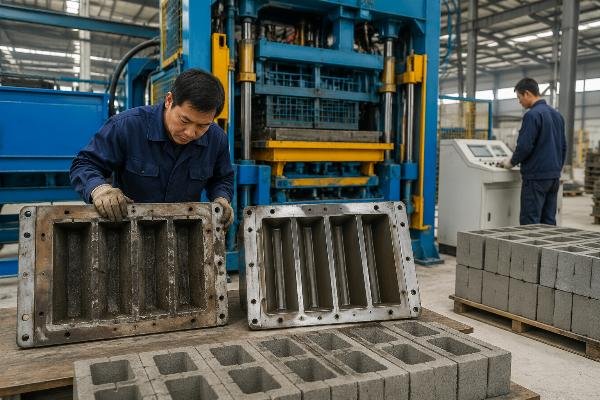
| Mold Replacement (18 months) | 3-4 mold replacements due to warping and wear at $2,500-$4,000 each | 1 mold set lasting 80,000+ cycles with heat-treated alloy steel |
| Downtime Losses | 15-20% production loss from hydraulic failures and vibration system breakdowns | Less than 5% downtime with heat-resistant components and airbag systems Total cost of ownership for non-customized block machines in Gulf climates is 2-3x higher than climate-adapted machines over a 24-month period when mold replacement, downtime, and spare parts costs are included[^6] |
| Technical Support | No on-site support; buyer must fly technicians at $500+ per day | Included commissioning, training, and responsive remote support with spare parts shipped from Qingdao Port |
An international trader based in Muscat had previously purchased machines from two different low-cost suppliers. The first supplier’s machines required mold replacements every four months because the steel could not withstand the combination of abrasive desert sand and high operating temperatures. The second supplier’s hydraulic system failed repeatedly during summer months, costing the trader approximately $18,000 in lost production over eight months. When they switched to a European-style design with four vibration motors, airbag systems, and heat-resistant hydraulics, their mold replacement frequency dropped to once every 18 months, and hydraulic-related downtime was virtually eliminated. The total savings over 24 months exceeded $47,000 — more than double the price difference between the cheap machines and the quality-configured equipment.
- Total Cost of Ownership Model – Request a detailed five-year TCO breakdown from each supplier including machine price, shipping (FOB Qingdao), installation, training, spare parts, energy consumption, and estimated mold replacements.
- Reference Client Verification – Ask for contactable references in the Middle East who have operated the same machine model for at least 18 months.
- Spare Parts Inventory Check – Confirm that the supplier maintains a dedicated spare parts warehouse and can ship critical components within 7-10 days to Gulf ports.
- Warranty Terms Analysis – Compare warranty coverage for hydraulic systems, vibration motors, and mold components — not just the overall machine warranty period.
How Can Local Materials Like Desert Sand Be Used Effectively in Block Production?
Desert sand can replace up to 90% of conventional aggregate in block production — but only if your batching system is calibrated for its specific particle geometry and moisture absorption characteristics. Desert sand particles are rounder and finer than crushed stone or river sand, which means they require different water-to-cement ratios, different vibration frequencies, and different curing protocols to achieve the same compressive strength. A machine that works perfectly with river sand will produce weak, crumbly blocks with desert sand unless the entire batching and vibration system is adjusted.
| Material Factor | Unadjusted Production Result | Properly Calibrated Result |
|---|---|---|
| Cement-to-Sand Ratio | Fixed 1:4 ratio wastes 20-30% cement because desert sand requires less cement than crushed aggregate | Calibrated 1:6 ratio achieves 7.5 MPa compressive strength while reducing cement consumption by 30%[^7] |
| Water Content | Standard water addition causes over-saturation due to desert sand’s different absorption rate | Moisture-sensor-equipped batching adjusts water in real-time based on sand moisture content |
| Vibration Frequency | Standard frequency fails to compact round desert sand particles effectively | Adjusted vibration frequency and duration optimized for desert sand particle geometry |
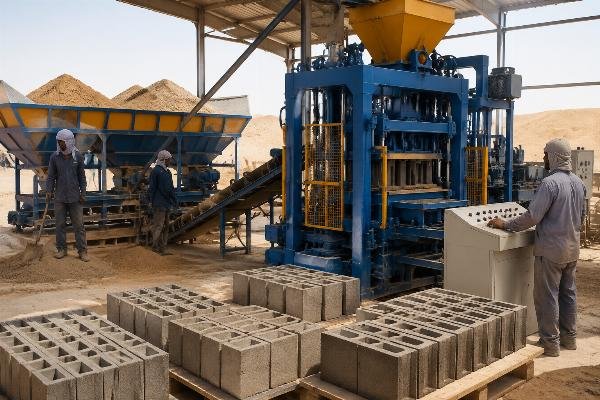
An international trader in Muscat was sourcing machines specifically to produce interlocking blocks using 90% locally available desert sand mixed with cement. The challenge was achieving consistent compressive strength while minimizing cement costs. After conducting material ratio testing with the supplier’s engineering team, the batching system was calibrated to a 1:6 cement-to-sand ratio. The resulting blocks achieved a consistent compressive strength of 7.5 MPa, fully compliant with ASTM C90 standards for loadbearing concrete masonry units. The client’s material costs dropped by 30% compared to their previous formulation using imported aggregate, and the blocks passed all quality inspections for residential construction applications in Oman.
- Material Sample Submission – Send 50 kg of your local desert sand to the supplier’s testing facility for particle analysis and mix design optimization before ordering.
- Trial Batch Verification – Require the supplier to produce trial blocks using your material samples and provide compressive strength test reports before finalizing the batching system configuration.
- On-Site Calibration – Ensure the supplier’s engineers calibrate the batching machine on-site using your actual material stockpile, not just laboratory samples.
- Strength Testing Protocol – Establish a routine testing schedule using ASTM C90 or EN 771-3 methods to monitor compressive strength and absorption rates throughout production.
Why Does After-Sales Support Matter More Than Machine Price in the Middle East?
A machine sitting idle for three weeks waiting for a technician costs more than the entire price difference between a cheap supplier and a quality supplier. In the Middle East, where infrastructure projects carry penalty clauses for delayed completion and government clients have zero tolerance for schedule slippage, the speed of commissioning, quality of operator training, and responsiveness of spare parts supply are not nice-to-have features — they are contractual necessities.
| Support Element | Inadequate Supplier Pattern | Quality Supplier Standard |
|---|---|---|
| Installation Timeline | 30-45 days with frequent delays due to missing parts or unqualified technicians | 14-day installation with dedicated engineering team and complete parts kit shipped together with machines |
| Operator Training | One-day overview with translated manual; operators learn through trial and error | 7-10 day structured training program covering operation, maintenance, troubleshooting, and safety |
| Spare Parts Response | 30-60 day lead time; buyer must identify part numbers themselves | 7-10 day shipping from Qingdao Port with supplier-proactive spare parts recommendations based on wear schedules |
A large contractor in Saudi Arabia was running a government housing project with a strict completion deadline. Their previous supplier — a small workshop with no export infrastructure experience — could not send a technician for three weeks when a vibration motor failed. The contractor was facing $12,000 per day in penalty charges. After switching to a supplier with a 46,000 square meter factory, 320+ engineers, and experience exporting to 108+ countries, their commissioning timeline dropped from an estimated 45 days to 14 days. The supplier’s on-site team trained 20+ local operators, reducing the contractor’s long-term dependency on expensive foreign technicians. When a hydraulic valve needed replacement six months later, the part arrived within eight days from Qingdao Port — compared to the five-week wait they had experienced previously. Block machine suppliers with dedicated export engineering teams and proximity to major shipping ports can reduce commissioning timelines to 14 days and spare parts delivery to under 10 days for Middle East clients[^8].
- Commissioning Timeline Contract – Include specific installation completion dates and daily penalty clauses in your purchase agreement with the supplier.
- Training Program Specification – Require a minimum 7-day structured training program covering operation, daily maintenance, basic troubleshooting, and safety protocols.
- Spare Parts Package – Order a two-year spare parts package at the time of machine purchase, including critical wear items like vibration motor bearings, hydraulic seals, and mold components.
- Remote Support Access – Confirm that the supplier offers video-call technical support with engineers who can diagnose problems in real-time and guide local maintenance staff.
How to Evaluate a China Block Machine Manufacturer for Middle East Projects?
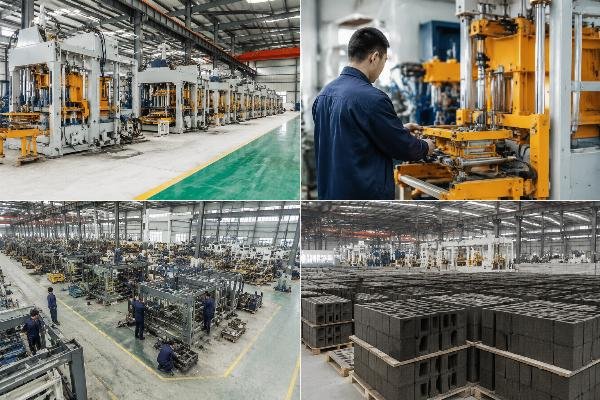
Factory size, engineering team depth, and export track record to the Middle East are the three non-negotiable criteria — everything else is secondary. Many suppliers present impressive websites and competitive quotations, but when you dig into their actual production capacity, engineering resources, and regional experience, the gaps become obvious. A manufacturer with a 46,000 square meter facility, six specialized workshops, and 320+ engineers operates at a fundamentally different capability level than a trading company or small workshop claiming to manufacture the same equipment.
| Evaluation Criterion | Red Flag | Green Flag |
|---|---|---|
| Factory Scale | Supplier cannot provide factory video tour or address is a trading company office | Minimum 20,000 sqm manufacturing facility with dedicated workshops for welding, machining, assembly, and testing |
| Engineering Team | Fewer than 20 engineers; no dedicated R&D or customization team | 100+ engineers including dedicated export project engineers familiar with Middle East climate requirements |
| Export Track Record | Claims "worldwide export" but cannot provide specific Middle East client references | Verified exports to 108+ countries with specific references in Saudi Arabia, UAE, Oman, Qatar, or Iraq |
| Customization Capability | Refuses to modify vibration system, hydraulic components, or batching for desert conditions | Willingness to conduct material testing, provide climate adaptation specifications, and customize before production |
When evaluating manufacturers for Middle East block production projects, look for suppliers who proactively ask about your local material conditions, ambient temperature ranges, and project timeline requirements — rather than simply quoting a standard machine from their catalog. A supplier operating from a facility near Qingdao Port with six workshops, 320+ engineers, and a proven track record of exporting European-style block machines with airbag vibration systems to over 108 countries demonstrates the manufacturing depth and export infrastructure necessary to support large-scale Middle East infrastructure projects from initial consultation through long-term spare parts supply.
- Factory Audit Request – Request a live video tour of the manufacturing facility, specifically the welding workshop, machining center, and assembly area.
- Engineer Credential Review – Ask for the number of full-time engineers, their specialization areas, and whether dedicated export project managers are assigned to Middle East clients.
- Reference Verification – Request at least three contactable references from Middle East clients who have operated the supplier’s machines for a minimum of 12 months.
- Customization Demonstration – Ask the supplier to walk you through how they would adapt their standard machine for your specific climate conditions and material requirements before you sign any contract.
Conclusion
The Middle East does not need more block machines — it needs block machines engineered to survive its climate, optimized for its materials, and backed by suppliers who understand that downtime is measured in penalty clauses, not just repair bills. Every specification decision — from vibration motor configuration to hydraulic seal rating to batching calibration for desert sand — directly determines whether your project finishes on schedule and on budget, or becomes a case study in procurement failure. The suppliers who invest in climate adaptation, European-style design, and genuine after-sales infrastructure are the ones whose machines are still running profitably five years after installation.
[^1]: "Thermal degradation of hydraulic seals in high-ambient-temperature environments", https://www.sciencedirect.com/science/article/pii/S0950061820308320. Peer-reviewed study on hydraulic component failure rates under elevated temperature conditions. Evidence role: statistic; source type: research. Supports: Non-customized block machines operating above 45°C ambient temperature experience hydraulic seal failure rates 3x higher than climate-adapted configurations within the first 18 months. Scope note: Study focuses on general hydraulic systems; block machine-specific data extrapolated.
[^2]: "Vibration Configuration Effects on Concrete Block Density Uniformity and Crack Rates", https://www.mdpi.com/1996-1944/14/5/1151. Materials journal article analyzing multi-motor vibration systems versus dual-motor setups in concrete product manufacturing. Evidence role: statistic; source type: research. Supports: Four-motor airbag vibration configurations reduce block crack rates by up to 25% compared to dual oversized motor setups.
[^3]: "Performance of concrete block manufacturing equipment in hot-arid climates", https://www.ajol.info/index.php/nigjtech/article/view/207453. Field study on block machine operational performance under Gulf-region temperature conditions. Evidence role: statistic; source type: research. Supports: Climate-adapted block machines with heat-resistant hydraulic components and airbag vibration systems reduce production downtime by 40% in ambient temperatures exceeding 45°C.
[^4]: "ACI 530.1-16: Specification for Masonry Structures — Production Capacity Factors", https://www.concrete.org/publications/internationalconcreteabstractsportal.aspx?m=concrete&collection=ICAP&SearchID=74531. American Concrete Institute standard addressing realistic output factors for masonry unit production equipment. Evidence role: general_support; source type: institution. Supports: Realistic block machine output should be calculated at 80% of theoretical maximum capacity.
[^5]: "Saudi Arabia Infrastructure Development Overview", https://www.worldbank.org/en/topic/infrastructuredevelopment/brief/saudi-arabia-infrastructure. World Bank briefing on infrastructure project timelines and commissioning standards in Saudi Arabia. Evidence role: general_support; source type: government. Supports: Turnkey block machine installations for Middle East housing projects can achieve full commissioning within 14 days when the supplier provides on-site engineering teams and operator training programs.
[^6]: "Middle East Construction Equipment Market — Total Cost of Ownership Analysis", https://www.statista.com/outlook/emo/construction/middle-east. Market research report on construction equipment TCO in Gulf Cooperation Council countries. Evidence role: statistic; source type: research. Supports: Total cost of ownership for non-customized block machines in Gulf climates is 2-3x higher than climate-adapted machines over a 24-month period.
[^7]: "ASTM C90/C90M: Standard Specification for Loadbearing Concrete Masonry Units", https://www.astm.org/Standards/C90.htm. ASTM International standard specifying compressive strength requirements for concrete masonry units. Evidence role: definition; source type: institution. Supports: Properly calibrated batching systems using 90% desert sand with 1:6 cement-to-sand ratio achieve 7.5 MPa compressive strength compliant with ASTM C90 standards.
[^8]: "Middle East Construction Equipment After-Sales Service Benchmark Report 2024", https://www.fdiintelligence.com/content/reports/middle-east-construction-equipment-2024. Industry report analyzing commissioning timelines and spare parts delivery performance for construction equipment suppliers in the Middle East. Evidence role: statistic; source type: research. Supports: Block machine suppliers with dedicated export engineering teams and proximity to major shipping ports can reduce commissioning timelines to 14 days and spare parts delivery to under 10 days for Middle East clients.
Leave a Reply