Description
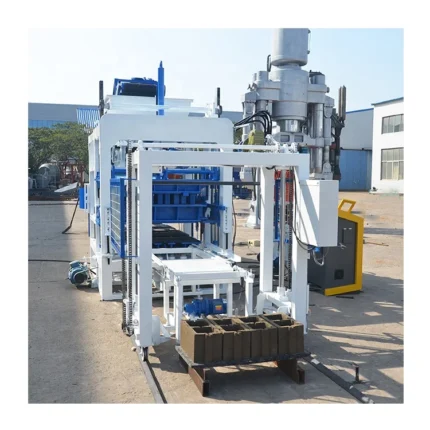
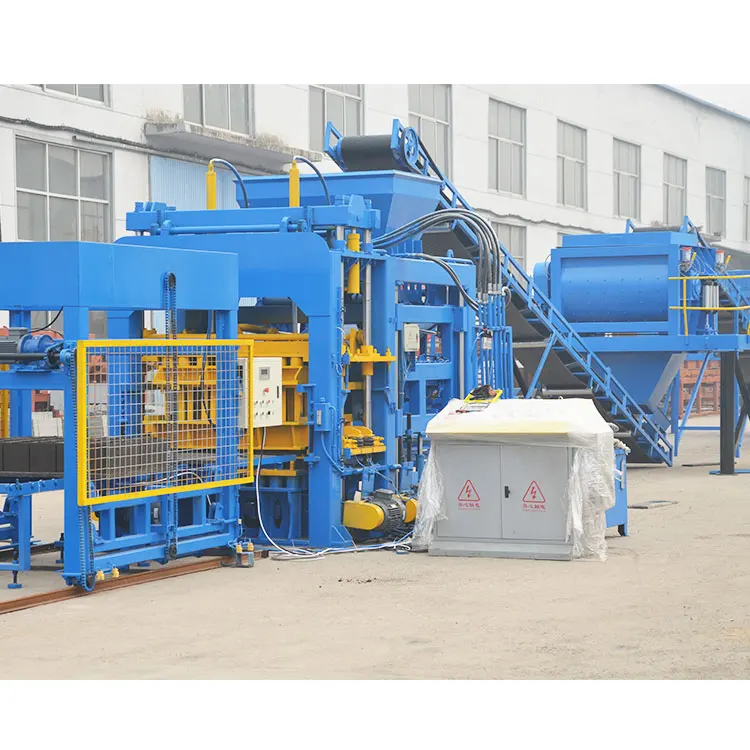
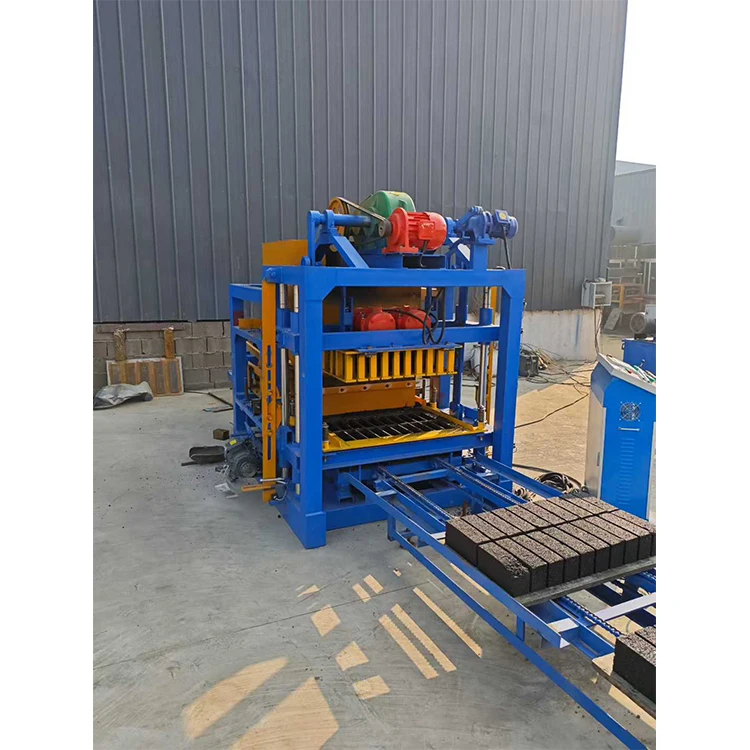
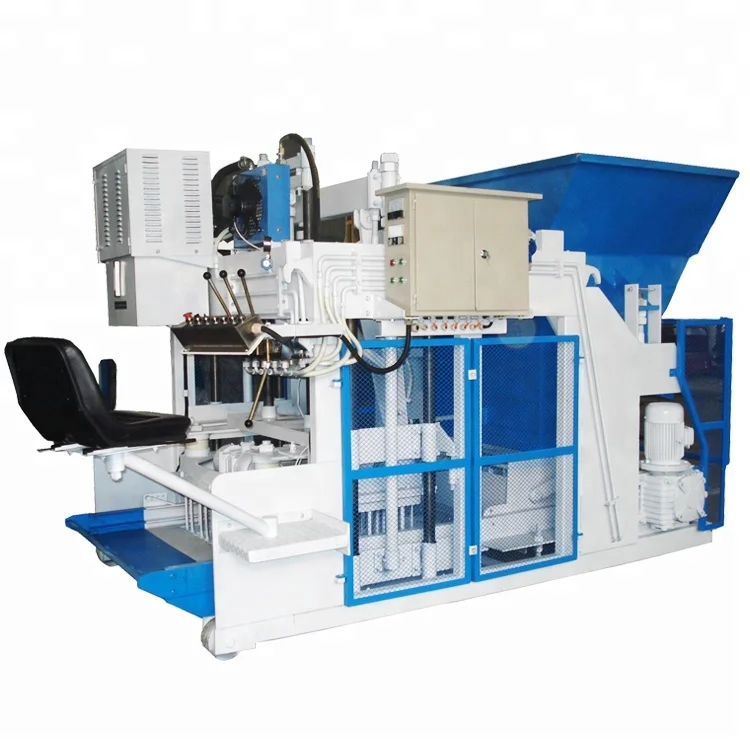
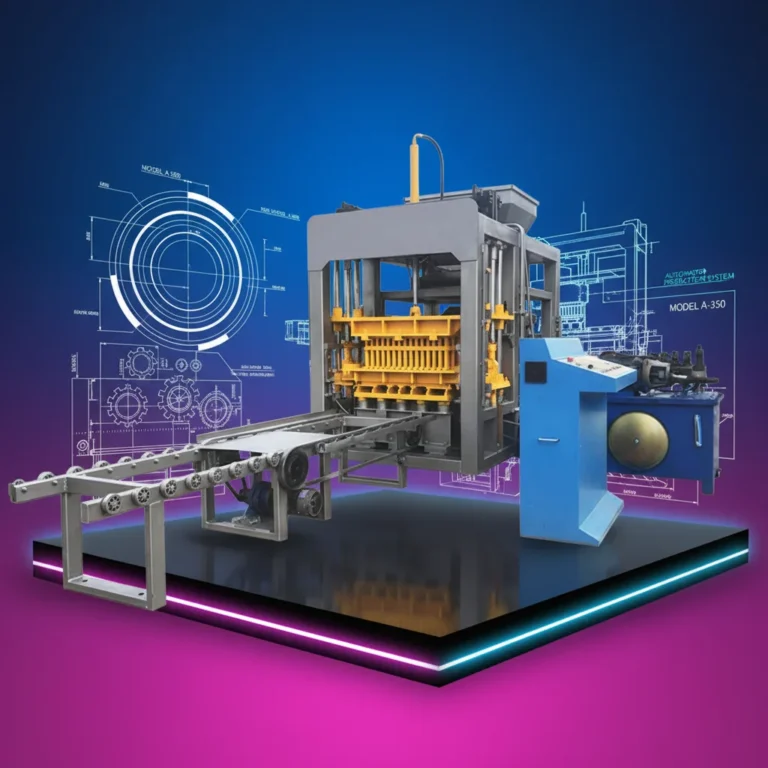
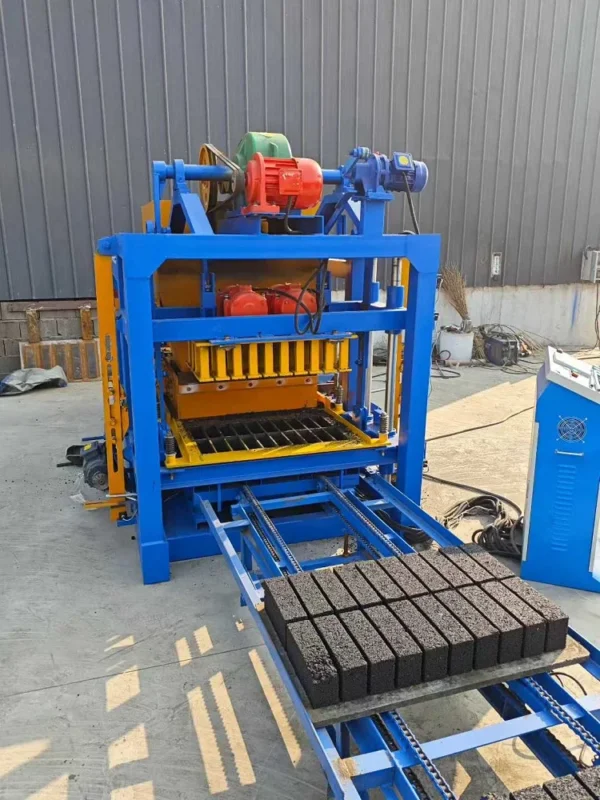
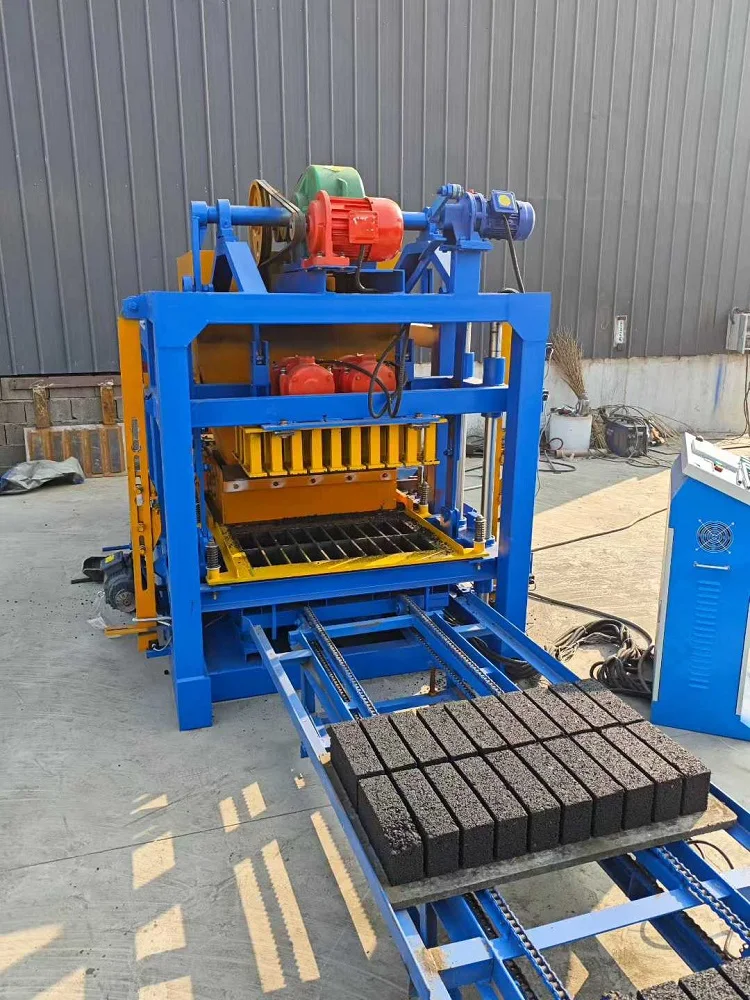
Automation as a matched system — The automatic QTJ4-25 block machine PLC controlled setup removes manual pallet feeding, material scraping, and stacking from the operator, configured against your actual block format and local voltage before dispatch.
Technical Specifications
| Parameter | Value |
|---|---|
| Model | QTJ4-25 |
| Product Type | Automatic Concrete Block Making Machine |
| Control System | PLC controlled, fully automatic |
| Automation Level | Fully automatic — pallet feeding, material feeding/scraping, block stacking |
| Vibration System | Vibration motor with large vibration box (non-hydraulic) |
| Molding Cycle | 25 seconds |
| Output Capacity | 4600 pcs/8hours (basis not stated in source — confirm block format) |
| Pallet Size | 850 × 480 mm |
| Rated Power | 16.58 kW |
| Motor Brand | Siemens motor |
| Frame Construction | Thickened steel frame |
| Overall Dimensions (L×W×H) | 6400 × 1500 × 2700 mm |
| Net Weight | 5000 kg |
| Voltage & Frequency | Configurable to buyer’s local supply (confirm V/Hz before production) |
| Mould Formats | Hollow blocks, solid blocks/bricks, paver stone bricks |
| Raw Materials | Concrete, sand, cement, fly ash, crushed stone, lime, water |
Application Suitability
| Application | Material or Output |
|---|---|
| Medium-sized block factory production | Hollow blocks from crushed stone, sand, and cement |
| On-site contractor block manufacturing | Solid bricks using locally sourced river sand and fly ash |
| Paver stone production for landscaping | Interlocking pavers from fine aggregate and cement |
| First automatic plant for entrepreneurs | Multiple formats on a single line with PLC consistency |
Why "4,600 Pieces per Shift" Means Nothing Without the Block Format
The cycle time is fixed at 25 seconds, but the number of blocks per cycle depends entirely on the mould you install.
Quoted capacity figures for automatic block machines often assume a small solid brick format that your market may never buy. When you switch to a large hollow block, the pieces per cycle drop significantly, and the daily output falls far short of the headline number. I have seen buyers sign contracts based on a single output figure, only to discover during commissioning that their actual target format produces considerably less. [NEED_CITE: block format assumptions in capacity quotations] The automatic QTJ4-25 block machine PLC controlled system delivers consistent 25-second cycles, but the capacity calculation must state which block format, wall thickness, and material mix that figure assumes — before the order is confirmed.
What Full Automation Actually Removes from Your Operator
On a semi-automatic line, the operator manually places pallets, watches material distribution, and stacks cured blocks by hand. The automatic QTJ4-25 block machine PLC controlled configuration eliminates these three stations. Pallet feeding happens on a timed cycle, material scraping ensures even fill across the mould cavity, and the block stacker cubes output at the end of the line. This means the operator monitors the process rather than performing it — which matters most during the second shift when fatigue introduces inconsistency in manual operations.
Consistency Across Formats and Shift Changes
When you run hollow blocks in the morning and switch to pavers after lunch, the PLC stores the vibration duration and material feed parameters for each mould. The operator selects the programme rather than adjusting dials by feel. This batch-to-batch consistency is where automation adds value beyond labour reduction — the block strength and dimensions on the last pallet of the day match the first. [NEED_CITE: PLC parameter storage for mould change consistency]
Reading the Vibration and Frame Specifications
The vibration motor paired with a large vibration box provides compaction force without the complexity and maintenance of a full hydraulic pressure system. For medium-output plants, this reduces the number of hydraulic seals and hoses that require scheduled replacement. The thickened steel frame absorbs vibration energy that would otherwise transfer to the foundation and cause misalignment over time. At 16.58 kW rated power, the machine requires a dedicated circuit with adequate breaker capacity — undersizing the supply cable causes voltage drop during the vibration peak, which affects compaction density and produces inconsistent block strength across the pallet.
The Cost of Skipping the Voltage Confirmation Step
Arriving on site to find the local supply is 220V/60Hz when the machine was built for 380V/50Hz means the PLC will not boot, the motors will draw excessive current, and the vibration frequency will be wrong for the mould cycle. I have watched entire commissioning schedules collapse because voltage and frequency were assumed rather than confirmed in writing. [NEED_CITE: voltage mismatch commissioning delays in export machinery] The cost of rewinding motors and replacing control transformers on site far exceeds the time spent confirming these parameters during the quotation stage.
Why Procurement Here Differs from Catalogue Ordering
Block machinery is our single focus, so the QTJ4-25 is specified as a matched system — machine, mould, pallet, and handling — rather than assembled from separate suppliers. Configuration is set against your local aggregate and target block format, not a catalogue default. Mould design covers the formats your market actually sells, including custom drawings when standard options do not match. The automation level is selectable, so you can commission semi-automatic and add stacking later. Installation includes operator training on the PLC interface, and wear parts lists identify every item you will need before the first replacement is due.
Documentation & Verification
- Line layout and capacity calculation stating the block format assumed for the QTJ4-25
- Machine specification sheet with confirmed voltage, frequency, and PLC display language
- Mould drawing and format list for hollow, solid, and paver configurations
- Factory test record demonstrating cycle time and block quality before dispatch
- Operation and maintenance manual with wear parts and mould replacement intervals
Installation, Commissioning & Support
- Foundation must support 5000 kg net weight plus dynamic vibration loads across the 6400 × 1500 mm footprint
- Dedicated electrical circuit required for 16.58 kW rated power with confirmed voltage and frequency
- Machine ships dismantled for container loading; reassembly and alignment on site during commissioning
- PLC control language confirmed before production; operator training covers programme selection per mould format
- Siemens motor and vibration box wear parts list provided with first replacement intervals identified
- Pallet size 850 × 480 mm confirmed against your existing curing area and forklift capacity
What We Need to Configure Your Line Correctly
Provide your target block formats with dimensions and wall thickness, your daily output requirement per format, and a sample or analysis of your local aggregate and sand. Confirm your site voltage, frequency, and preferred PLC display language. Tell us the pallet size your curing racks and forklifts already accommodate, and whether you need the stacker included or plan to handle pallets manually at first.
Frequently Asked Questions
Q: How is the QTJ4-25 output capacity calculated, and which block format does the 4,600 pcs/8h figure assume?
A: The 4,600 pieces per 8-hour shift is based on a specific block format that must be confirmed before the order proceeds. The 25-second moulding cycle is fixed, but pieces per cycle vary by mould cavity count. We provide a capacity calculation document stating the exact block format, dimensions, and material mix assumed — so the figure matches the product your market actually purchases.
Q: What PLC language options are available, and how is voltage matched to my site before shipment?
A: The PLC display language is confirmed in writing during the quotation stage, along with your exact voltage and frequency. The control system is then configured before production begins. This prevents the common situation where the machine arrives and cannot boot because the local supply does not match an assumed standard.
Q: How does the automation level reduce labour compared to semi-automatic operation?
A: Full automation removes manual pallet feeding, material scraping, and block stacking from the operator. On semi-automatic configuration, these three stations require dedicated workers. The upgrade path allows you to start with manual pallet handling and add the automatic stacker later as production volume justifies the investment.
Q: What block formats can run on this machine, and how long does a mould change take?
A: The QTJ4-25 runs hollow blocks, solid bricks, and paver stone bricks using format-specific moulds. The PLC stores vibration and feed parameters per mould, so the operator selects the programme rather than adjusting manually. Mould change time depends on the format and your crew’s familiarity with the procedure, which is covered during operator training.
Q: What installation and spare parts support is included with the QTJ4-25?
A: Commissioning includes on-site assembly, parameter configuration for your local aggregate, and operator training on the PLC interface. A complete wear parts and mould list is provided before shipment, identifying every replacement item and its expected service interval so you can stock accordingly before the first change is due.