

Description
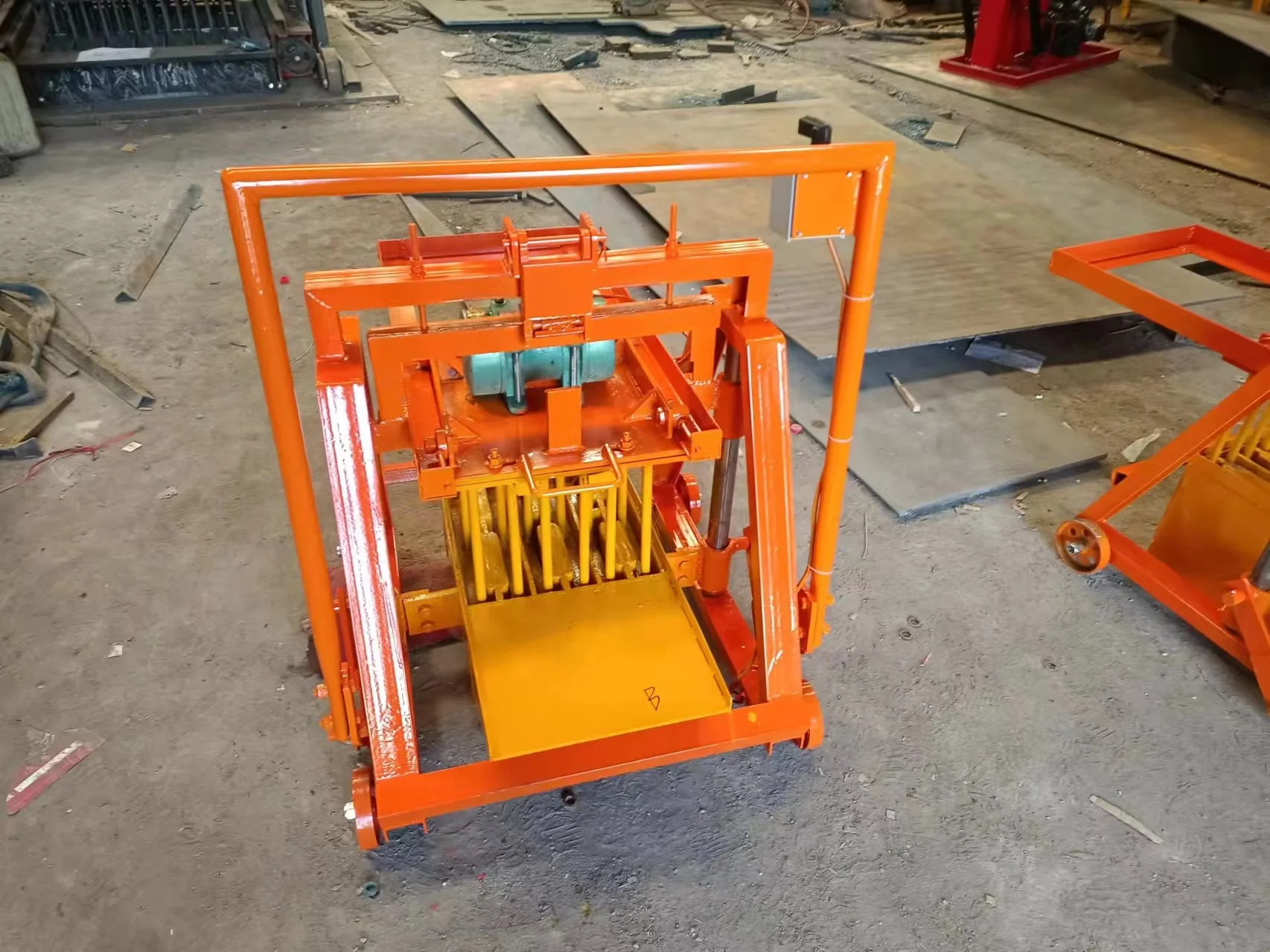
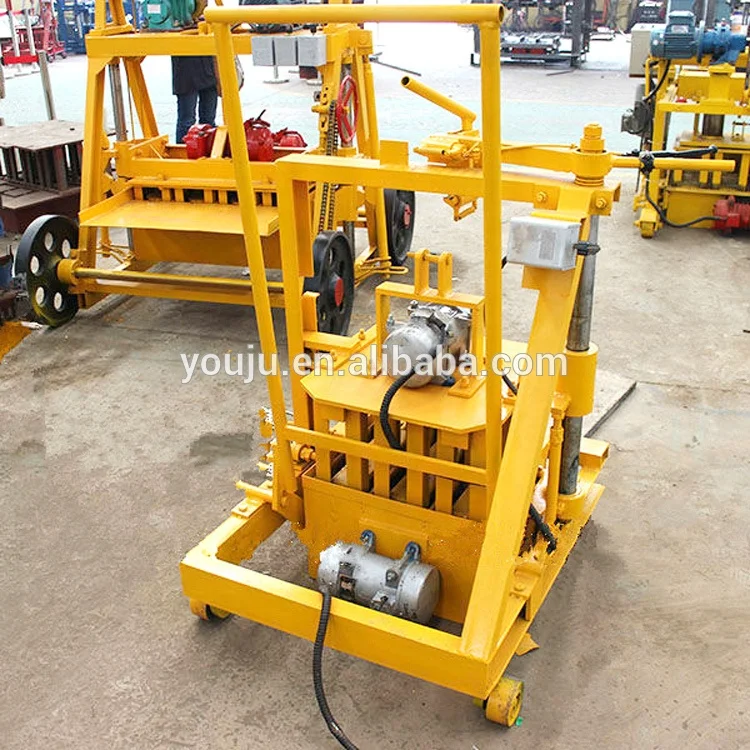
Single-Focus Engineering — We specify the hand-pushed egg-laying press, mould, and curing method as one matched system, so manual cycle consistency does not depend on operator guesswork when your local aggregate changes.
Technical Specifications
| Parameter | Value |
|---|---|
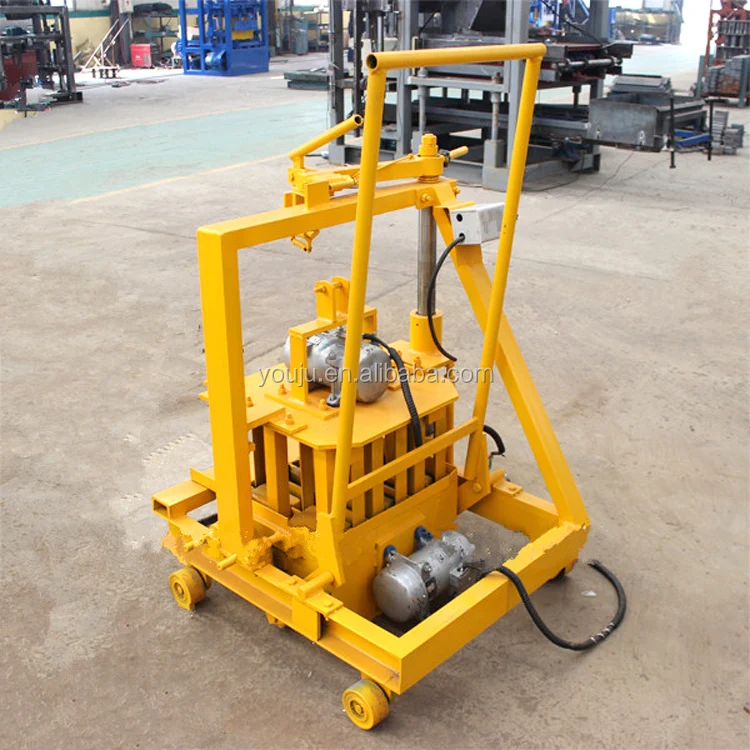
| Model | QMJ2-45 |
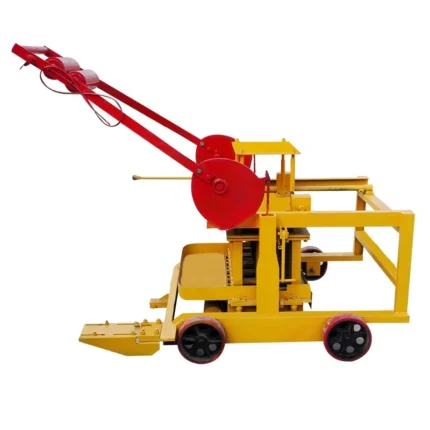
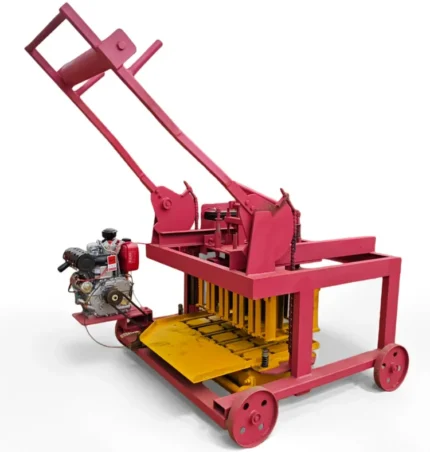
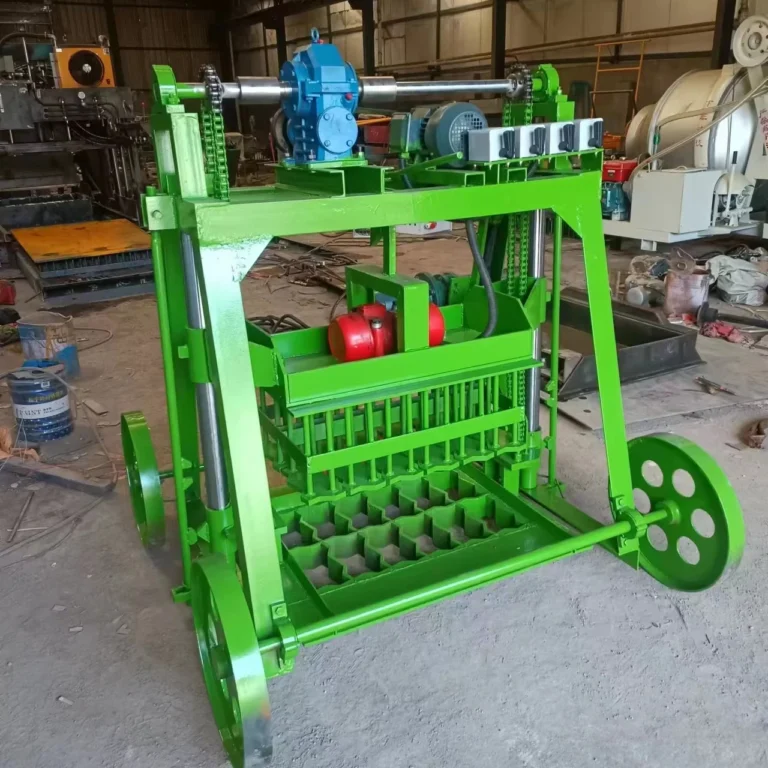
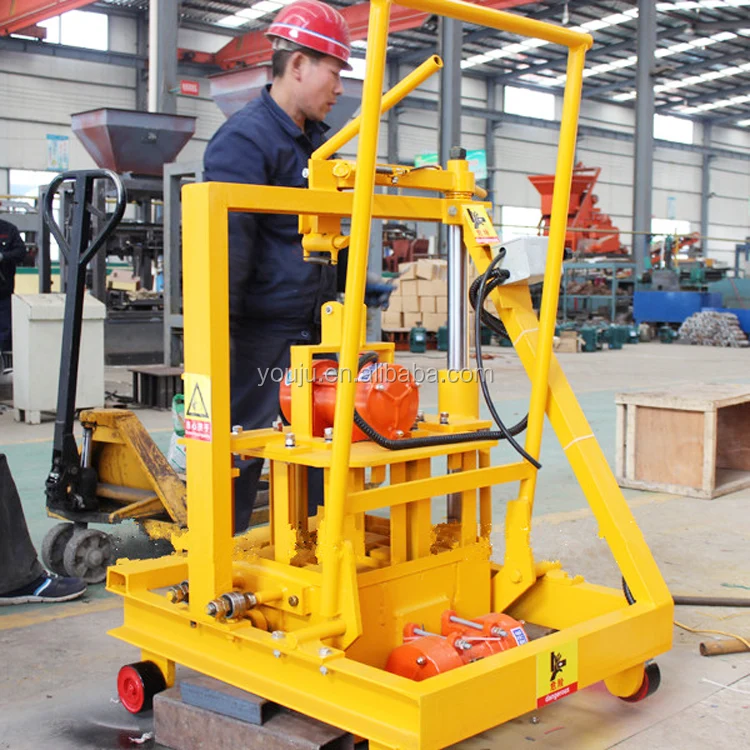
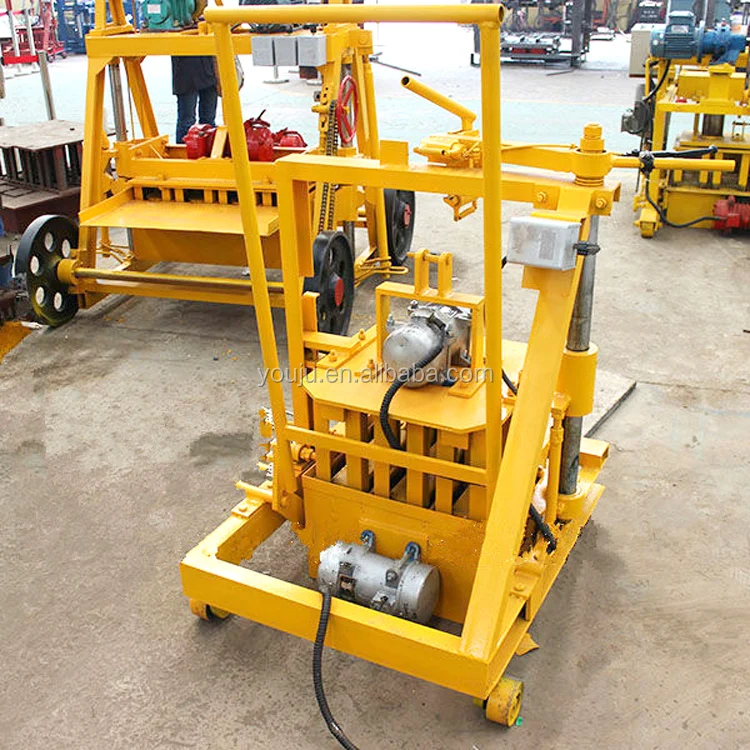
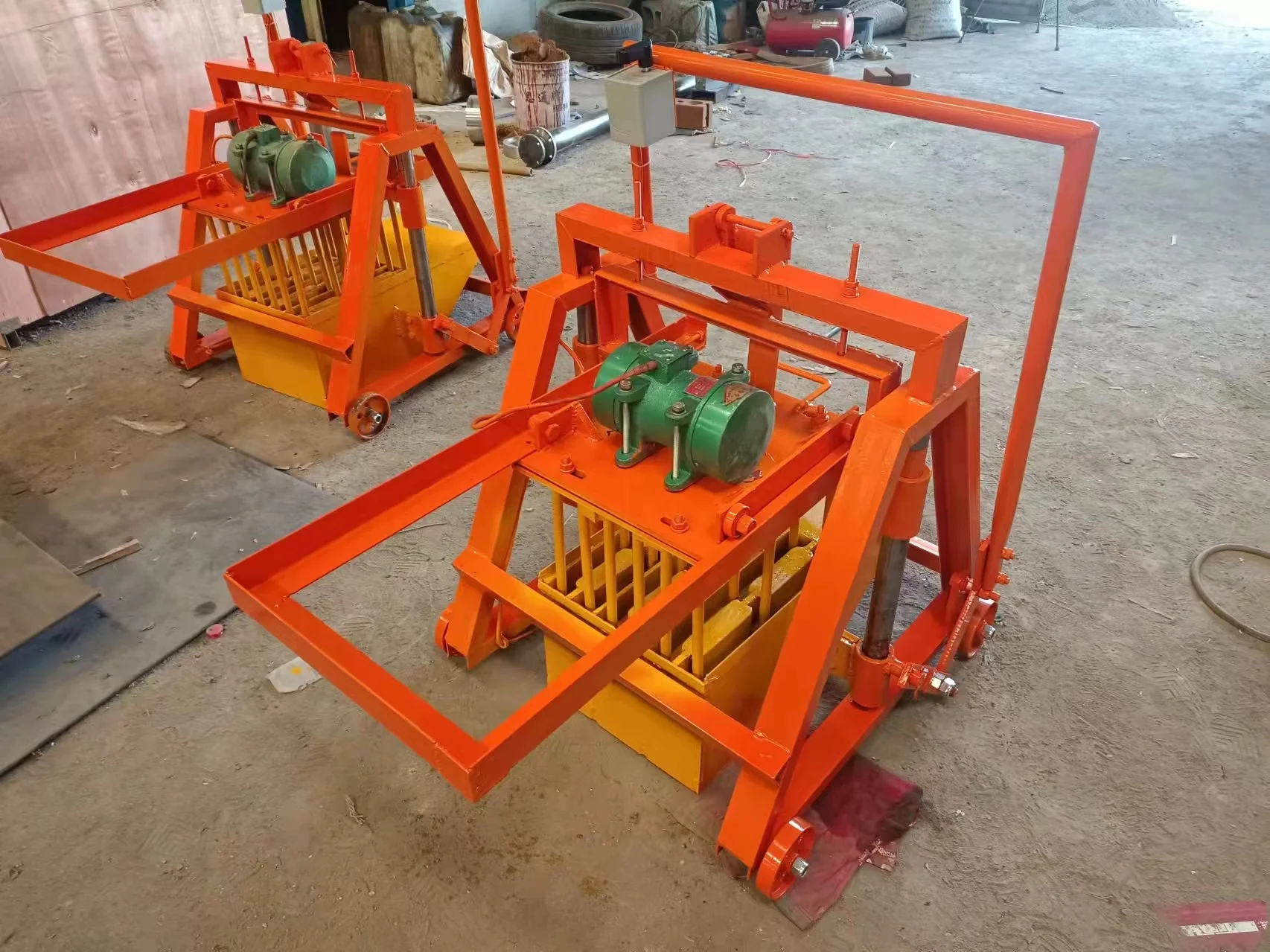
| Product Type | Mobile Egg-laying Concrete Block Making Machine |
| Machine Operation | Hand-pushed mobile egg-laying (no pallets required) |
| Automation Level | Manual operation |
| Mould Formats | 400×200×200 mm, 400×150×200 mm, 400×100×200 mm hollow brick |
| Output per Format | 1280 pcs/8 hr (400×200), 1920 pcs/8 hr (400×150), 2560 pcs/8 hr (400×100) (basis to be confirmed for 400×150 variant) |
| Cycle Time | 25–30 seconds per mould |
| Pallet Requirement | None (on-ground curing) |
| Labour Requirement | 1 to 3 workers |
| Mould Heat Treatment | Carburization technology |
| Control System | Manual (no PLC) |
| Standards | ISO 9001:2000, CE |
Application Suitability
| Application | Material or Output |
|---|---|
| Small-scale on-site production | Hollow blocks from local aggregate and cement for housing projects |
| First block plant validation | Low-investment entry using river sand, crushed stone, or volcanic ash mix |
| Remote or off-grid sites | Egg-laying operation without pallet handling or curing rack infrastructure |
| Multi-format production | Interchangeable moulds for 400×200, 400×150, and 400×100 hollow bricks |
Why Manual Consistency Demands Mix-to-Machine Matching Before Purchase
A hand-pushed egg-laying magnifies every variable the operator controls.
When vibration force and hydraulic pressure are not matched to your specific aggregate, block strength fails long before the machine does. With this QMJ2-45, there is no PLC batching correction or feedback loop — the crew feeds, presses, and moves the unit by hand, meaning mix consistency becomes the only control you have. I once saw a Latin American contractor run standard river sand settings on volcanic ash, and the entire first batch crumbled on demoulding [NEED_CITE: aggregate variability and compressive strength correlation in manual block production]. Verifying your material against the machine’s vibration characteristics before order prevents that outcome.
What PLC Control Removes From the Operator
The QMJ2-45 places every timing decision in the hands of the crew — when to vibrate, how long to press, when to advance. For a first plant proving local demand, that manual rhythm is acceptable and keeps capital outlay minimal. However, as daily volume grows, cycle-to-cycle variation from operator fatigue or shift changes introduces density inconsistency that no amount of supervision fully eliminates.
The Upgrade Path From Manual Egg-Laying to Controlled Mobile Lines
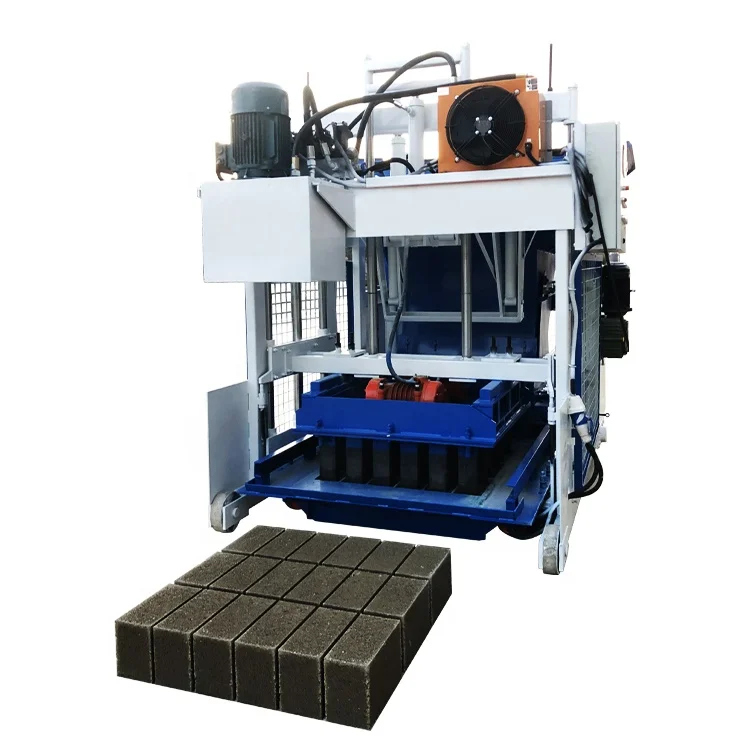
Transitioning from this hand-pushed unit to a PLC controlled egg-laying block machine locks the vibration duration and feed sequence into repeatable programmes, removing the human timing variable entirely. The value is not in producing faster, but in producing identically across every shift. Buyers who start on the QMJ2-45 to validate their market often move to a semi-automatic mobile line once daily throughput targets stabilise and consistency demands tighten [NEED_CITE: automation adoption stages in small-scale block manufacturing].
How Cycle Time and Mould Format Define Real Output
The stated 25–30 second cycle applies across all three hollow brick formats, but the pieces per mould vary — two for the 400×200, three for the 400×150, and four for the 400×100. This means the 8-hour output scales with format selection, not machine speed. Mould interchangeability is mechanical, and change time is not published; on a manual machine, the crew physically swaps the mould box, so the time cost of format switching falls entirely on the operator. Understanding which format dominates your sales volume determines whether the QMJ2-45 meets your daily commitment or whether a quick-change mould system on a larger press becomes necessary.
The Hidden Cost of Skipping Voltage and Power Confirmation
Source documentation omits motor rating, voltage, and frequency entirely. Shipping a hand-pushed mobile unit with an unconfirmed electrical specification means the machine can sit idle on arrival while a compatible motor is sourced locally or the control panel is rewired [NEED_CITE: voltage and frequency standards by export market]. On a machine with no PLC, the electrical scope is limited to the vibration motor, but that single motor must match your site supply exactly — a mismatch here delays commissioning and forces the crew back to manual block making during the wait.
Why Buyers Source This Machine Here
We specify the QMJ2-45 against your actual local aggregate and target format rather than quoting a catalogue default, which matters especially on a manual press where there is no automated batching correction. Mould design covers the hollow brick formats your market actually sells, including custom drawings when standard formats do not match local building codes. Machine, mould, and curing method are configured as a matched system, preventing the situation where the press works but the pallet or handling setup does not. Automation level remains selectable, so starting on this hand-pushed unit leaves a clear upgrade route to a semi-automatic or fully automatic mobile line without replacing your entire production logic. Installation support includes operator training focused on manual cycle discipline, ensuring your crew understands which variables they control and which require mix adjustment upstream.
Documentation & Verification
- Line capacity calculation stating the assumed block format and 8-hour shift basis
- Mould drawing and format list with carburization hardness test record included
- Voltage, frequency, and motor rating confirmation sheet before production begins
- Factory test record on your specified hollow brick format prior to dispatch
- Operation and maintenance manual covering manual cycle procedure and mould change steps
Installation, Commissioning & Support
- Flat concrete curing area required, sized to your daily output in square metres for the chosen hollow brick format
- Site electrical supply confirmed for motor voltage and frequency before the QMJ2-45 ships from factory
- Machine arrives fully assembled; hand-pushed frame requires only wheel and handle inspection on arrival
- First production run supervised to set manual vibration timing against your specific aggregate mix
- Mould wear inspection schedule provided based on abrasiveness of your local raw material
- Spare mould and mechanical wear parts list supplied with the QMJ2-45 shipment for your first reorder
What We Need to Configure Your Line
Provide your target hollow brick format, daily volume requirement, and the specific aggregate you will source locally so we can match vibration characteristics before building. Confirm your site voltage and frequency to avoid motor substitution delays. Let us know whether you plan to stay on manual operation or evaluate a PLC-controlled upgrade within your first year of production.
Frequently Asked Questions
Q: How do I verify the real daily output when the source table contains inconsistent arithmetic across formats?
A: Request a capacity calculation document that states the assumed block format, cycle time, and pieces per mould for each variant. For the 400×150×200 mm hollow brick, the published figures contain an arithmetic discrepancy that must be resolved in writing before you commit to a daily production target or sign a supply contract.
Q: What automation upgrade path exists from a hand-pushed QMJ2-45 to a PLC-controlled mobile egg-laying line?
A: The upgrade typically introduces automated vibration sequencing and controlled feed timing while retaining the pallet-free egg-laying concept. You keep the same curing method but remove operator timing variation. Full pallet-fed stacking automation requires a different machine class entirely.
Q: How is mix design matched to a machine with no PLC batching or vibration force feedback?
A: We test your local aggregate sample against the machine’s vibration profile before production, adjusting mould compaction expectations to your material. On a manual press, the mix is your only control variable, so this matching step is more critical than on a PLC-controlled line.
Q: Which voltage and motor configuration must be confirmed before shipment to avoid commissioning delays?
A: Provide your site voltage, phase, and frequency in writing before production starts. The source documentation omits all electrical specifications for the QMJ2-45, and arriving with an incorrect motor is the most common reason manual block machines sit idle after delivery.