Description
Matched System Control — Every QMJ2-45 control panel we dispatch is language-confirmed and voltage-matched before the machine leaves the shop floor, so the operator reads cycle times and fault codes in their own language on day one.
Technical Specifications
| Parameter | Value |
|---|---|
| Model | QMJ2-45 |
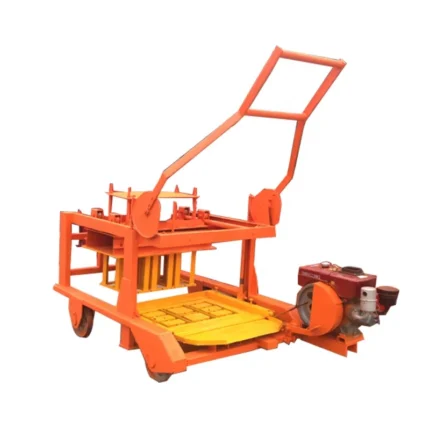
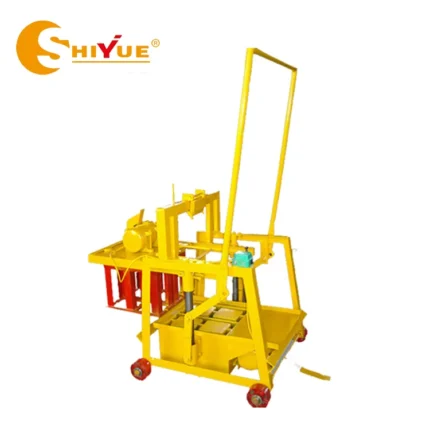
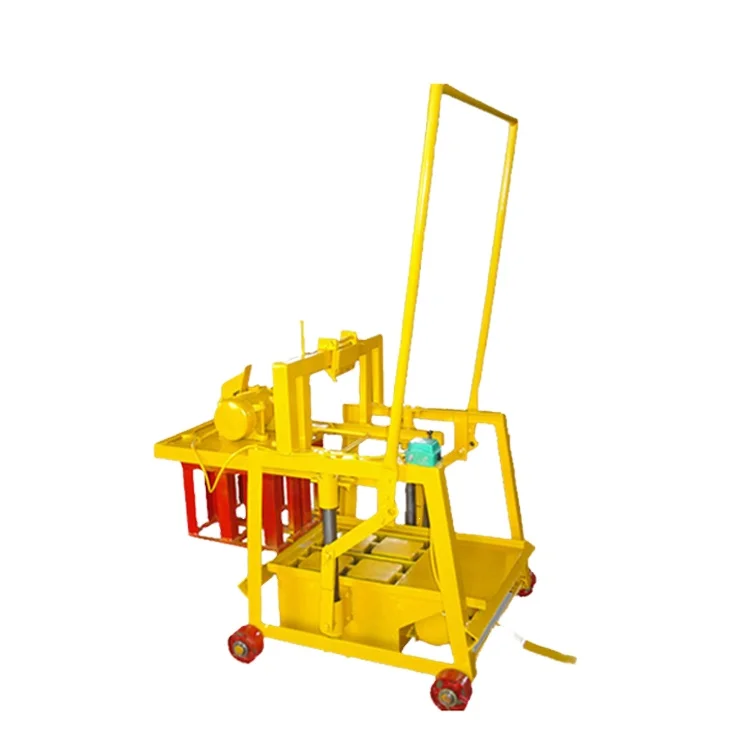
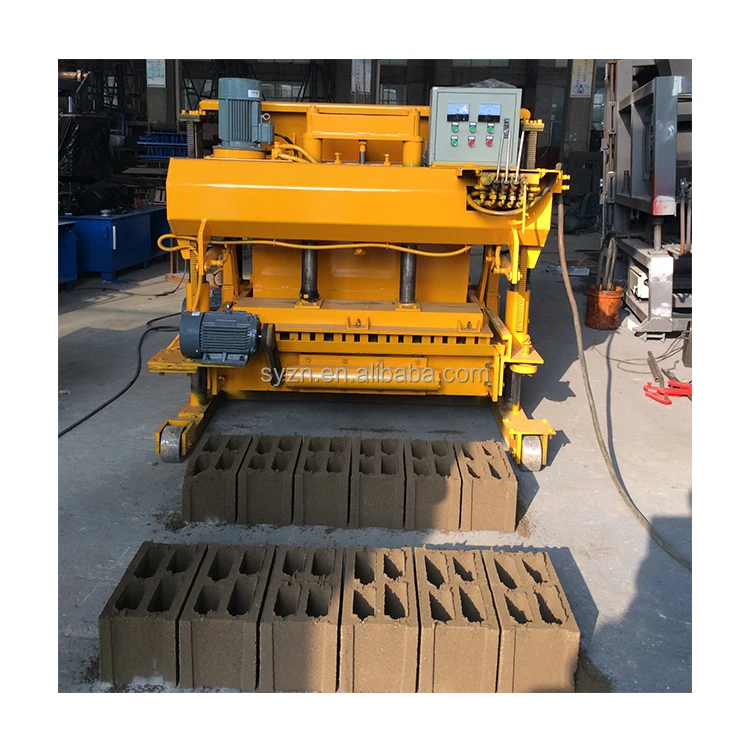
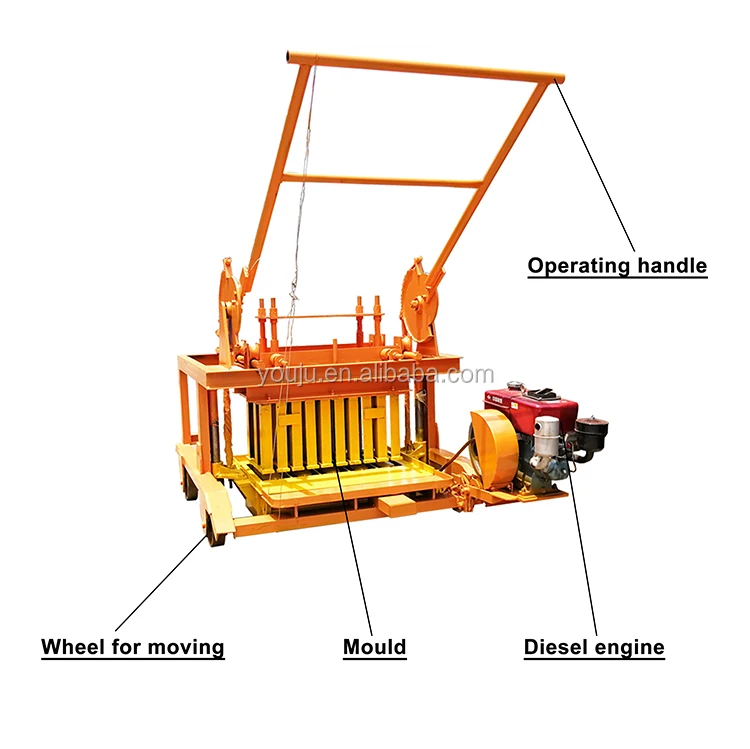
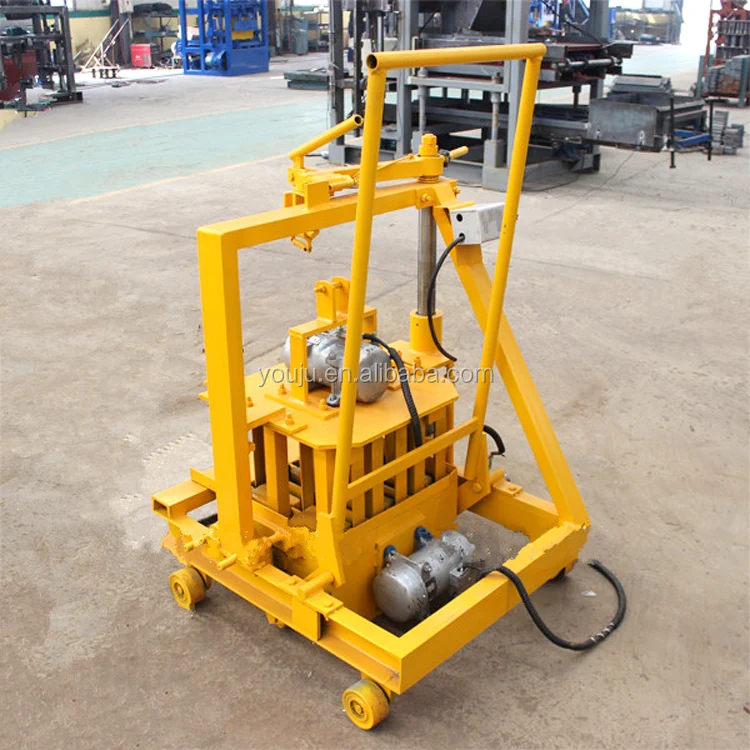
| Product Type | Mobile Block Making Machine |
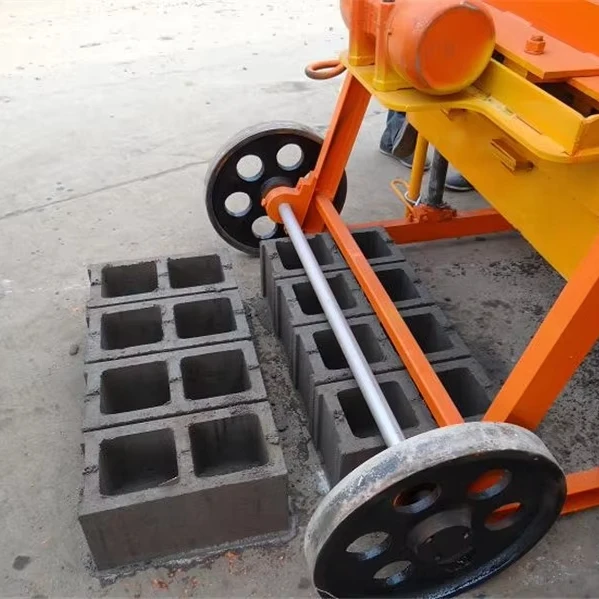
| Machine Type | Mobile / egg-laying (no pallets required) |
| Pressure Type | Hydraulic static pressure |
| Moulding Cycle | 25–30 seconds per cycle |
| Output (400×200×200mm hollow block) | 2 pcs/cycle, 160 pcs/hour, 1280 pcs/8hr shift |
| Output (400×150×200mm hollow block) | 3 pcs/cycle, 240 pcs/hour (source value — verify against manufacturer catalog) |
| Output (400×100×200mm hollow block) | 4 pcs/cycle, 320 pcs/hour, 2560 pcs/8hr shift |
| Power Source | Electric engine |
| Labor Requirement | 1 to 3 workers |
| Pallet Requirement | None |
| Automation Level | Manual mobile operation |
| Mould Change | Supported across multiple hollow brick formats |
| Certification | ISO 9001:2000, CE |
Application Suitability
| Application | Material or Output |
|---|---|
| On-site hollow block production | Crushed stone, sand, and cement mixes |
| Rural housing project construction | 400×200×200mm structural hollow blocks |
| First block plant startup | 400×150×200mm and 400×100×200mm hollow formats |
| Remote job site supply | Cement-based hollow blocks without pallet infrastructure |
Why the Control Language Question Should Come Before the Price
A PLC-controlled mobile block machine that speaks the wrong language is a silent machine on day one. I spent an afternoon rewiring an HMI language pack on a folding table outside Riyadh while the entire crew stood around waiting. The QMJ2-45 may be one of the simplest machines on a job site, but when the automatic mobile block making machine arrives with a display in the wrong script, commissioning halts. Voltage mismatch goes further — undersized breakers trip mid-cycle, and hydraulic pressure never reaches the rated point, producing blocks that crumble at the edges. Every export market has its own voltage and frequency standards, and those details must be locked down before the machine enters production [NEED_CITE: voltage and frequency standards by export market].
What Automation Actually Removes from the Operator
The QMJ2-45 is built as a manual mobile egg-laying machine, but its control scope can be configured to reduce operator variability. The 25–30 second moulding cycle becomes a fixed baseline rather than something the operator estimates by feel. On a manual unit, cycle consistency depends entirely on the worker pacing the hydraulic press and release. A controlled cycle timer removes that guesswork and gives repeatable block density across the shift. When you position the automatic mobile block making machine on uneven ground, the PLC-controlled mobile block machine holds its sequence regardless of operator fatigue.
Consistency Without Vibration Dependency
Most block machines rely on vibration force to compact the mix into the mould. The QMJ2-45 uses hydraulic static pressure instead. That design choice means the machine is less sensitive to aggregate gradation variations that plague vibration-based presses on remote sites where the local stone supply shifts between deliveries. Static pressure pushes the mix into every corner of the mould cavity at a steady force. Blocks produced this way show more uniform wall thickness and corner definition when the local aggregate is coarse or poorly graded. The trade-off is a slower densification compared to high-frequency vibration units, but the payoff arrives when your raw material source is unpredictable [NEED_CITE: hydraulic static pressure versus vibration compaction in block production].
Reading the Specs That Matter on a Mobile Unit
The 25–30 second moulding cycle defines your daily planning. At 2 pieces per cycle on 400×200×200mm hollow blocks, you can reliably plan around 1,280 pieces across an eight-hour shift — not an arbitrary catalogue figure, but a number tied to that specific format. The QMJ2-45 requires no pallets, which eliminates an entire layer of logistics: no pallet feeding system, no curing rack handling, no forklift dedicated to pallet rotation. That also means your curing area simply needs a flat, level concrete surface. The 1-to-3 worker labor requirement covers one person operating the hydraulic controls and one or two workers feeding the mix hopper and repositioning the machine. Voltage and frequency remain configurable — confirm your site’s supply before dispatch to avoid transformer rentals or motor rewinds on arrival.
What Happens When You Skip the Configuration Conversation
A mobile block machine bought on price alone often arrives misconfigured for the site it will serve. The hydraulic pressure may be set for a fine sand mix, but your local quarry supplies coarse crushed stone — and the blocks crack during handling because the static pressure was never matched to your aggregate [NEED_CITE: effect of aggregate gradation on block compressive strength]. Voltage discrepancies cause motor overheating in sustained operation. Without a confirmed mould change procedure, operators spend an entire shift swapping to a different hollow block format, negating the format flexibility the machine was supposed to deliver. The PLC-controlled mobile block machine configuration must be finalized against your actual conditions, not assumed from a generic quotation.
Why Source the QMJ2-45 Here
We treat the QMJ2-45 as part of a matched system — machine, mould, and hydraulic settings configured against your confirmed block format and local material profile. Capacity calculations are stated per block format, not as a single generic cycles-per-hour claim. Mould design covers the hollow formats your market actually sells, with custom drawings available for non-standard dimensions. The automation level is selectable, so a buyer starting with manual mobile operation has a defined upgrade path. Installation support includes operator training that covers mould change procedure and hydraulic pressure adjustment for your specific mix. Documentation arrives in your language, with control panel labels and manuals confirmed before shipment.
Documentation & Verification
- Factory test record documenting cycle times per your confirmed hollow block format
- Machine specification sheet listing hydraulic pressure rating and moulding cycle per format
- Mould drawing and format list for all supplied hollow block dimensions
- Voltage, frequency, and control display language confirmation sheet before dispatch
- Hydraulic and electrical schematic for on-site troubleshooting
Installation, Commissioning & Support
- Flat concrete curing area required — no pallet racks or fixed plant infrastructure needed
- Confirm site voltage and frequency before dispatch to match the electric engine supply
- Machine arrives as a single mobile unit ready for on-site positioning and commissioning
- First-run block samples tested against target strength using your local aggregate mix
- Operator training covers mould swap procedure and hydraulic pressure adjustment
- Wear parts and mould replacement list provided with initial shipment
What to Include in Your Inquiry
Tell us the hollow block formats your market demands and the daily output you need to plan against. Share your local aggregate type and typical mix proportions so the hydraulic static pressure can be matched before production. Confirm your site voltage, frequency, and preferred control panel language so the automatic mobile block making machine ships ready to run.
Frequently Asked Questions
Q: How is the QMJ2-45’s capacity calculated per block format?
A: Capacity is stated per specific hollow block dimension, not as a generic hourly figure. For 400×200×200mm blocks, the calculation uses 2 pieces per 25–30 second cycle across an 8-hour shift, yielding 1,280 pieces. Each format change alters pieces per cycle, so your quotation will show output tied to your confirmed format list.
Q: Can the control system be upgraded from manual to PLC-controlled operation?
A: Yes. The QMJ2-45 supports an upgrade path from manual hydraulic controls to PLC-controlled cycle timing and sequence management. This upgrade locks the moulding cycle to a consistent interval, reducing operator variability and improving batch-to-batch block density. The upgrade can be specified at order or retrofitted later.
Q: What voltage, frequency, and control language options are confirmed before dispatch?
A: We confirm your site’s exact voltage and frequency supply, then match the electric engine and control panel accordingly. Control display language is set to your operator’s preference before shipment. This prevents commissioning delays caused by unreadable fault codes or mismatched motor specifications on arrival.
Q: How does the hydraulic static pressure system handle different local aggregates?
A: Static pressure compacts the mix without vibration, making the machine less sensitive to aggregate gradation shifts. Coarse crushed stone and poorly graded sand both respond to steady hydraulic force. We set the pressure rating against your confirmed mix design so that block wall density remains consistent regardless of material variation between deliveries.
Q: What is the upgrade path from manual mobile operation to more automation?
A: The QMJ2-45 starts as a manual egg-laying unit requiring 1 to 3 workers. You can add controlled cycle timing to fix the moulding interval, then layer in automated mix feeding or pallet-free stacking solutions as production volume grows. Each stage is configurable independently, so you invest only where the bottleneck actually exists.