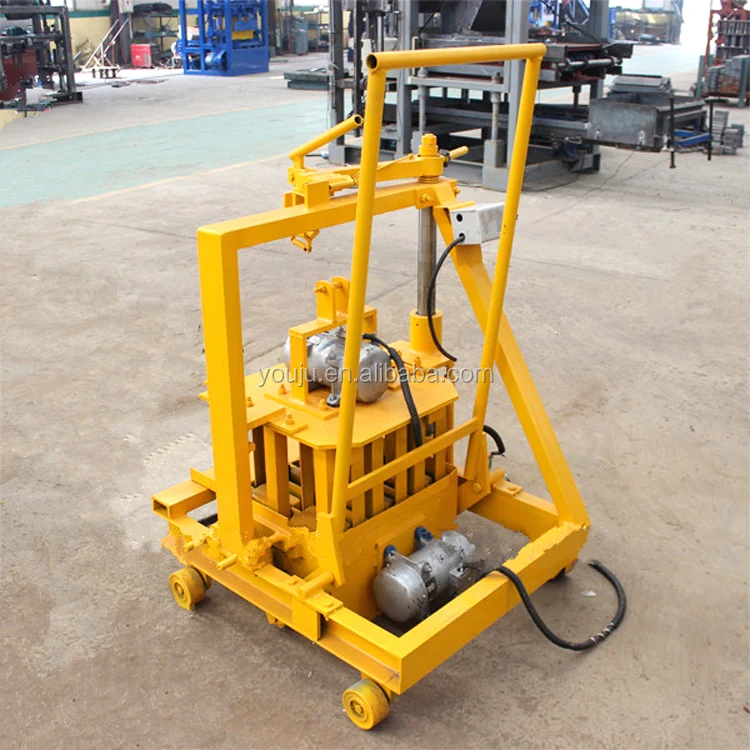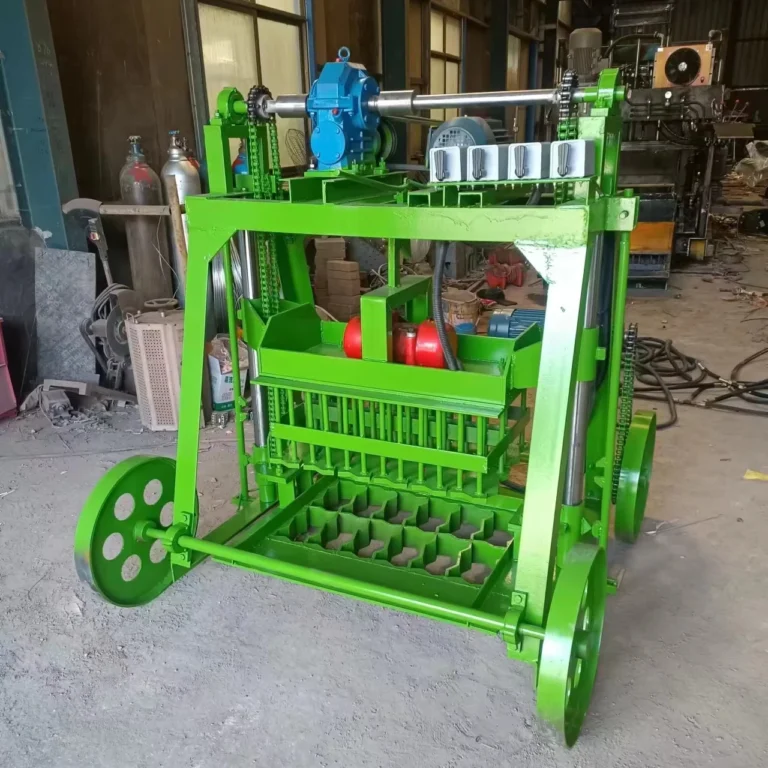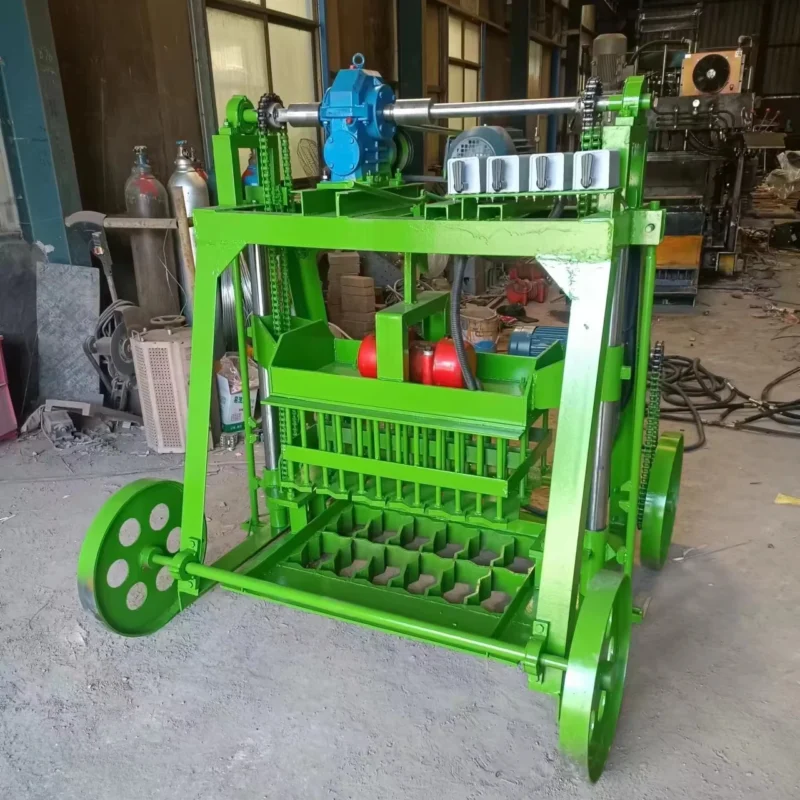
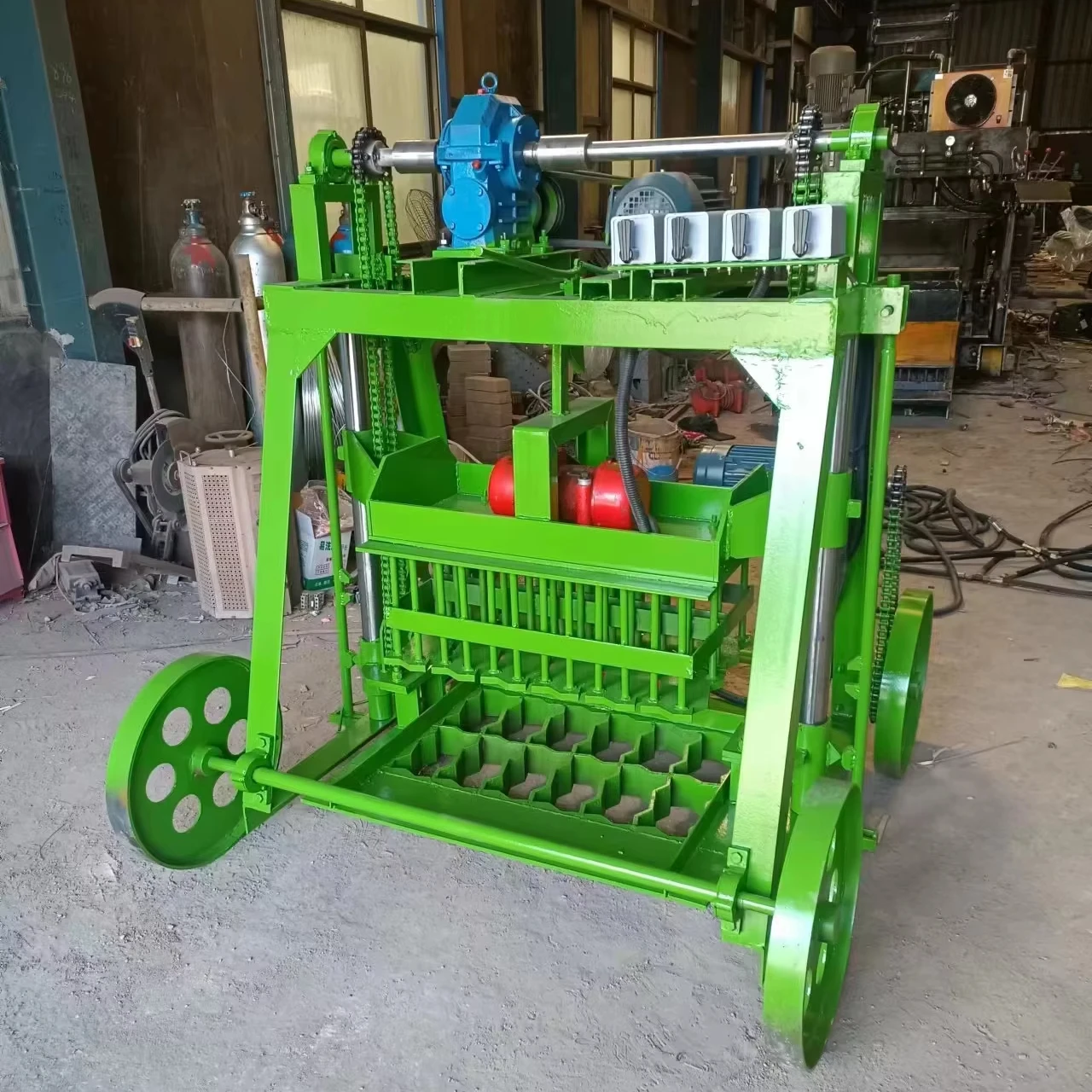
Description
Engineered upgrade path — The QMJ4-45 is delivered as a matched mechanical system with defined automation integration points, so owners can add PLC-controlled feeding or batching later without replacing the press core.
Technical Specifications
| Parameter | Value |
|---|---|
| Model | QMJ4-45 |
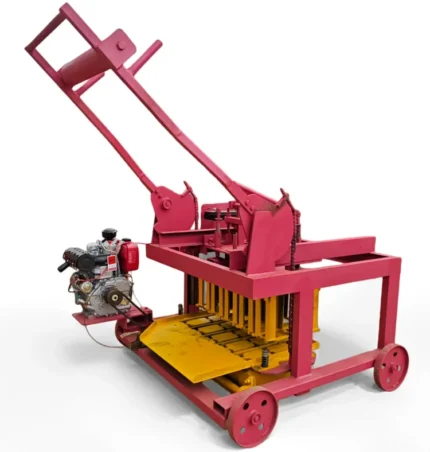
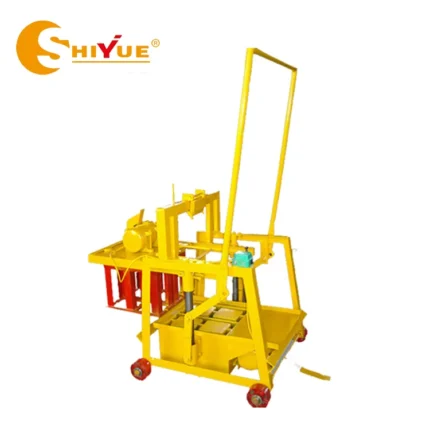
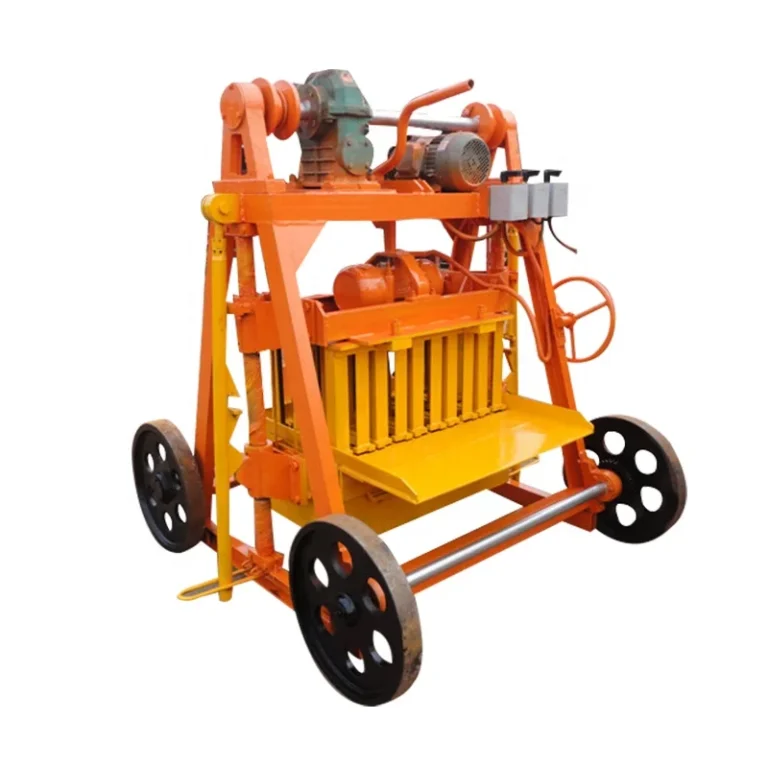
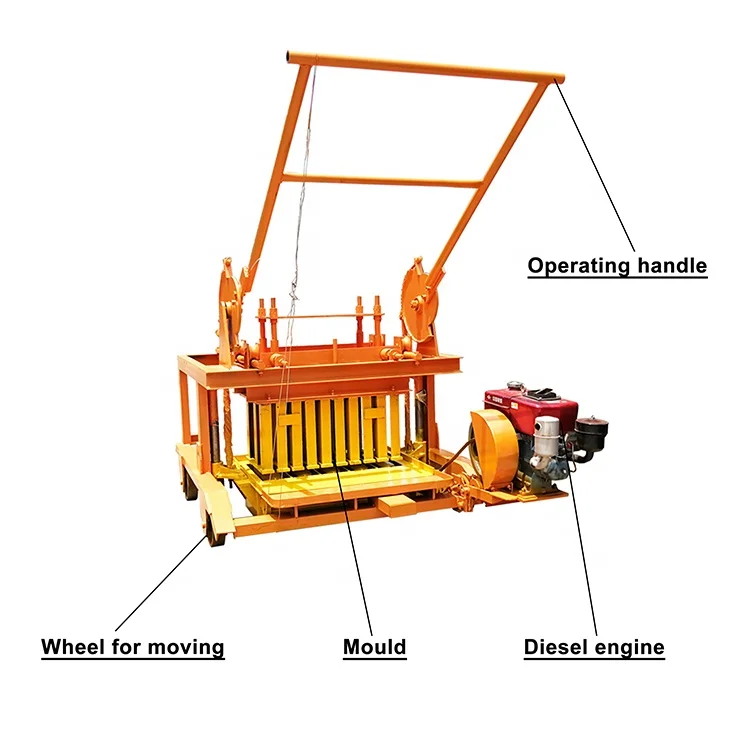
| Product Type | Mobile Egg-Laying Block Making Machine |
| Brand | YOUJU |
| Molding Capacity | 4 pcs/mold (basis not stated in source — confirm block format / material / thickness) |
| Vibration Frequency | 2400 r/m |
| Productivity | 2600-4000 pcs/day (basis not stated in source — confirm block format / material / thickness) |
| Vibration Method | Mold vibration |
| Demold Method | Manual |
| Turning Method | Manual |
| Total Power | 6 kW |
| Power Source | Diesel/Petrol engine |
| Molding Cycle | 45 s |
| Automation Level | Manual / egg-laying mobile |
| Mould Format | Hollow block (400×200×200 mm / 400×150×200 mm / 400×120×200 mm listed) |
| Cycle Time per Format | 40-45 s (hollow block formats listed) |
| Productivity per Format (8 h shift) | 400×200×200 mm: 3000 pcs (4 pcs/mould); 400×150×200 mm: 3500 pcs (5 pcs/mould); 400×120×200 mm: 4500 pcs (6 pcs/mould) |
| Stacking Method | Manual (egg-laying, blocks cured on ground) |
| Voltage & Frequency | Not applicable (engine-driven) |
| Warranty | One year |
Application Suitability
| Application | Material or Output |
|---|---|
| On-site hollow block production | Concrete mix with local aggregate and cement, cured directly on the ground |
| Small-scale block plant startup | Hollow blocks in 400×200×200, 400×150×200, and 400×120×200 mm formats |
| Remote construction project sites | Diesel or petrol engine operation where grid electricity is unavailable |
Why Cycle Consistency Matters More Than Quoted Output
When a PLC controlled egg-laying block machine is not yet in the picture, operators rely on rhythm and experience to maintain cycle timing — and rhythm drifts over an eight-hour shift.
I once watched a crew in West Africa run a mobile egg-laying press through a full day. The first two hours produced clean, dense blocks. By hour six, fatigue shortened the vibration window and the operator rushed demolding. Block weight dropped noticeably, and the supervisor rejected an entire row. Without controlled cycle timing, the machine’s quoted daily figure is a ceiling, not a guarantee [NEED_CITE: operator fatigue effects on manual block production consistency].
Where Automation Begins on a Manual Press
The QMJ4-45 runs entirely on mechanical timing and operator input, which keeps the initial investment low and removes electrical dependency on job sites without reliable grid power. This makes it a practical automatic mobile block machine entry point for contractors who need hollow blocks on their own project sites before committing to a fixed plant.
Building Toward Intelligent Control
The mechanical design leaves room for staged automation. A PLC panel can later govern raw material feed rate, vibration duration, and cycle countdown, removing the operator’s guesswork from each molding sequence. Engine-driven units gain particular value from this because the diesel or petrol power source already introduces minor RPM fluctuation — a controlled timing loop compensates for that variation and holds the 40-45 second cycle steady across every block.
Reading the Numbers Behind the Molding Cycle
The 2400 r/m vibration frequency drives compaction through mold vibration rather than table vibration, meaning energy transfers directly into the concrete inside the cavity. At 45 seconds per cycle, the QMJ4-45 produces 4 pcs/mold for the 400×200×200 mm hollow block format. The 6 kW total power covers the vibration motor and the mold turning mechanism; since a diesel or petrol engine supplies that power, voltage mismatch is irrelevant. However, engine governor response affects RPM stability, and an operator who learns to read engine sound gains a practical substitute for electronic monitoring until a PLC panel is installed [NEED_CITE: engine governor response and vibration consistency in mobile block presses].
What Happens When Control Is Left to Chance
A machine without timing feedback places full responsibility on the operator’s attention span. I have seen crews produce strong blocks in the morning and under-compacted ones by afternoon because the vibration window shortened without anyone noticing. On engine-driven units, fuel quality and ambient temperature shift RPM, altering vibration intensity. Without a control system that adjusts or alerts, these variables accumulate into batch-to-batch density differences that only appear during the drop test or, worse, under load on the wall [NEED_CITE: density variation causes in manually operated block presses].
Why Procurement Here Reduces Configuration Risk
Block machinery is a single focus for this workshop, so the press, mold, and engine are specified as one system rather than sourced separately. Configuration is set against the buyer’s local aggregate and target block format — not a catalog default — meaning the 400×200×200 mm or 400×120×200 mm mold is matched to the mix the buyer can actually obtain. Automation level is selectable, allowing a buyer to start with the QMJ4-45 in its manual egg-laying form and plan the PLC upgrade when production volume justifies it. Installation support includes operator training on vibration timing and engine maintenance, addressing the two variables that most affect block consistency on a manual press.
Documentation & Verification
- Machine specification sheet confirming engine type, total power, and mold format matched to buyer’s target block
- Factory test record documenting vibration frequency and cycle time per hollow block format before dispatch
- Operation and maintenance manual with engine service intervals and mold vibration component replacement schedule
- Wear parts and mould list identifying every consumable required for the first replacement cycle
- Voltage and control language confirmation document where PLC upgrade is included in scope
Installation, Commissioning & Support
- Level compacted ground required; no fixed foundation needed for the QMJ4-45 egg-laying operation
- Diesel or petrol fuel supply to be arranged locally; 6 kW total power covered by the engine
- Machine arrives assembled; operator training covers manual demolding rhythm and engine RPM monitoring
- First-day commissioning verifies 40-45 second cycle across all three hollow block formats ordered
- Mold vibration components inspected at scheduled intervals per the maintenance manual
Starting the Conversation
Share the hollow block format you sell most — 400×200×200 mm, 400×150×200 mm, or 400×120×200 mm — along with your local aggregate type and whether grid electricity is available at the production site. Confirming these details upfront ensures the engine specification and any future PLC control language are aligned before the machine leaves the workshop.
Frequently Asked Questions
Q: How is daily output verified and what block format does the productivity figure assume?
A: Output depends on the hollow block format in production. For the 400×200×200 mm block the QMJ4-45 yields approximately 3000 pieces per eight-hour shift at a 40-45 second cycle; the 400×120×200 mm format yields around 4500 pieces at the same cycle because six pieces fit each mold. A factory test record confirms cycle time per format before shipment.
Q: Can the QMJ4-45 be upgraded with PLC control or automatic feeding in the future?
A: The mechanical press core remains compatible with a PLC panel governing feed rate and vibration timing. Engine-driven units benefit especially from controlled cycle timing, which compensates for RPM fluctuation. The upgrade can be planned at purchase or added after the machine has been running in manual mode.
Q: What mix design and local aggregate considerations affect block strength on this machine?
A: Mold vibration at 2400 r/m compacts the mix directly inside the cavity. Coarse or poorly graded aggregate reduces density regardless of vibration frequency. The configuration is set against the buyer’s actual local material so that pressure, vibration, and mix work together rather than against each other.
Q: How does engine-driven operation affect cycle consistency compared to electric motor power?
A: Diesel and petrol engines introduce minor RPM variation based on fuel quality and temperature, which shifts vibration intensity slightly. An experienced operator learns to read engine sound as a proxy for RPM. Adding PLC-controlled timing later closes this gap by holding the molding cycle constant regardless of engine speed fluctuation.