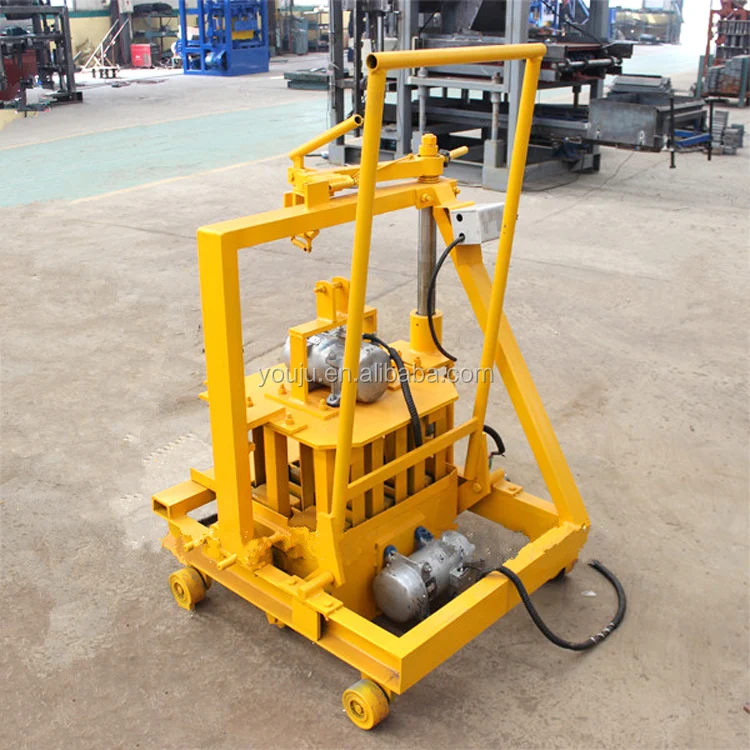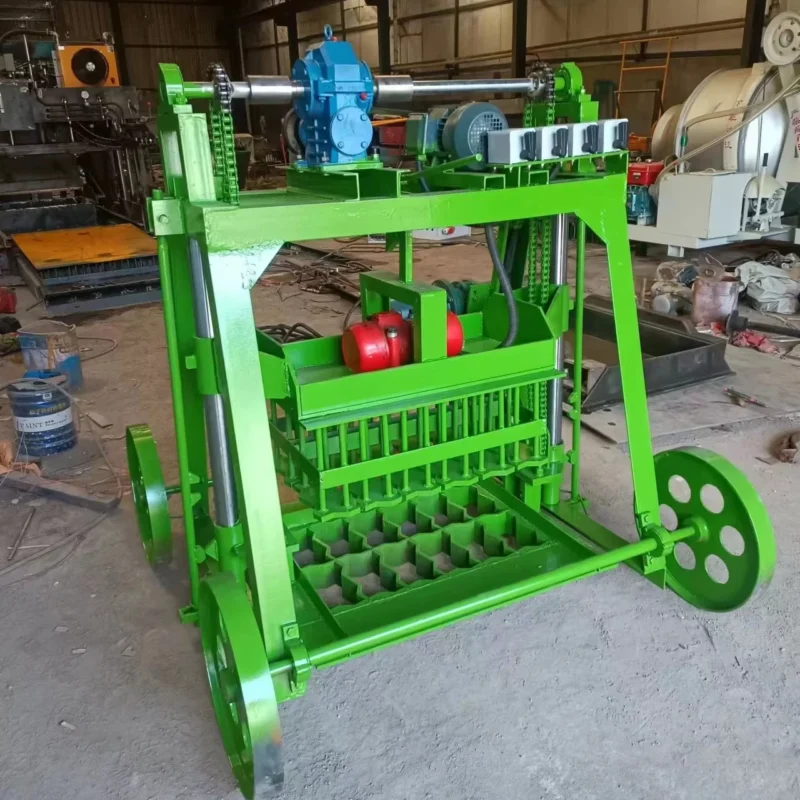

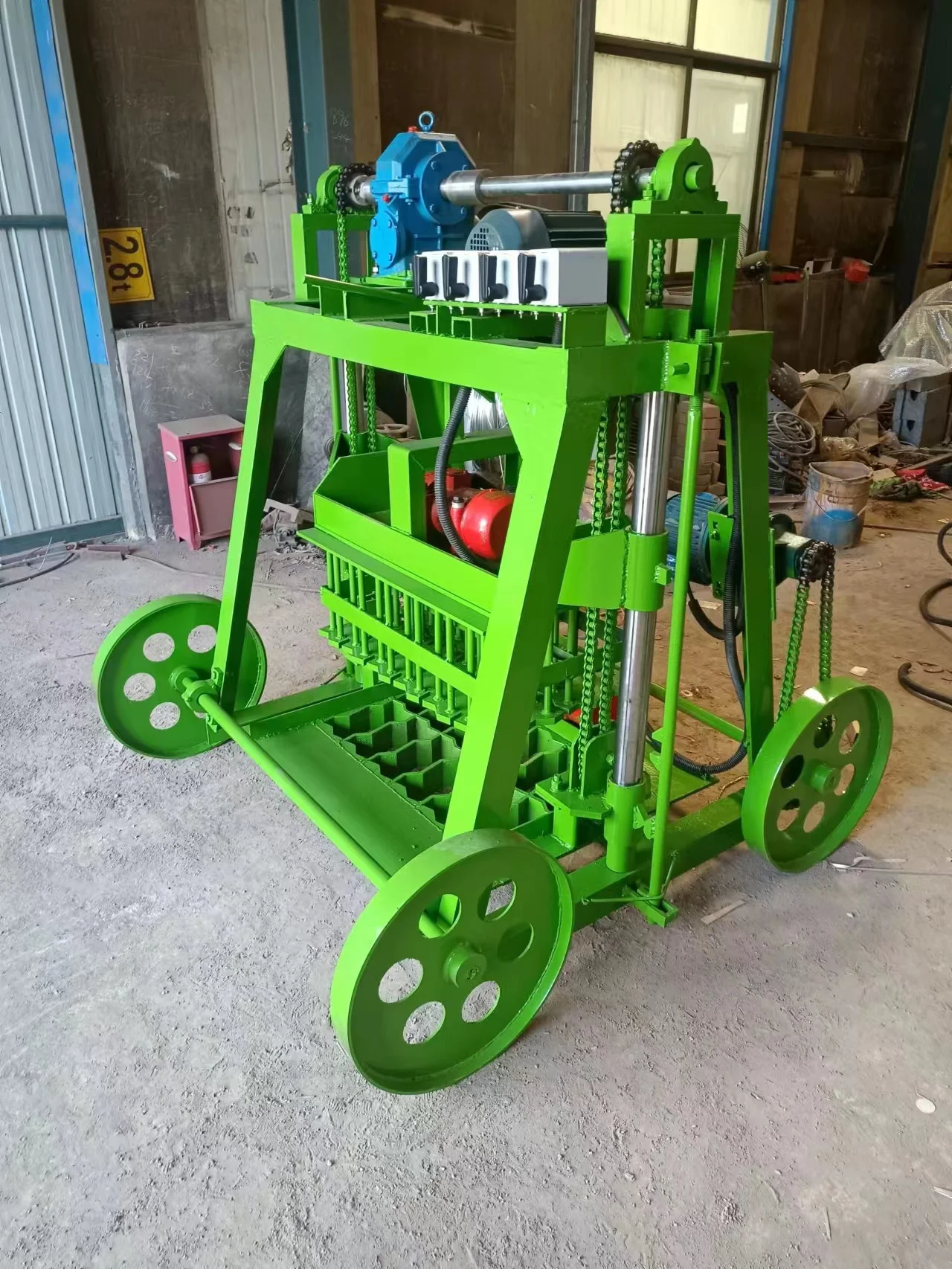
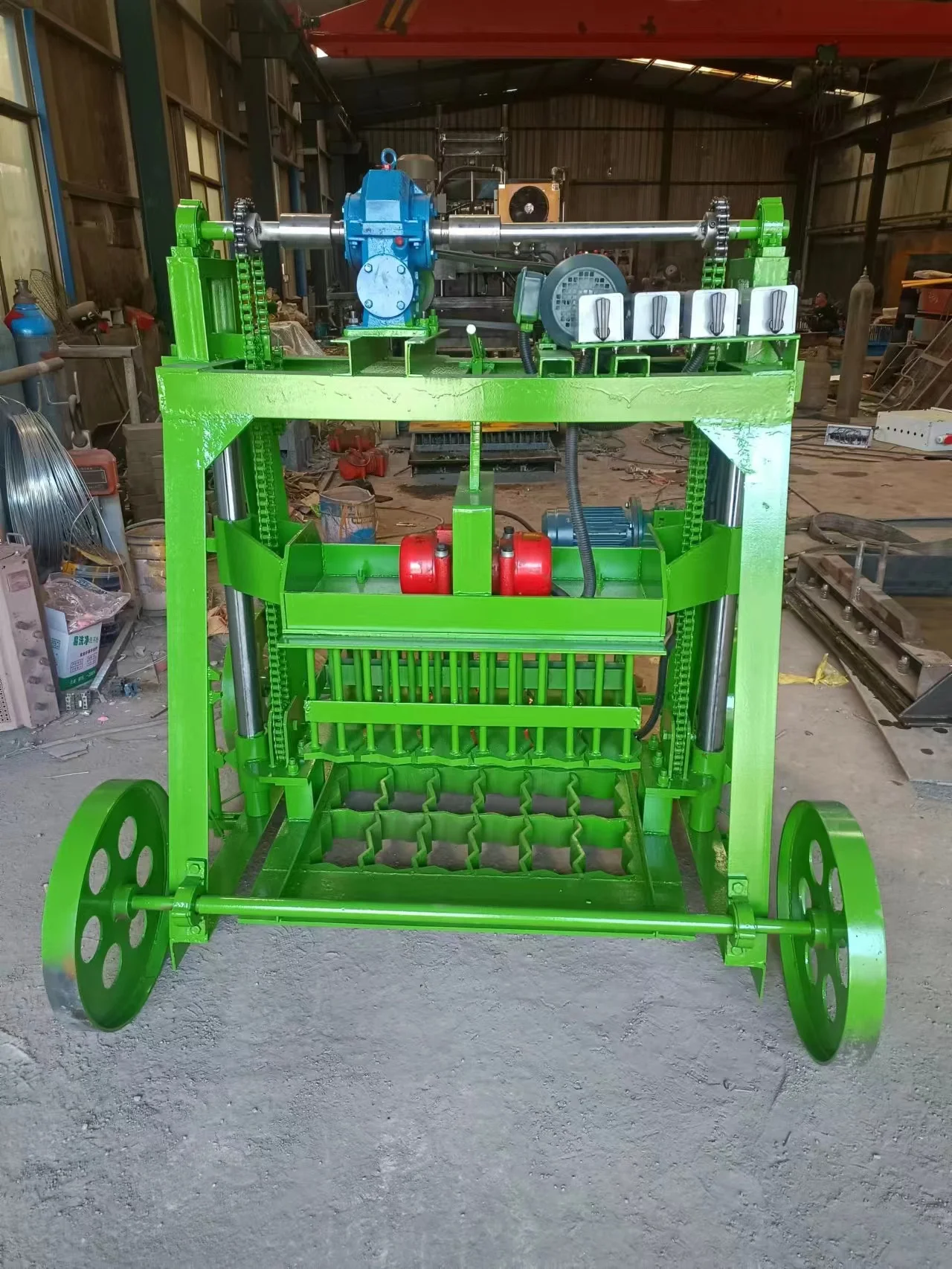
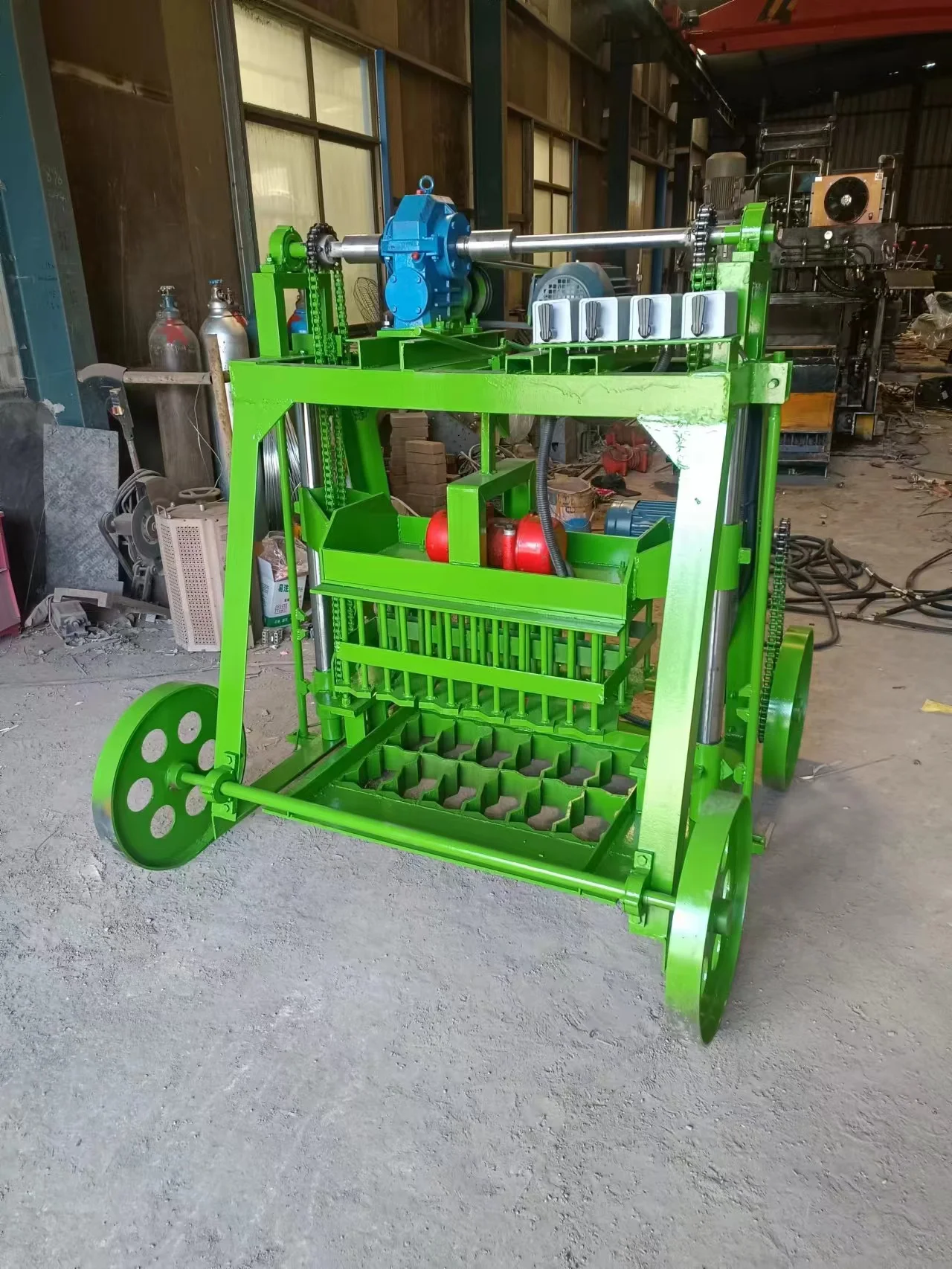
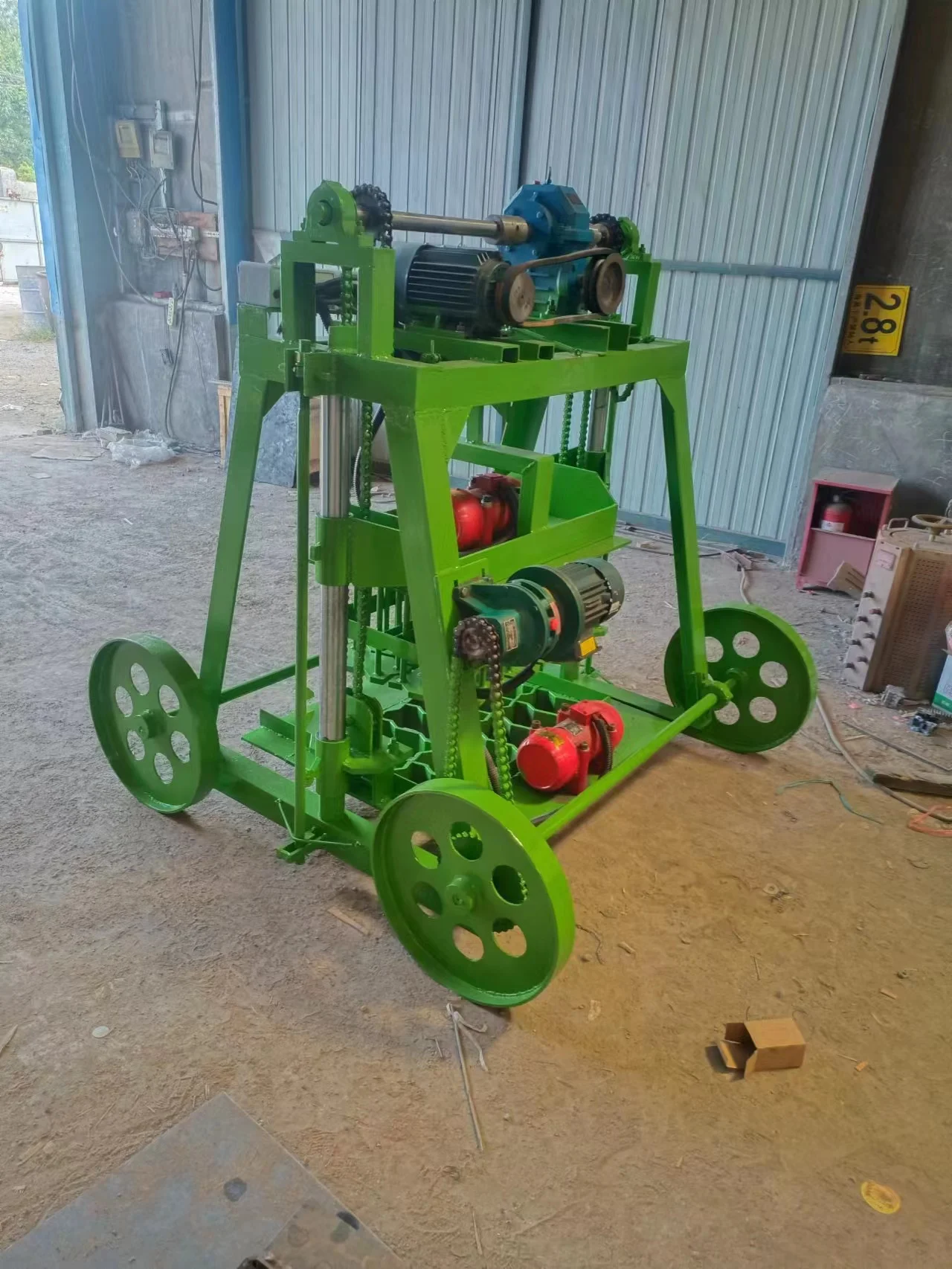

Description
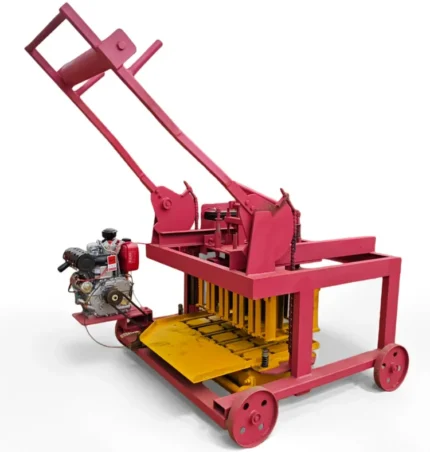
Engineered for consistent cycle control — the QMJ4-45 eliminates pallet dependency while offering an automation upgrade path that removes manual handling from the operator’s daily workflow.
Technical Specifications
| Parameter | Value |
|---|---|
| Model | QMJ4-45 |
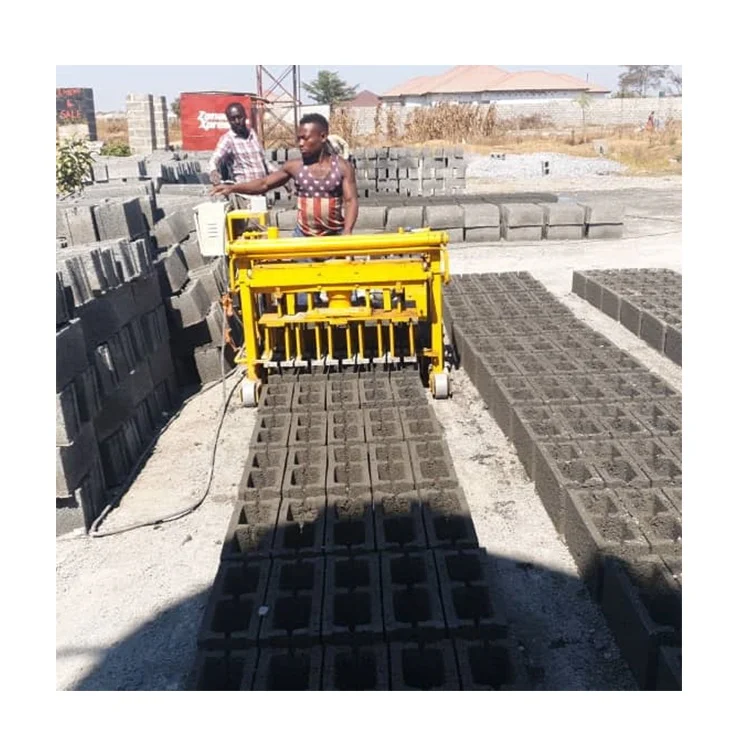
| Product Type | Mobile Egg Laying Block Making Machine |
| Molding Capacity | 4 pcs/mould |
| Vibration Frequency | 2400 r/m |
| Molding Cycle | 45 s |
| Hydraulic Method | Mold vibration |
| Demold Method | Manual |
| Turning Method | Manual |
| Total Power | 6 kW |
| Power Source | Diesel / Petrol engine |
| Productivity (400×200×200mm Hollow Block) | 3000 pcs/day (8 hours, 4 pcs/mould, 40–45s cycle) |
| Productivity (400×150×200mm Hollow Block) | 3500 pcs/day (8 hours, 5 pcs/mould, 40–45s cycle) |
| Productivity (400×120×200mm Hollow Block) | 4500 pcs/day (8 hours, 6 pcs/mould, 40–45s cycle) |
| Daily Productivity | 2600–4000 pcs/day (basis not stated in source — confirm block format / material / thickness) |
| Pallet Requirement | None (egg-laying type) |
| Automation Level | Manual / Egg-laying with upgrade path |
| Warranty | One year for the whole machine |
Application Suitability
| Application | Material or Output |
|---|---|
| On-site concrete block production | Cement, crushed stone, sand, and water mix without fixed plant infrastructure |
| Hollow block manufacturing | Multiple wall thicknesses from 120mm to 200mm |
| Remote construction site supply | Diesel or petrol engine operation independent of grid power |
| Small-scale block plant startup | Minimal footprint, no pallet inventory or curing rack investment required |
What "3000 Blocks per Day" Actually Requires from the Operator
Output depends on the block format, the molding cycle, and an uninterrupted eight-hour shift.
I have watched crews lose an entire morning on a remote site in West Africa because the engine throttle was set wrong for the local sand gradation, and the 45-second cycle stretched well past a minute. Sellers quote the automatic mobile egg laying block making machine at peak productivity, but that number assumes a consistent mix, a trained operator, and no material stoppages [NEED_CITE: on-site production variables affecting cycle time]. The real question buyers should ask is which block format that daily figure references and how much of the shift is actually spent feeding, turning, and moving the machine forward.
Control Upgrades That Remove Operator Guesswork
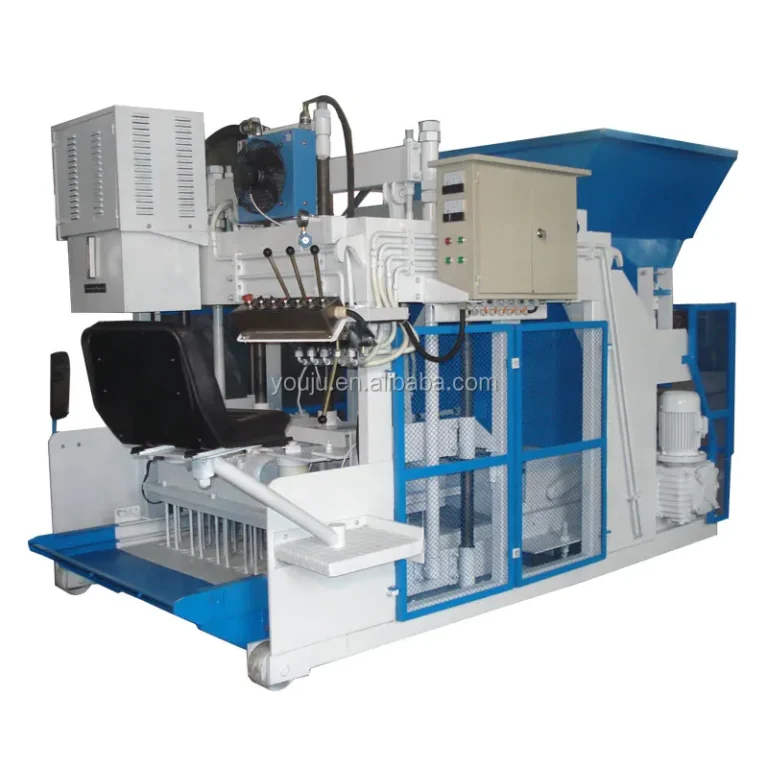
The base QMJ4-45 runs as a manual egg-laying unit, meaning the operator controls feeding, vibration timing, and forward movement. For buyers who need batch-to-batch consistency, a PLC upgrade introduces automated cycle timing so the vibration duration and mold release are no longer left to the operator’s judgment. This is where the automatic mobile egg laying block making machine earns its name — not by replacing the operator, but by taking the timing decisions out of their hands.
Engine Power and the Remote Site Reality
Diesel or petrol engine operation means the QMJ4-45 works where grid power has not yet arrived. On housing projects in rural areas, this removes the cost and delay of running temporary power lines before block production can begin. The 6 kW total power requirement is modest enough that a standard small engine covers it, and fuel sourcing on a construction site is rarely a problem. Engine specification should be confirmed before dispatch to match local fuel availability and altitude conditions [NEED_CITE: engine performance derating at altitude for construction equipment].
Vibration, Cycle Time, and What Density Means for Block Strength
The 2400 r/m vibration frequency works through a twice-vibration molding core that compacts the concrete mix from two directions during the 45-second cycle. This dual-action approach produces higher block density compared to single-direction vibration, which matters directly for compressive strength. The molding cycle of 40 to 45 seconds is achievable with a free-flowing mix, but sticky or poorly graded aggregate will slow the release. Hydraulic pressure is not the primary forming force here — the mold vibration does the work, so matching the vibration frequency to the buyer’s actual mix design is more important than raw pressure ratings. Pallet size is irrelevant on this machine since it lays blocks directly on the ground, but the ground surface must be level and firm enough to support wet blocks without settling.
What Happens When the Spare Parts Crate Is Incomplete
On a mobile egg-laying machine, the vibration springs and mold wear surfaces take the most abuse. I once saw a site in Ghana lose eleven working days because a single mold spring failed and no replacement was on hand. The cost of the spring was negligible; the cost of a halted project crew was not. When the QMJ4-45 arrives, the wear parts list should already match what the operator will actually replace in the first year of production [NEED_CITE: typical wear part replacement intervals for egg laying block machines].
Why the Configuration Conversation Matters Here
Block machinery is a single focus for Shandong Shiyue Intelligent Machinery, so the machine, mold, and handling equipment are specified as one matched system. The QMJ4-45 configuration is set against the buyer’s actual mix design and local aggregate rather than a catalog default. Mould design covers the formats the buyer’s market actually sells, including custom drawings when standard formats do not match. Automation level is selectable, so a buyer can start with the manual base and layer on feeding or stacking upgrades later. Installation and commissioning support includes operator training on the specific cycle parameters for the buyer’s chosen block format.
Documentation & Verification
- Line layout showing the QMJ4-45 working area and curing space required for each block format
- Machine specification sheet with engine type and vibration frequency confirmed per order
- Mould drawing and format list covering all hollow block thicknesses the buyer intends to produce
- Factory test record on the buyer’s chosen block format before dispatch
- Operation and maintenance manual with a wear parts and mould replacement schedule
- Voltage and control language confirmation document for PLC-equipped configurations
Installation, Commissioning & Support
- Level ground preparation across the block laying path, with no fixed foundation required for the QMJ4-45
- Engine startup and throttle calibration matched to the 6 kW total power draw and local fuel type
- Vibration frequency verification at 2400 r/m during first production run with the buyer’s mix
- Mold change procedure walkthrough covering all supplied formats and the tools needed on site
- Operator training on the 45-second cycle timing and manual demold technique for consistent block release
- Wear parts crate with mold springs and vibration components sized for the first year of production
What to Share Before Requesting a Quote
Provide the hollow block formats and wall thicknesses your market demands, the daily output you need on an eight-hour shift, and the aggregate and cement available at your site. Confirm whether engine power or grid connection suits your location, and specify the control display language if you are considering the PLC option. This information allows the configuration to be matched to your actual production conditions rather than a generic setup.
Frequently Asked Questions
Q: How is daily output verified for each hollow block format and what shift hours are assumed?
A: Output figures for the QMJ4-45 are stated per block format with the molding cycle and shift hours made explicit. For example, 400×200×200mm hollow blocks are rated at 3000 pieces per day based on 4 pieces per mould, a 40–45 second cycle, and an eight-hour shift. Different formats change the pieces-per-mould count, which shifts the daily total accordingly.
Q: What PLC or control upgrades are available and what display language options exist?
A: The QMJ4-45 can be configured with a PLC system that automates cycle timing and vibration control, replacing manual operator judgment with repeatable parameters. Display language is confirmed before production so the operator reads prompts in their working language. Control specifications are documented in the voltage and control confirmation sheet supplied with each order.
Q: Can the machine be configured for the buyer’s local aggregate and mix design?
A: Yes. The vibration frequency and mold setup are matched to the buyer’s actual aggregate gradation and cement ratio rather than a default catalog configuration. Providing a sample of the local sand and crushed stone allows the mix to be tested before the machine ships, reducing adjustment time during commissioning.
Q: What automation add-ons can be layered onto this manual egg-laying base?
A: Automated feeding systems can be added to deliver consistent material volume to the mold without manual shoveling, and stacking or curing handling equipment can be integrated for the blocks once they have set. These upgrades reduce the labor headcount and remove variability from the production cycle while keeping the egg-laying principle intact.