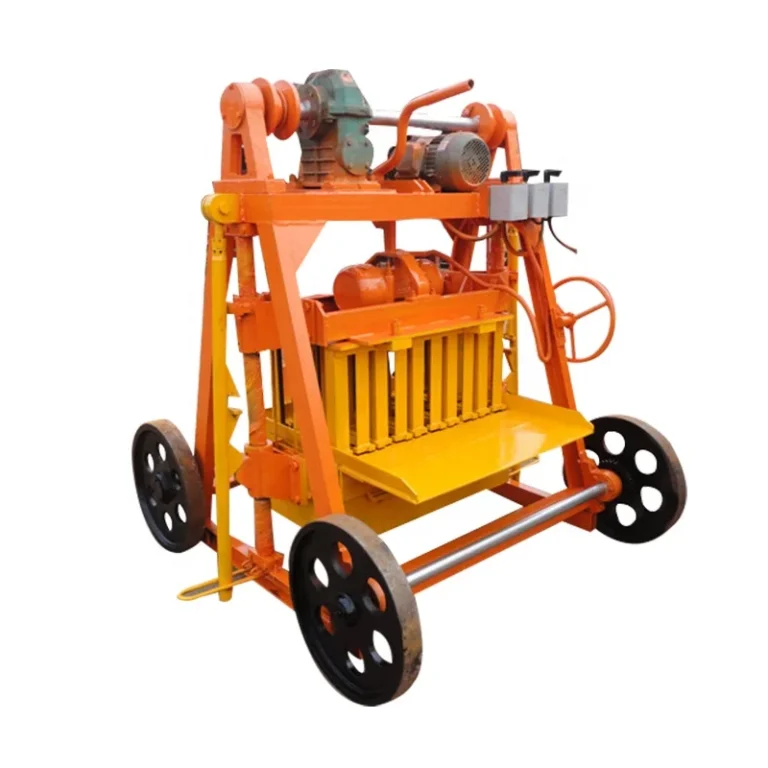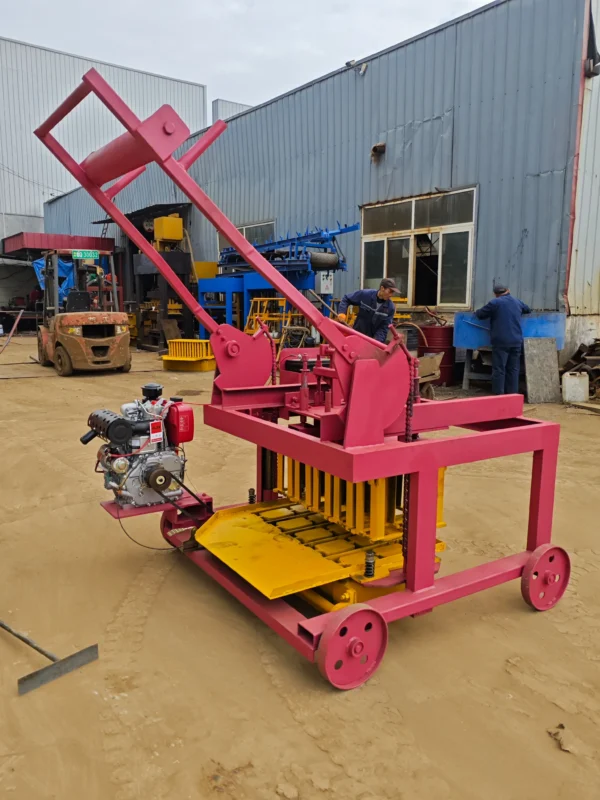
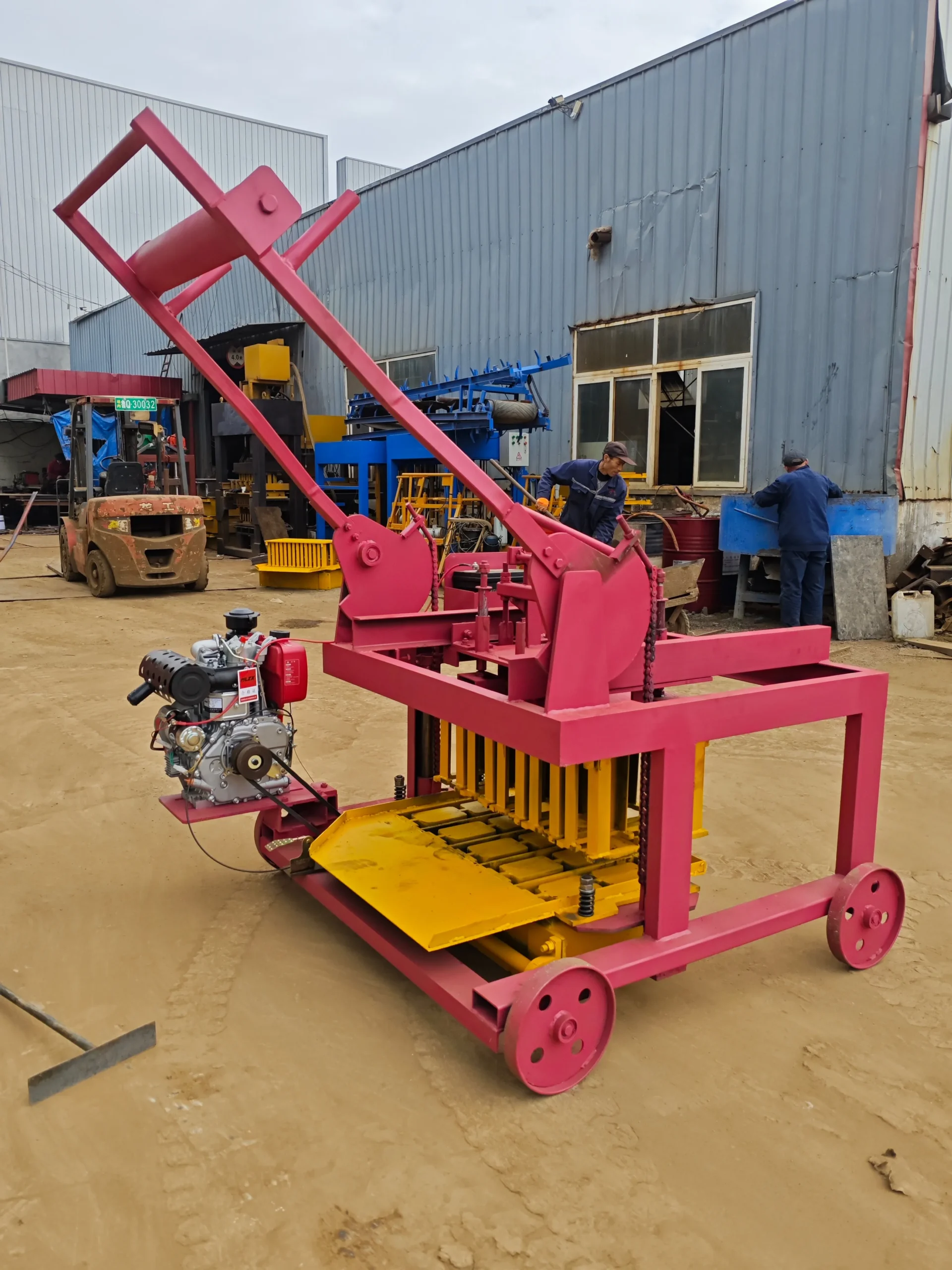
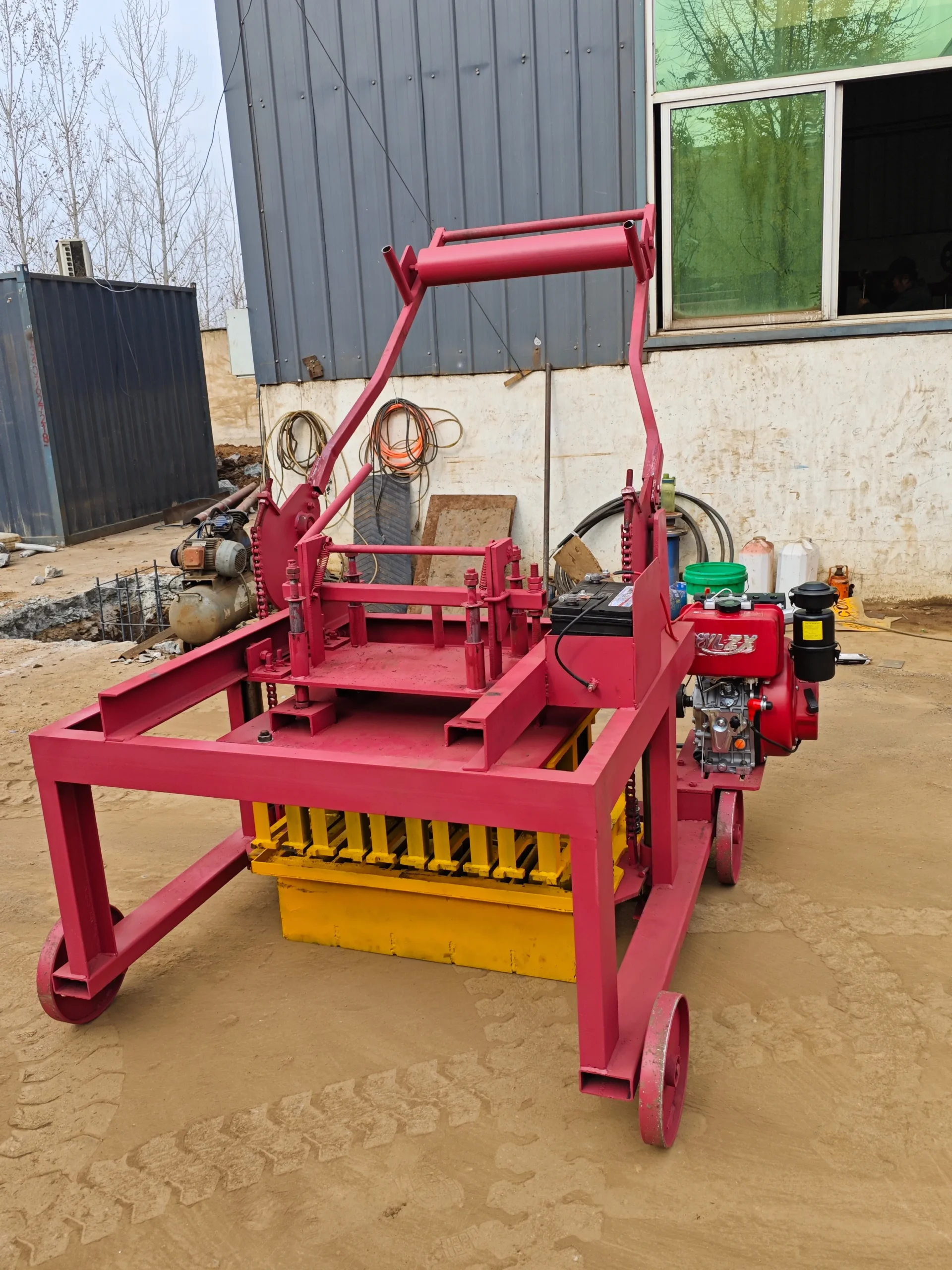
Description
Vibration Tuned to Local Aggregate — cycle time and block strength are calculated from your raw material test before the QMR4-45 leaves the factory.
Technical Specifications
| Parameter | Value |
|---|---|
| Model | QMR4-45 |
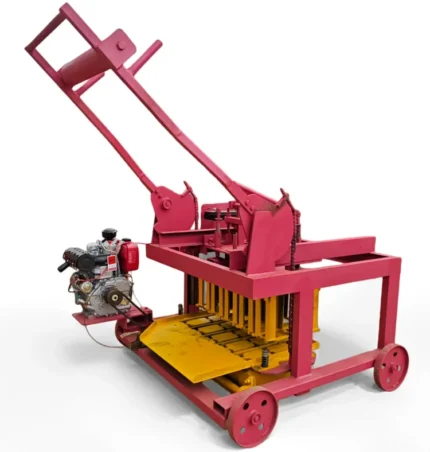
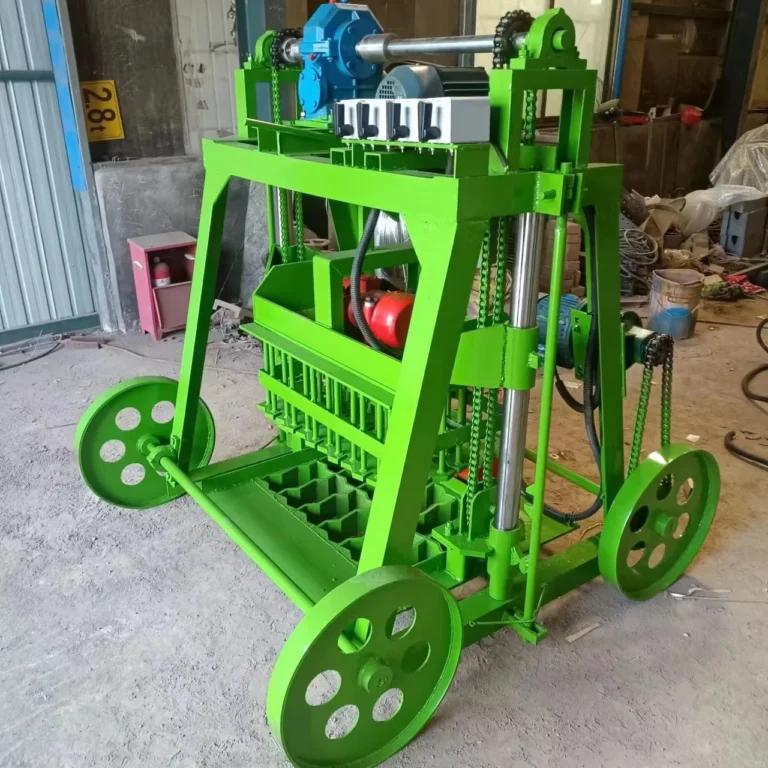
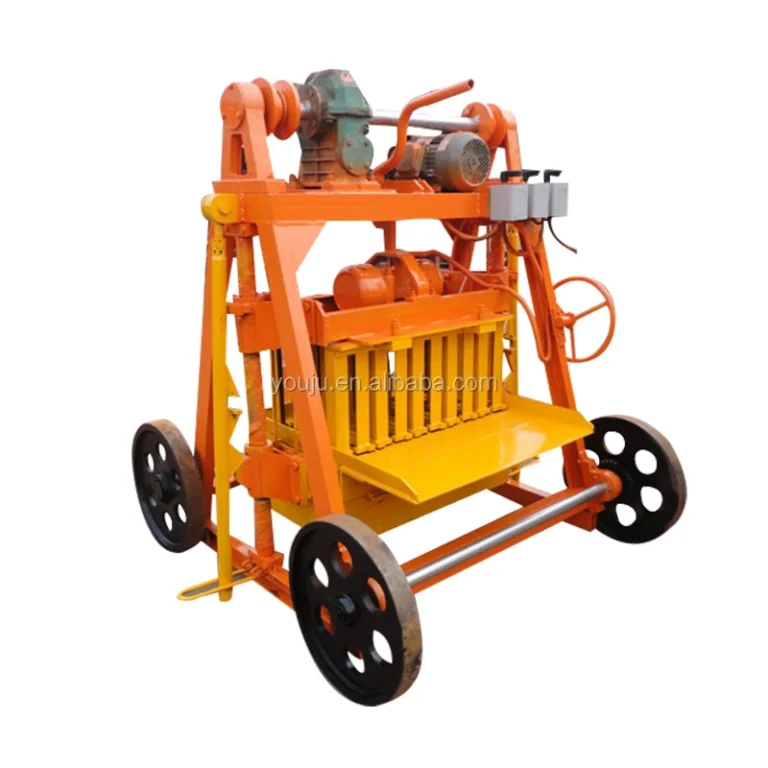
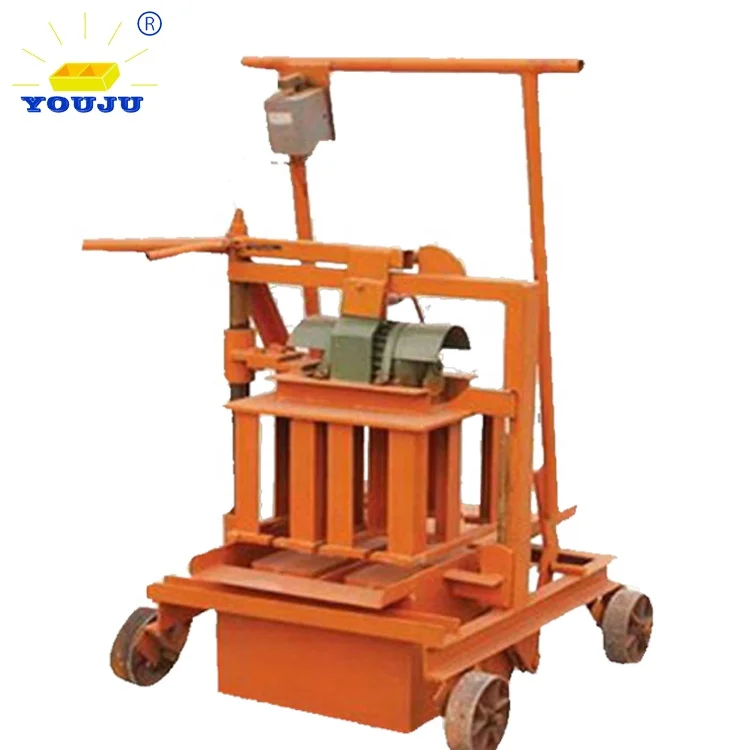
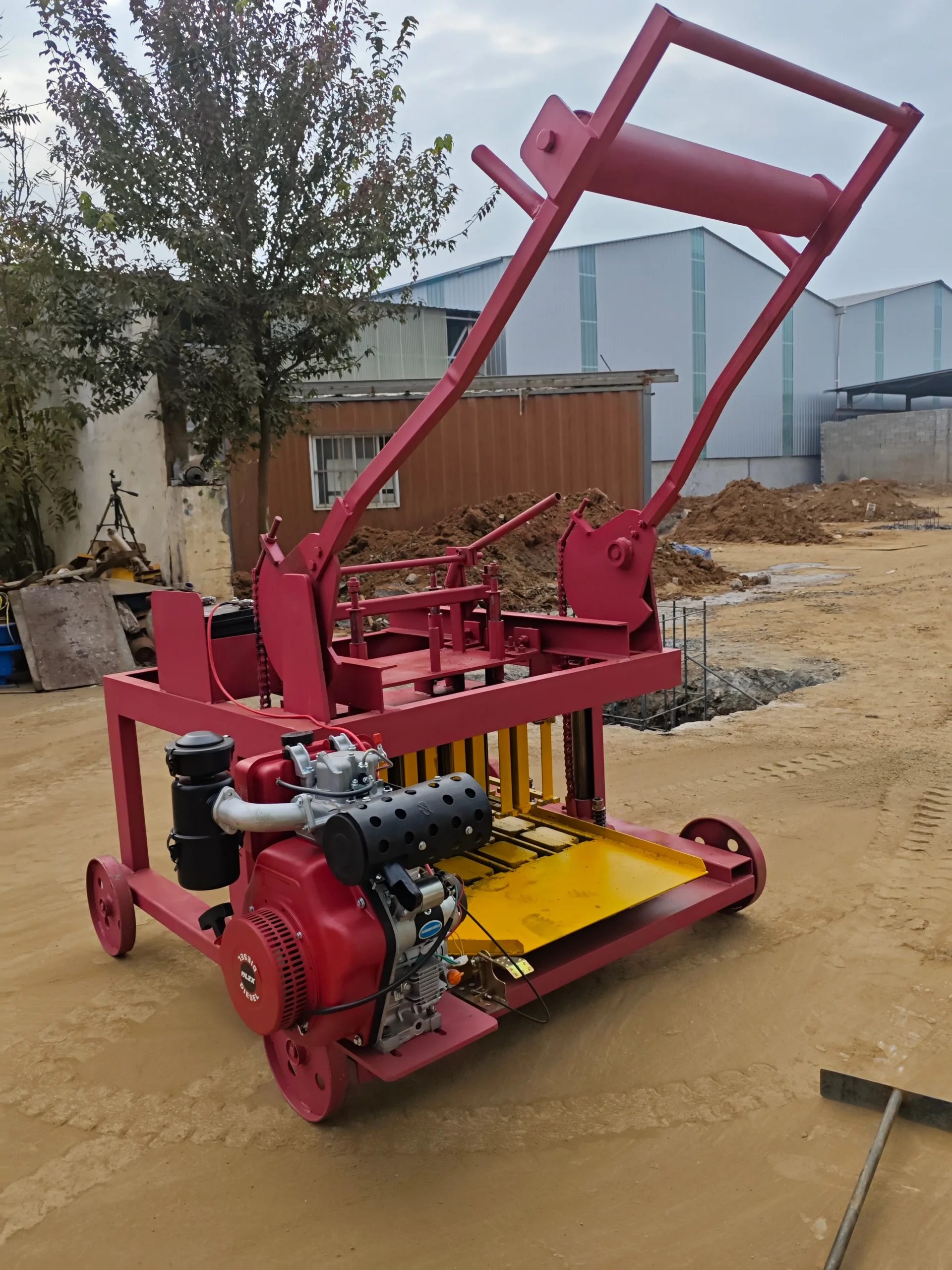
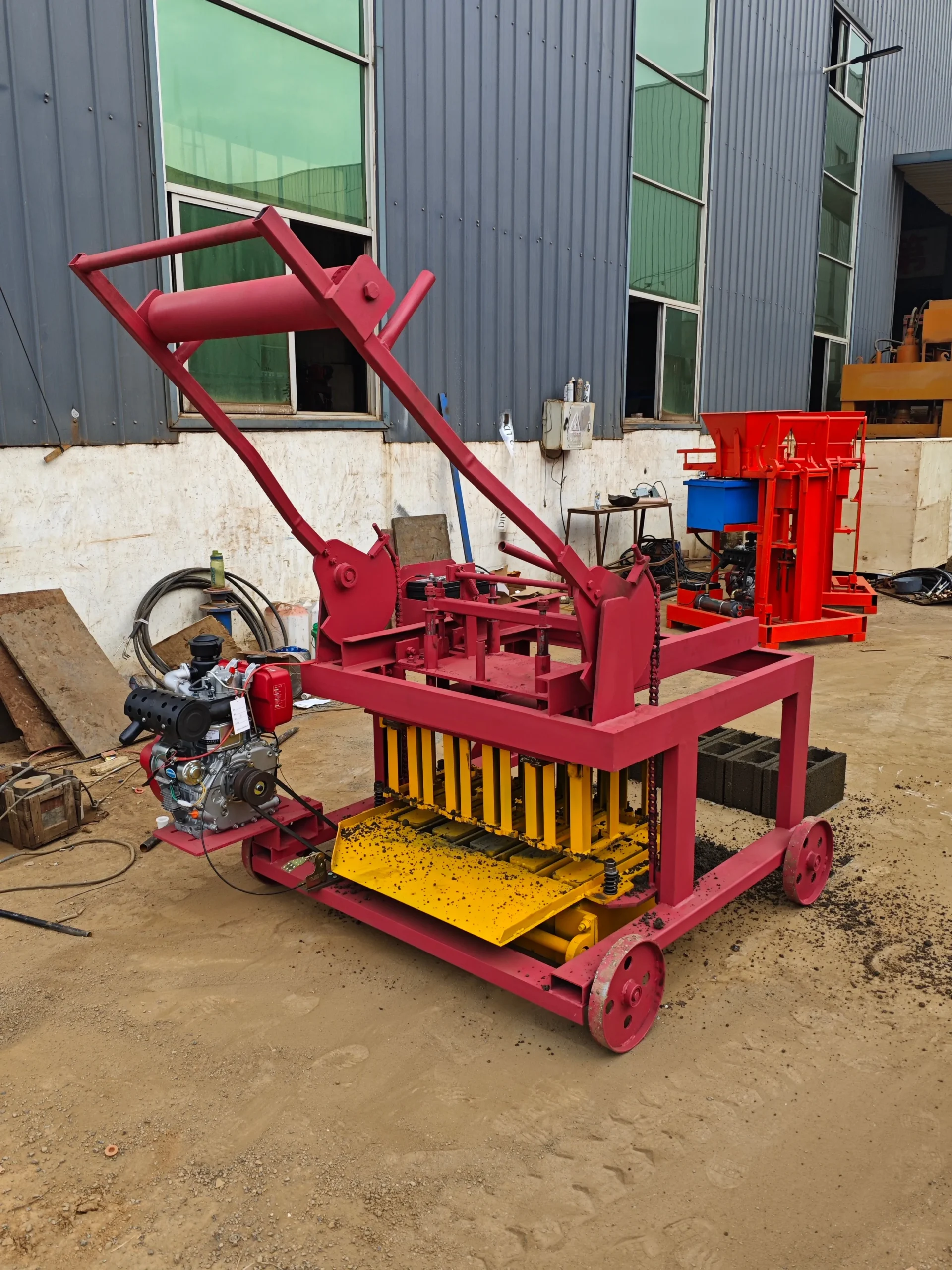
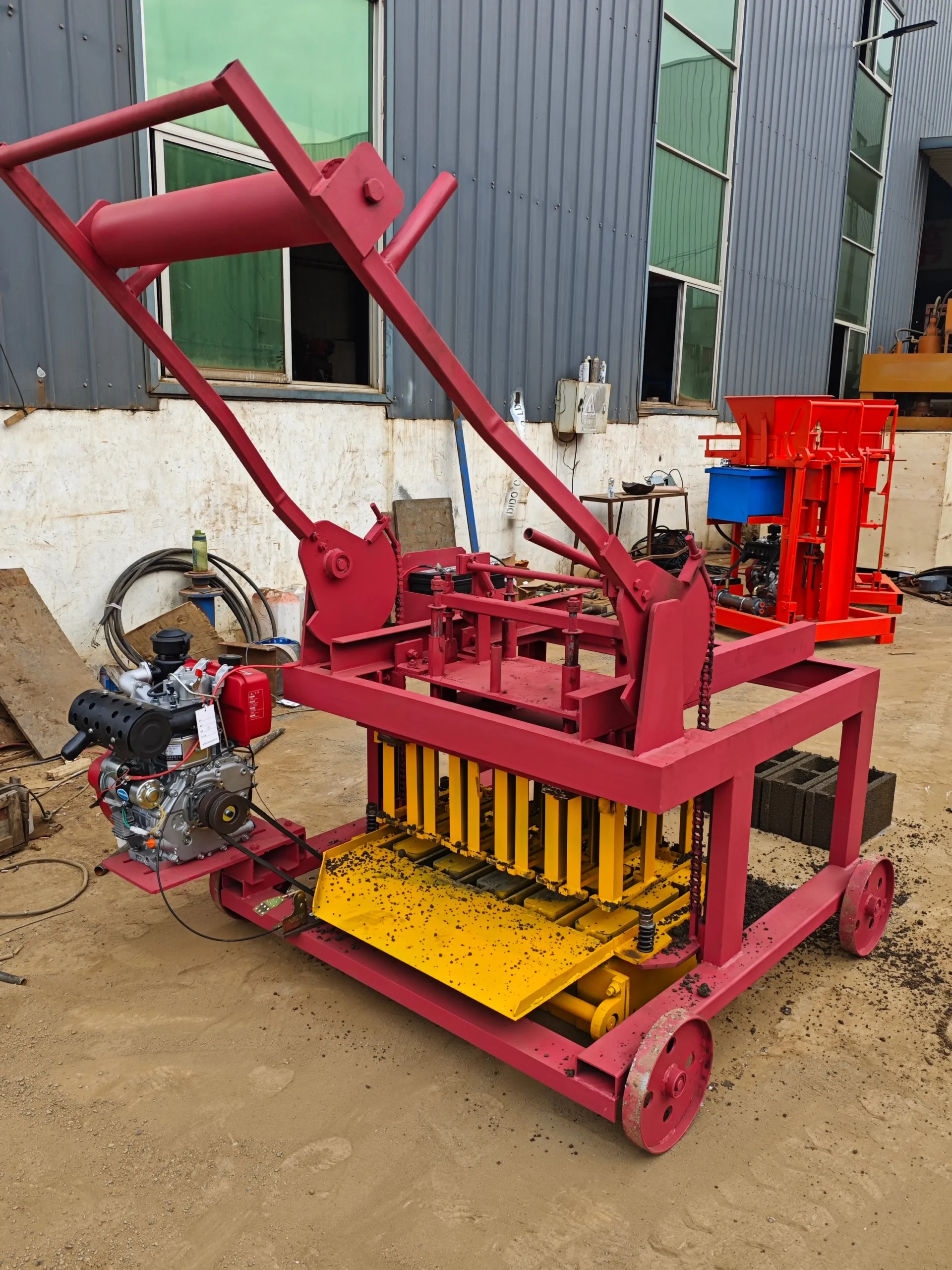
| Product Type | Mobile Diesel Engine Block Making Machine |
| Power Source | Diesel (Electric optional) |
| Rated Power | 8 hp |
| Molding Cycle | 45 s (basis not stated in source — confirm block format / material / thickness) |
| Molding Form | Vibration and Pressure |
| Vibration Force | 60 kN |
| Pallet Size | Not required (pallet-less mobile operation) |
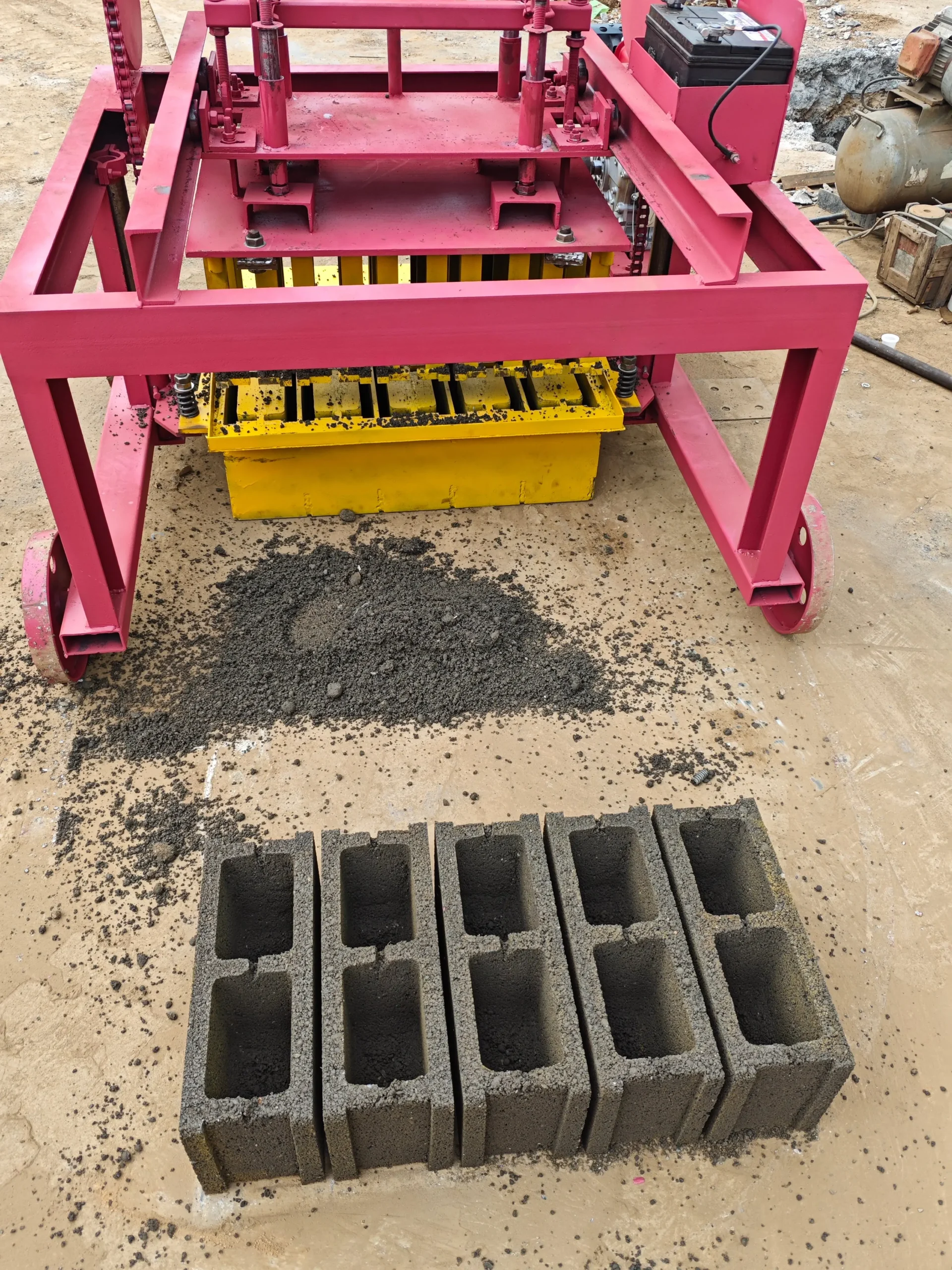
| Mould Format | Hollow block, solid block, paver brick, concrete block, fly ash brick |
| Automation Level | Manual / mobile egg-laying |
| Stacking Method | On-ground egg-laying (no pallet, no automatic stacking) |
| Overall Dimensions (L×W×H) | 2420 × 1320 × 1650 mm |
| Net Weight | 800 kg |
| Voltage & Frequency | N/A (diesel engine); electric generating unit optional for mixer |
| Assembly State | Fully assembled mobile unit |
| Basic Equipment Included | JZC350 Diesel Concrete Mixer or JQ350 Diesel Concrete Mixer (with Electric Generating Unit); Trolley |
Application Suitability
| Application | Material or Output |
|---|---|
| On-site production for housing projects | Hollow and solid blocks from crushed stone, sand and cement |
| Remote infrastructure works without grid power | Concrete blocks using locally sourced river sand and gravel |
| First block plant with minimal capital | Paver bricks and fly ash bricks without pallet infrastructure |
| Rural construction supply | Standard concrete masonry units produced directly on a prepared ground surface |
What "45 Seconds per Cycle" Leaves Out When Buying an Automatic Mobile Block Machine
The molding cycle only matters when tied to a specific block format and validated against your local mix.
A mobile egg-laying press cycles faster on thin pavers than on tall hollow block*ydraulic pressure has longer to hold the core pins in place. Sellers who quote a single cycle figure across all moulds leave buyers with daily output far below the number they used to justify the purchase [NEED_CITE: block machine cycle time versus format and material density]. I spent weeks on a project site watching operators blame the PLC controlled mobile block machine when the real problem was a high-clay sand that absorbed water differently from the clean aggregate the factory test assumed.
Control Path from Manual Valve to Semi-Automatic PLC Operation
The QMR4-45 ships with manual hydraulic valve control, letting an operator run the press with minimal electrical infrastructure. For buyers planning to scale output later, the same chassis accepts a PLC controlled mobile block machine conversion that replaces the manual valves with solenoid-driven sequencing, reducing the operator count from two to one while holding cycle timing consistent batch after batch.
Diesel Power Where the Grid Has Not Arrived Yet
The 8 hp diesel engine removes the three-phase electrical requirement that forces most mobile presses to sit idle on greenfield sites. An optional electric generating unit powers the companion JZC350 mixer so the entire mixing and pressing loop runs independently of local utility connections. This matters when a contractor wins a housing tender in a rural district and needs blocks curing on the ground before the power company installs the transformer [NEED_CITE: off-grid construction site power constraints in developing regions].
Vibration Force, Pressure and the Mix Design Triangle
The 60 kN vibration force must be matched to the hydraulic pressure and the buyer’s aggregate grading to produce blocks that pass a compressive strength test. Coarse crushed stone needs higher vibration amplitude to settle into the mould corners, while fine fly ash mixes require lower vibration and longer pressure hold to avoid segregation. We ask for a raw material sample before finalising the vibration motor pulley ratio and the hydraulic relief valve setting so the press is tuned before it ships, not after it arrives and produces a week of weak blocks.
The Hidden Cost of Skipping the Automation Decision Early
Buyers who purchase a manual mobile unit and later decide they need PLC control often face a full valve block replacement, new wiring harness and PLC panel retrofit that costs more in downtime than specifying the upgrade path at the quotation stage. Locking in the automation level — or at least the panel mounting points and wiring conduit — before production avoids a workshop teardown three months after commissioning [NEED_CITE: retrofit cost versus factory-installed automation on mobile block presses].
Why Procurement Through a Machinery-Focused Line
Our specification process starts with the block format the buyer actually sells in their market, not a catalogue default. Mould drawings are confirmed against the buyer’s dimensional standards before steel is cut. The pallet-free egg-laying design means no pallet purchase, no curing rack build-out and no forklift dependency on day one. Mixer, press and trolley are quoted as one matched set so the mixing cycle does not bottleneck the molding cycle. Factory test records document the vibration force and pressure settings achieved with the buyer’s sample material, providing a baseline the operator can return to after the first mould change.
Documentation & Verification
- Machine specification sheet listing vibration force and hydraulic pressure settings tuned to your aggregate sample
- Mould drawing and format list confirming dimensional tolerances for each block type ordered
- Factory test record documenting cycle time on your target block format before dispatch
- Operation and maintenance manual with wear parts list and first replacement schedule
- Voltage and control language confirmation for the optional electric generating unit
Installation, Commissioning & Support
- Arrives fully assembled; requires only a level, compacted ground surface to begin production
- Diesel engine pre-filled and run-tested; operator checks oil and coolant before first start
- Vibration motor pulley and hydraulic relief valve set during factory test; re-verify after transport
- Companion mixer electrical connection confirmed to the generating unit voltage and frequency
- Mould change procedure demonstrated on-site using the formats included in the purchase order
- Wear parts list identifies vibration springs and hydraulic seals with reorder part numbers
What to Prepare Before Requesting a Quotation
Send us the block formats your market requires, including dimensional drawings or samples of blocks currently sold. Provide a representative sample of the sand, aggregate or fly ash you plan to use so we can run a bench test and confirm the vibration and pressure settings. Let us know whether grid power will be available within the project timeline or if the diesel configuration must cover both press and mixer for the full contract duration.
Frequently Asked Questions
Q: How is the 45-second cycle time measured and which block format does it assume?
A: The 45-second figure is a baseline that varies by mould depth and block geometry. Taller hollow blocks require longer vibration and pressure hold than thin paver bricks. We state the cycle time against the specific format you order and validate it during the factory test using your material sample.
Q: What automation level is supplied and what is the upgrade path?
A: The QMR4-45 ships with manual valve control. A semi-automatic PLC panel can be specified at order or retrofitted later, replacing manual valves with solenoid sequencing to reduce operator count and hold cycle timing consistent across shifts.
Q: Can the diesel engine be replaced with an electric motor later?
A: Yes. The press accepts an electric motor drive when three-phase power becomes available. Voltage and frequency must be confirmed before the motor is sourced so the winding matches local supply standards and avoids commissioning delays.
Q: How is vibration force matched to the local aggregate and target block strength?
A: We test the buyer’s sand and aggregate sample to determine the vibration amplitude and hydraulic pressure needed for adequate compaction. The vibration motor pulley ratio and relief valve are then set before shipment, providing a documented baseline for the operator.
Q: What PLC display languages are available and is remote diagnostics supported?
A: PLC language is configurable to the operator’s preference when the semi-automatic upgrade is specified. Remote diagnostics depends on site connectivity and is discussed during the automation scoping stage rather than assumed on every mobile unit.