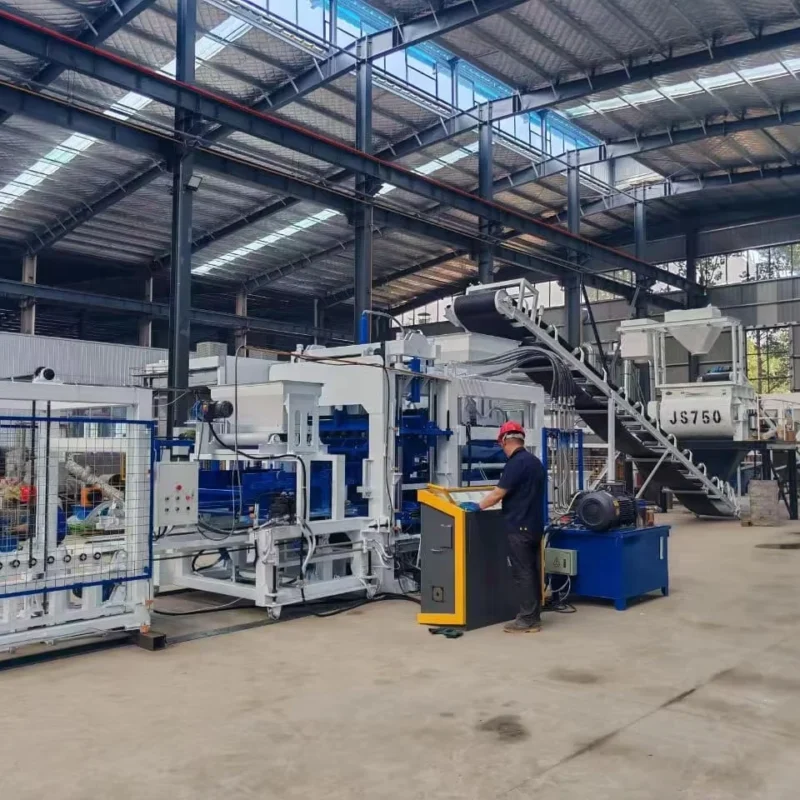

Description
Intelligent Control Configuration — every QT8-15 PLC controlled automatic block making machine ships with operator language, voltage, and batching parameters locked in before the crate leaves Linyi.
Technical Specifications
| Parameter | Value |
|---|---|
| Model | QT8-15 |
| Product Type | Automatic Hydraulic Block Making Machine |
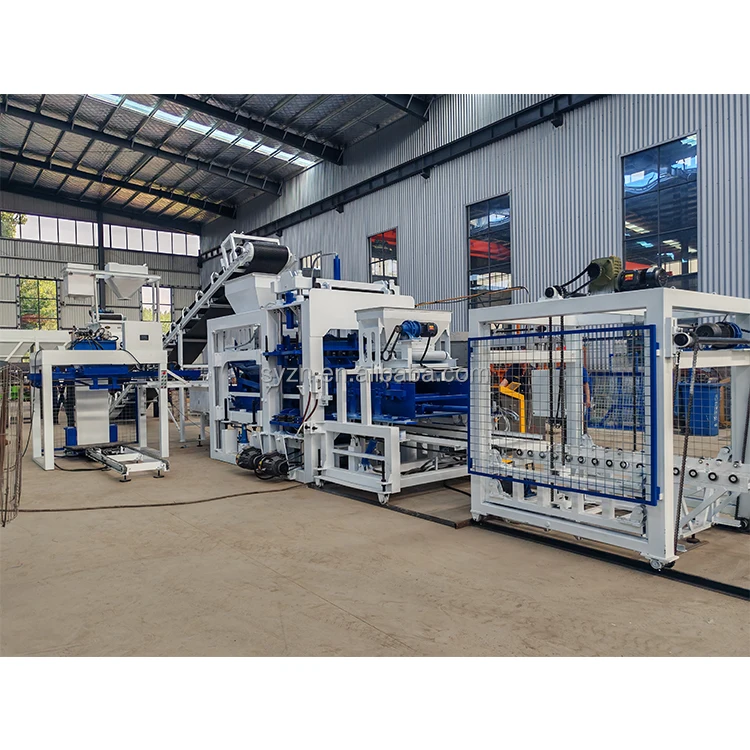
| Overall Dimensions (L×W×H) | 8300 x 1860 x 3000 mm |
| Rated Pressure | 21 MPa |
| Vibration Form | Platform Vibration |
| Vibration Frequency | 2800–4500 RPM |
| Pallet Size | 950 x 900 mm |
| Molding Cycle | 15–25 s (basis to be confirmed per block format) |
| Overall Power | 46 kW |
| Control System | PLC with touch screen HMI, manual/automatic selectable |
| Block Comprehensive Strength | Up to 15 MPa |
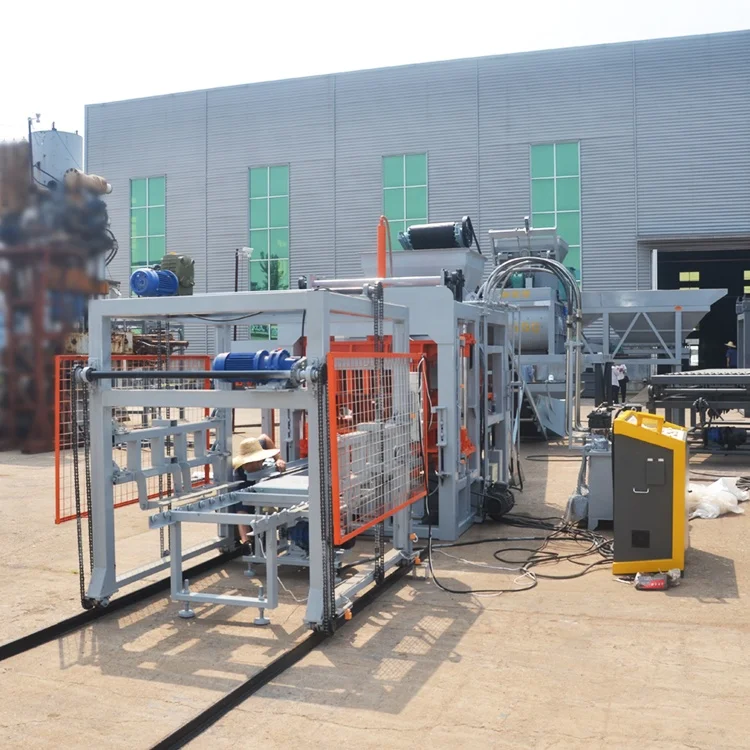
| Stacking Method | Automatic stacker, 2 pallets per lift, 3–6 layers |
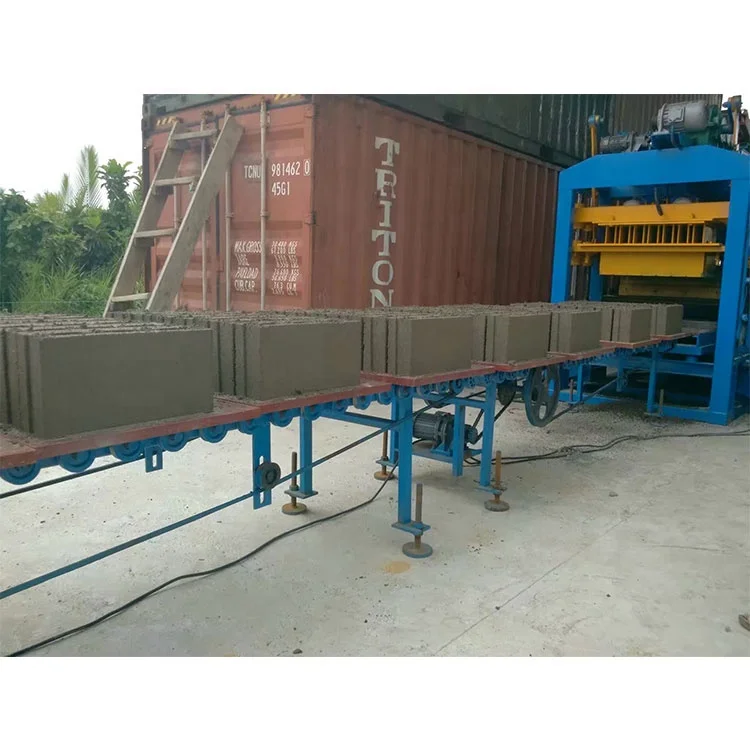
| Support Equipment | JS750 mixer, 8 m belt conveyor, pallet feeder, block conveyor, hydraulic station |
| Voltage & Frequency | Configurable to target market standard (basis to be confirmed) |
| PLC Display Language | Selectable per operator requirement (basis to be confirmed) |
| Certification | CE declaration where applicable |
Application Suitability
| Application | Material or Output |
|---|---|
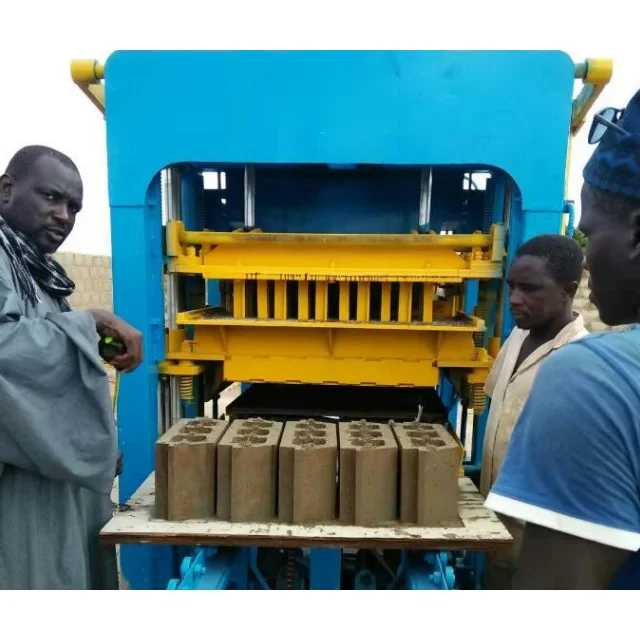
| Hollow block production | Crushed stone, cement, sand — standard walling formats |
| Solid block production | Dense aggregate mixes for load-bearing masonry |
| Paving block production | Fine aggregate and pigment blends for interlocking pavers |
| Kerbstone and specialty formats | Custom mould profiles matched to local infrastructure specs |
What "15-Second Cycle Time" Leaves Out on a PLC Controlled Automatic Block Making Machine
A cycle number without the block format behind it is marketing, not engineering.
When I first walked onto a block plant in Nairobi, the owner pointed at his PLC screen showing a cycle count and told me his output should be double what he was actually getting. The cycle time he had been quoted assumed a thin paving block; he was running 200 mm hollow blocks that needed longer feed and vibration windows. The PLC controlled automatic block making machine was doing exactly what it was told — but what it had been told was never matched to his product. [NEED_CITE: realistic block machine output calculation methodology] That mismatch is the single biggest reason buyers feel misled after commissioning, and it has nothing to do with the press itself.
Tuning Vibration and Feed per Format
The touch screen interface on the QT8-15 lets the operator store feeding duration, vibration time, and hydraulic dwell separately for each mould loaded onto the machine. When a plant switches from hollow blocks to solid pavers mid-shift, the PLC recalls the stored profile rather than relying on the operator to re-dial settings manually. This is where a PLC controlled automatic block making machine separates itself from relay-based panels — the recipe lives in the controller, not in someone’s head.
Isolation That Keeps the Hydraulics Alive
The hydraulic station sits independent from the main press frame, physically decoupled from the 2800–4500 RPM platform vibration and from the dust zone around the mould box. [NEED_CITE: hydraulic system contamination in concrete block production environments] Hydraulic valves and pump seals degrade faster when vibration transmits through shared mounting points. By isolating the station, the QT8-15 keeps pressure response consistent across the 21 MPa range, which directly governs block density and therefore compressive strength at the curing yard.
Reading the Spec Sheet Honestly
Platform vibration at up to 4500 RPM paired with 21 MPa hydraulic pressure produces the compaction force that determines whether a hollow block reaches its 15 MPa target strength or crumbles at the edges. Pallet size at 950 x 900 mm defines the maximum mould footprint and therefore the block count per cycle — a figure that matters far more than raw cycle speed when calculating daily output. The JS750 mixer in the support line must discharge a full batch within the press cycle envelope; if the mixer cannot keep up, the PLC simply waits, and the line loses throughput without any alarm firing. Automatic stacking at two pallets per lift across 3–6 layers removes manual pallet handling from the output side, but only if the stacking height matches the curing rack clearance the buyer already has on site.
The Commissioning Delay Nobody Budgets For
I spent two days standing next to a QT8-15 in Kenya because the PLC display shipped in English and the operators read Swahili. The machine was physically perfect; nobody could navigate the parameter screens. Remote language pack flashing eventually solved it, but the plant lost its entire first production window. Voltage mismatches cause a harder stop — a 46 kW system configured for 380 V / 50 Hz plugged into a 440 V / 60 Hz supply will trip protection or burn windings before the first cycle completes. [NEED_CITE: voltage and frequency standards by export market] These are not defects; they are configuration details that must be confirmed before the machine is wired on the factory floor, not after it arrives in a container.
Why Buyers Source This Line Here
Block machinery is the single manufacturing focus, so the QT8-15 press, its mould, pallet spec, and handling equipment are specified as one matched system rather than assembled from unrelated suppliers. The configuration is set against the buyer’s actual mix design and target block format instead of a catalogue default. Mould design covers the formats the buyer’s local market sells, including custom profiles drawn to buyer specifications. Automation level is selectable — a plant can commission semi-automatic now and add automatic stacking or pallet feeding later without replacing the press. Installation includes on-site commissioning and operator training so the team running the PLC on day one is the same team that was there when the parameters were first set.
Documentation & Verification
- Line layout and capacity calculation stating the specific block format assumed for cycle time
- PLC parameter backup procedure with step-by-step screen navigation in the operator’s language
- Hydraulic and electrical schematics showing valve block layout and sensor positions
- Factory test record run on the buyer’s requested block format before dispatch
- Wear parts and mould compatibility list with first replacement order lead times
- Voltage, frequency, and control language confirmation signed off before production
Installation, Commissioning & Support
- Foundation pad must support 8300 x 1860 mm footprint with level tolerance for platform vibration alignment
- Dedicated 46 kW circuit with correct voltage and frequency confirmed before the hydraulic pump is energized
- PLC display language verified at factory test and reconfirmed at on-site commissioning
- First mould change practiced with operators during training to establish realistic format swap time
- Automatic stacker synchronized to press cycle so two-pallet lifts clear before the next press discharge
- Hydraulic oil sample taken at 500 operating hours to check for contamination from the isolated station
What to Share When You Open an Inquiry
To size the QT8-15 accurately, tell us which block formats you sell today and which ones you plan to add, along with the local aggregate you source and the cement ratio your mix uses. Share your site voltage, frequency, and the language your operators read on a screen. Let us know whether your curing racks and forklift are already on site so pallet size and stacking height can be matched to what you have, not what a catalogue assumes.
Frequently Asked Questions
Q: How does the PLC store and recall parameters for different block formats?
A: Each mould profile stores its own feeding time, vibration duration, and pressure dwell as a named recipe on the touch screen. When the operator selects the next format after a mould change, the PLC loads the matching profile so the first cycle off the new mould runs at the correct settings rather than the previous format’s defaults.
Q: What automation upgrade path is available from a semi-automatic start?
A: The QT8-15 platform supports adding automatic pallet feeding, stacker integration, and cubing in stages. The PLC hardware and wiring conduit for these stations are present from initial build, so adding automation later means installing the mechanical modules and enabling them in the controller rather than rewiring the press.
Q: How is vibration time tuned to match local aggregate and mix design?
A: During commissioning, the test batch is run through a short vibration sweep while block density is measured at each step. The PLC records the duration that delivers target strength without over-compacting the surface, and that value is saved in the format recipe for repeatable production.
Q: What voltage, frequency, and PLC language options are confirmed before shipment?
A: The buyer confirms site voltage, phase, and frequency along with the operator’s preferred display language before the machine enters production. The factory test is then run at that exact electrical configuration, and the language pack is loaded and verified on the actual touch screen that ships with the machine.