

Description
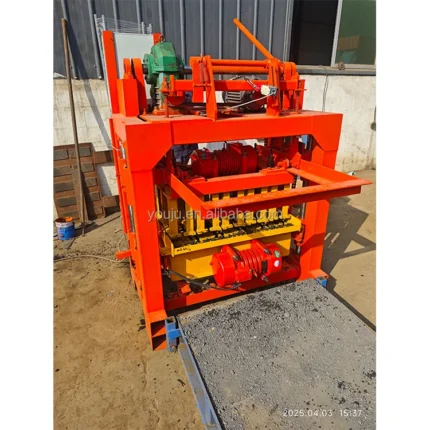
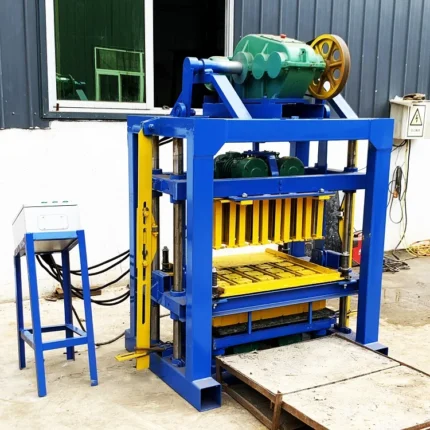
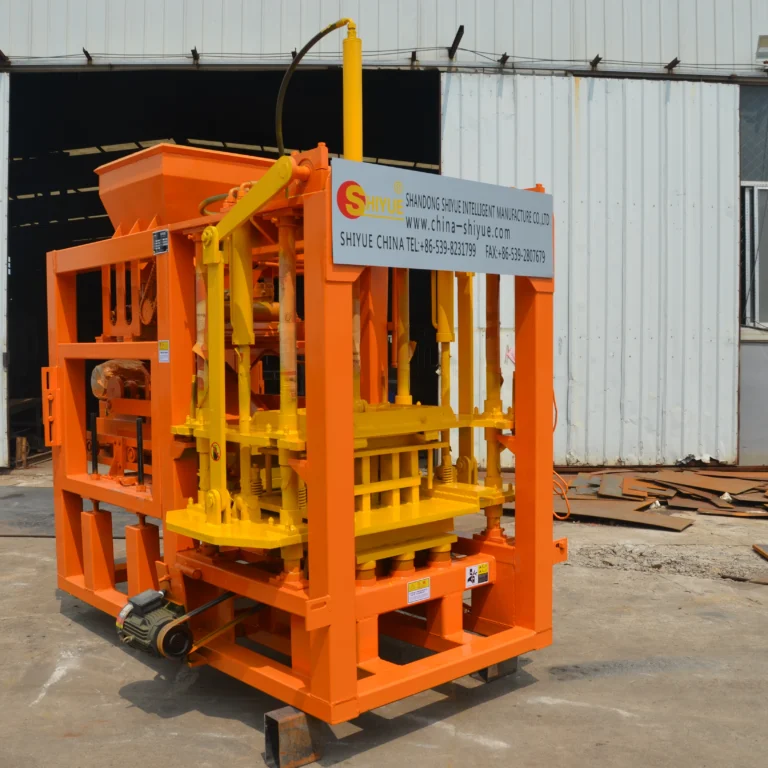
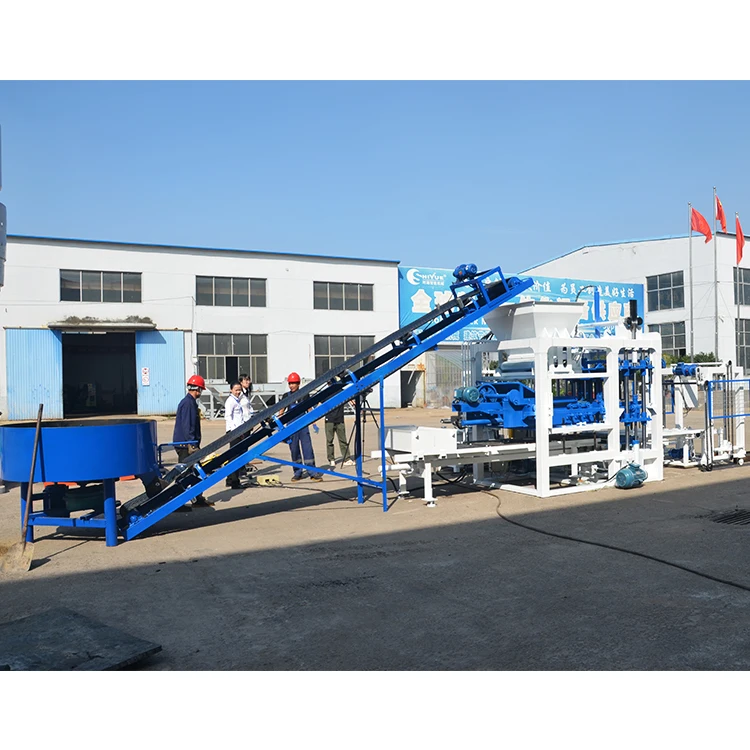
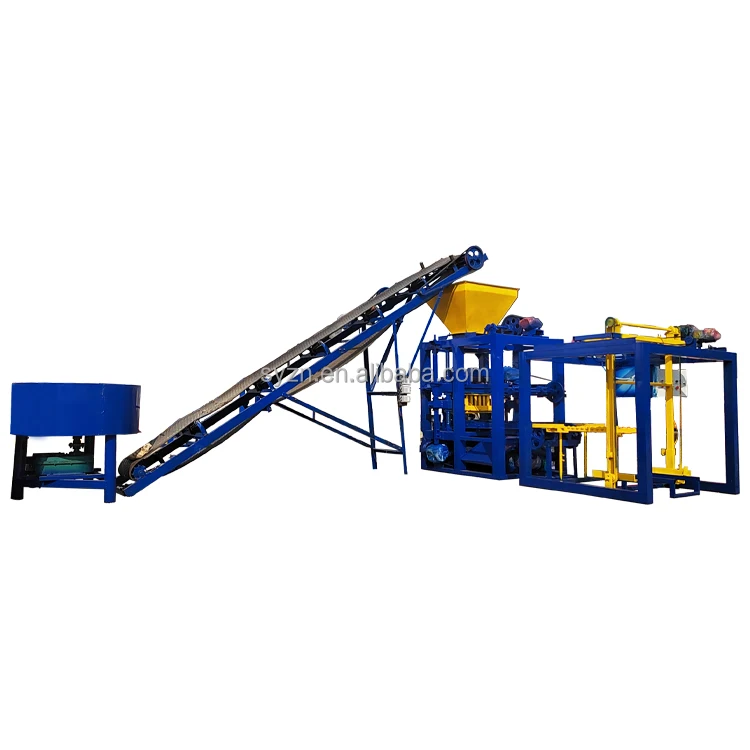
Configurable Automation Path — The QTJ4-24 ships as a semi-automatic press with mechanical molding and spiral feeding, yet its control architecture accepts PLC-driven pallet handling and stacking modules when your output volume justifies the upgrade.
Technical Specifications
| Parameter | Value |
|---|---|
| Model | QTJ4-24 |
| Product Type | Stationary Block Making Machine |
| Overall Dimensions (L×W×H) | 3600×1700×2560 mm |
| Pallet Size | 850×450 mm |
| Molding Cycle | 24–26 s (basis not stated in source — confirm block format and material) |
| Rated Power | 11.95 kW |
| Vibration Force | 45 kN |
| Net Weight | 2 T |
| Vibration Configuration | 2×3 kW lower vibrators + 2×1.5 kW upper vibrators |
| Material Distribution | Full-automatic spiral |
| Reducer for Mold Lifting | 350-type |
| Molding Method | Mechanical |
| Automation Level | Semi-automatic, PLC control available as upgrade option |
| Control System | Available with PLC or relay-based control (basis to be confirmed at order) |
| Voltage & Frequency | Configurable per destination market (basis to be confirmed at order) |
| Warranty | 1 year for whole machine (excluding spare parts) |
Application Suitability
| Application | Material or Output |
|---|---|
| Hollow block production for small-to-medium block plants | Crushed stone, sand, cement blends |
| Solid brick manufacturing for masonry contractors | Local aggregate with cement binder |
| Interlocking brick for paving and landscaping | Graded sand-cement mixes |
| Paving brick for walkways and yards | Coarse aggregate with cement |
| On-site block production for construction projects | Site-sourced sand and purchased cement |
What the Molding Cycle Number Actually Means for Your Daily Output
A 24–26 second cycle is only meaningful when tied to the exact block format and mix you plan to run.
I have watched buyers in the Gulf region sign off on a QTJ4-24 automatic block making machine based on a quoted cycle time, only to discover on arrival that the figure assumed a standard hollow block in a calibrated aggregate blend — while their site was running desert sand with entirely different flow characteristics. The molding cycle stretched, daily output dropped, and the blame landed on the machine instead of the specification gap [NEED_CITE: block format assumptions in cycle time quotations]. The QTJ4-24 PLC controlled stationary block machine must be quoted against your confirmed block dimensions, target strength, and the aggregate you can actually source locally.
Control Architecture That Grows With Your Plant
The QTJ4-24 automatic block making machine starts as a mechanically molded press with full-automatic spiral material distribution, meaning the operator manages pallet feeding and stacking manually. This keeps the initial investment contained for entrepreneurs launching a first production line. The control cabinet, however, is pre-wired to accept a PLC module that can take over pallet indexing, ejection timing, and eventually stacking sequences. When your daily volume crosses the threshold where manual pallet handling becomes the bottleneck, the transition is an electrical and programming exercise rather than a mechanical rebuild.
Matching Vibration to Your Aggregate, Not a Brochure Default
Block strength depends on how thoroughly the vibration energy compacts the specific particle size distribution in your mix. The dual-level system on this QTJ4-24 PLC controlled stationary block machine — two 3 kW lower vibrators paired with two 1.5 kW upper vibrators — delivers energy from both directions, collapsing air voids in tall hollow blocks and ensuring the face mix settles evenly in pavers. On a job in the Eastern Province, I spent three days adjusting frequency and amplitude on a comparable press because the contractor’s washed dune sand responded completely differently from the crushed limestone the factory had tested with [NEED_CITE: vibration tuning for regional aggregate types]. Configuration against your actual raw material prevents that commissioning delay.
Reading the Specification Sheet Against Real Production Needs
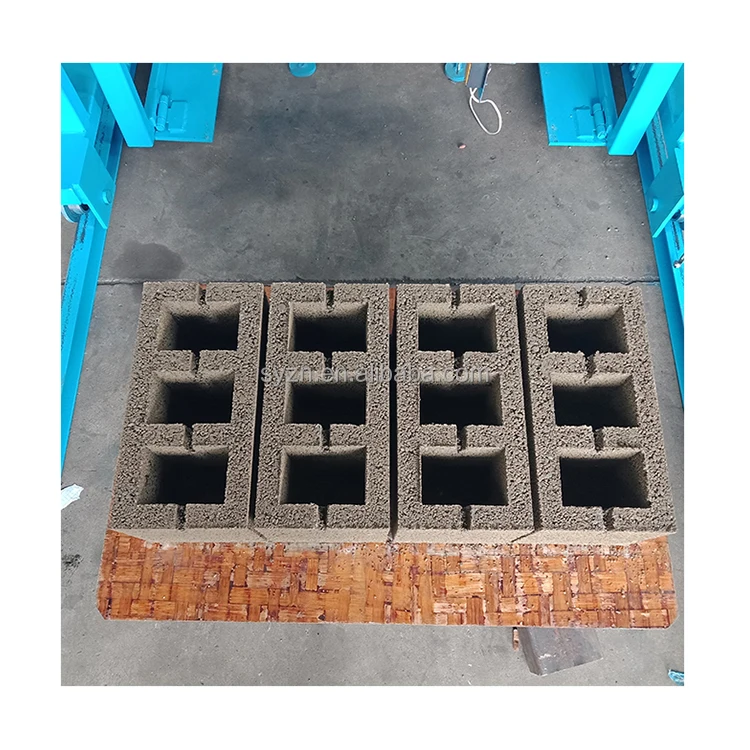
The 45 kN vibration force and mechanical molding method together determine the density ceiling your blocks can reach; higher compaction pressure on a hydraulic press would push that ceiling further, but for hollow and solid blocks in the small-to-medium output range, mechanical vibration at this force level produces adequate structural strength when paired with a proper cement ratio. The 850×450 mm pallet size defines the maximum block array per cycle — four standard hollow blocks fit this footprint — and must align with the curing rack spacing and forklift tine width already in your yard. The 11.95 kW rated power draw means you need a dedicated circuit sized with startup surge in mind; undersizing the breaker is a recurring cause of commissioning stalls on sites with temporary power. The 350-type reducer for mold lifting is rated for continuous cycling, which matters when you run two shifts back to back and cannot afford a gearbox swap mid-week.
The Cost of Skipping the Automation Question Before Shipment
Buyers who treat pallet handling as an afterthought often find their press idling while workers manually carry loaded pallets to the curing area, turning a 24–26 second molding cycle into a much longer effective cycle once human pace is factored in [NEED_CITE: manual pallet handling impact on effective cycle time]. On the QTJ4-24, leaving the automation decision unresolved means the machine arrives without the wiring harness and sensor mounts that a future PLC upgrade requires — so retrofitting later involves returning to the control cabinet and adding field sensors that would have been inexpensive to include at the factory. Voltage and PLC display language carry the same risk: a control panel labeled in a language your operators cannot read delays training and invites parameter errors during the first production weeks.
Why Source This Press Through a Machinery-Focused Supplier
Configuration is built around the block format your market actually buys, not a default setting pulled from a catalog — the mold, vibration tuning, and pallet size are specified as one matched set. Factory testing runs your confirmed mix design before dispatch, so vibration force and cycle time are documented against your material rather than an idealized benchmark. The automation level is selectable at order and upgradeable in the field, which means you can start the QTJ4-24 automatic block making machine as a semi-automatic unit and add PLC-controlled pallet feeding when demand warrants it. Mould design covers the formats your buyers request, including custom drawings when your local market calls for a dimension outside the standard range. Operator training at commissioning ensures your crew understands mold change procedure, vibration adjustment, and daily maintenance checkpoints specific to this press.
Documentation & Verification
- Line layout and capacity calculation stating the block format and mix assumed for cycle time
- Machine specification sheet confirming vibration force, pallet size, and rated power for your voltage
- Mould drawing and format list matching your target block dimensions
- Voltage, frequency, and PLC display language confirmation signed off before production
- Factory test record documenting cycle time and block density against your submitted mix design
- Operation and maintenance manual with wear parts list and lubrication schedule
Installation, Commissioning & Support
- Foundation pad must be level and rated for the 2 T net weight plus dynamic vibration load of the QTJ4-24
- Dedicated electrical circuit matching confirmed voltage and frequency with surge capacity for 11.95 kW rated power
- Machine ships partially assembled; vibration motors and spiral feeder require on-site alignment
- First-run commissioning includes vibration frequency tuning against your local aggregate and cement blend
- Operator training covers mold change sequence, spiral feeder calibration, and reducer lubrication intervals
- Wear parts list and mold wear items identified at shipment with reorder specifications documented
What We Need to Size Your Configuration
Before we quote a QTJ4-24 PLC controlled stationary block machine, share the block formats and dimensions your market demands, the cement and aggregate types available at your site, and your target daily output per format. Confirm the voltage and frequency standard for your facility along with the preferred PLC display language. If you already operate pallet racks and forklifts, send their dimensions so the 850×450 mm pallet specification can be verified against your existing handling equipment.
Frequently Asked Questions
Q: What block format does the 24–26 second molding cycle assume?
A: The quoted cycle time on the QTJ4-24 automatic block making machine is tied to a specific block format, wall thickness, and mix design. A standard hollow block on a calibrated aggregate blend may achieve this range, while a denser paver or a mix using fine local sand will require a different cycle. We confirm the cycle time against your confirmed format and material before the order is finalized.
Q: How does the automation upgrade from semi-automatic to PLC-controlled stacking work?
A: The QTJ4-24 ships with pre-wired control architecture so that pallet feeding, ejection timing, and stacking modules can be added as PLC-driven functions. The upgrade is primarily an electrical and programming exercise — no structural modification to the press is needed. We plan the sensor and harness placement at initial build so the transition is straightforward when your volume justifies it.
Q: Can the PLC display language and voltage match my local requirements before shipment?
A: Voltage, frequency, and PLC interface language are confirmed during the specification stage and set before the machine leaves the factory. This avoids commissioning delays where operators cannot read the control panel or the electrical supply does not match the motor rating. We document these parameters in the pre-production confirmation sheet.
Q: How is vibration force matched to my local aggregate for consistent block strength?
A: The dual-level vibration system on the QTJ4-24 PLC controlled stationary block machine is tuned against your submitted mix design and aggregate sample. Frequency and amplitude are adjusted so that compaction energy matches your particle size distribution, producing consistent density across batches. Factory test records document the settings so they can be replicated on-site during commissioning.