


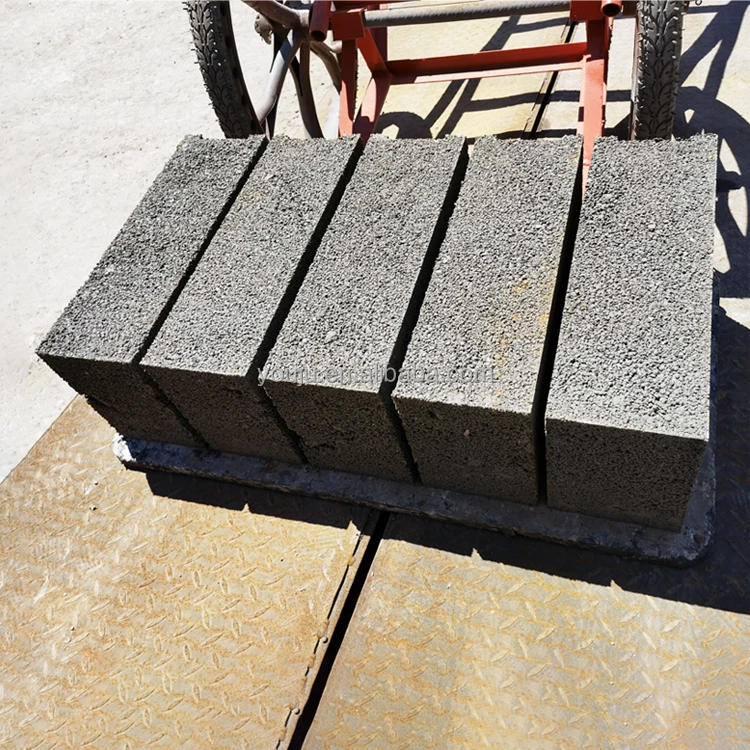
Description
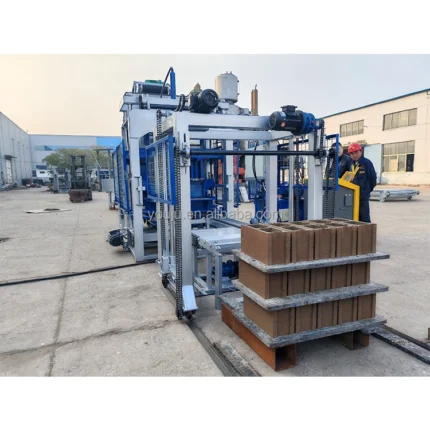
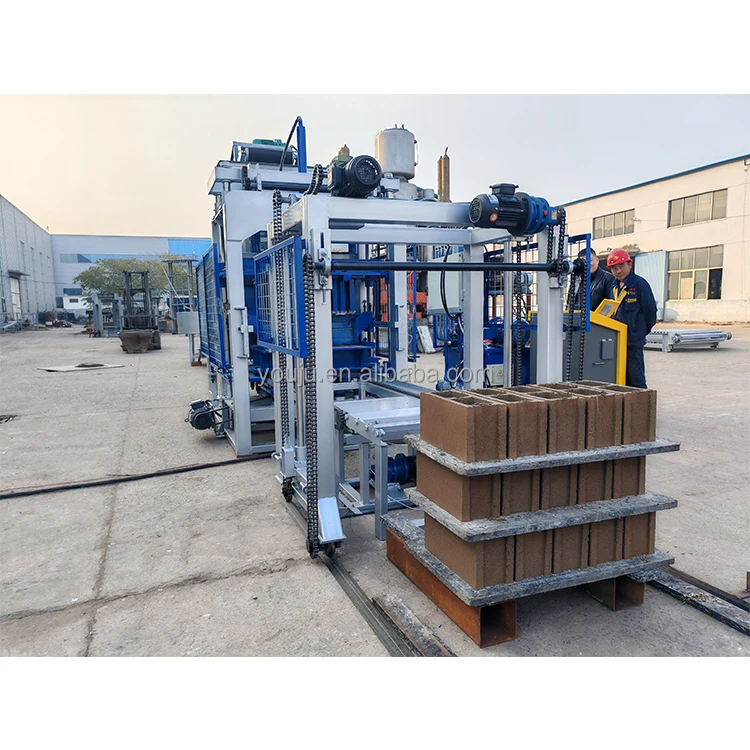
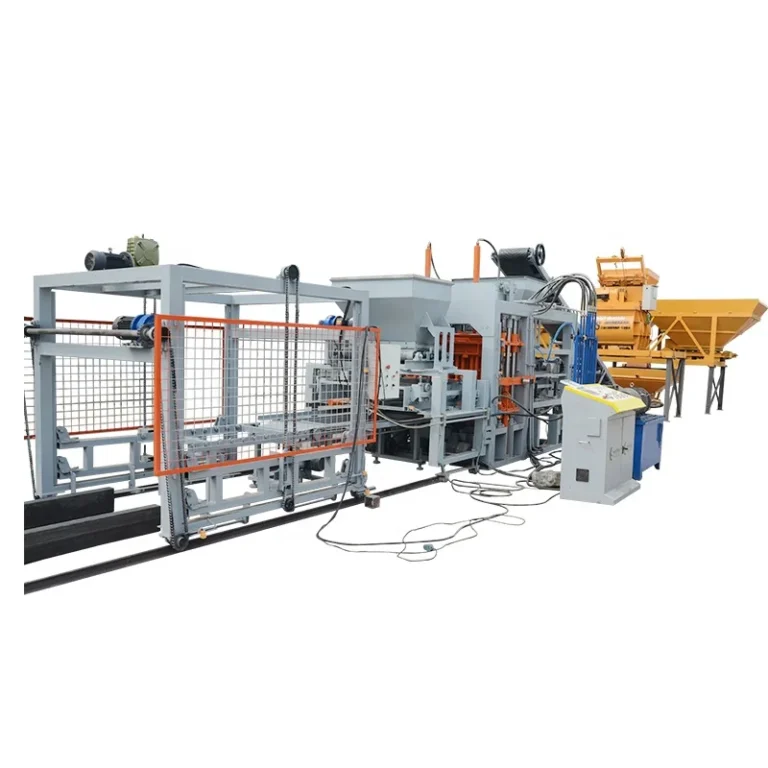
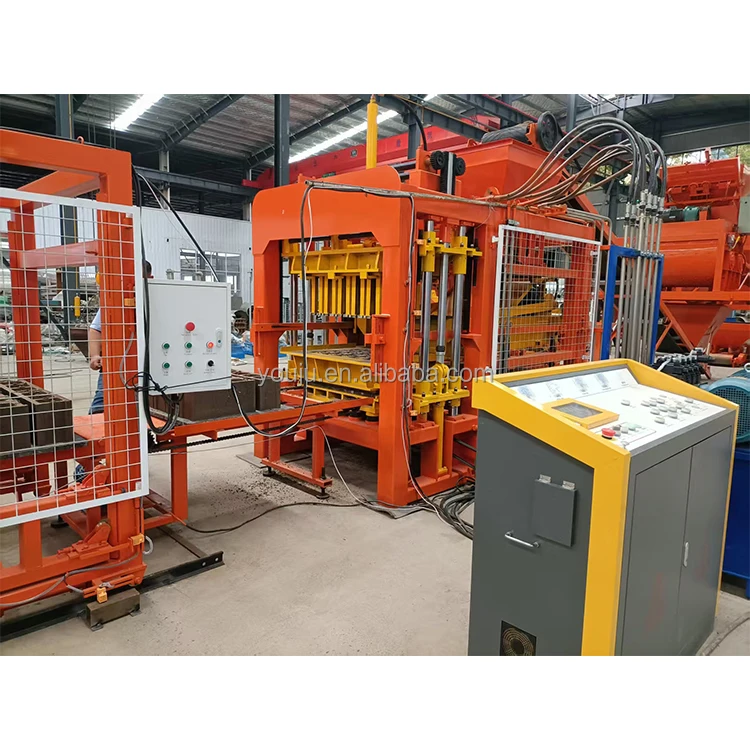
Configurable Automation — the QTJ4-40 platform supports manual, semi-automatic or PLC-controlled operation so buyers can align the block line to their actual labour model and upgrade later without replacing the press.
Technical Specifications
| Parameter | Value |
|---|---|
| Model | QTJ4-40 |
| Product Type | Hydraulic Concrete Block Making Machine |
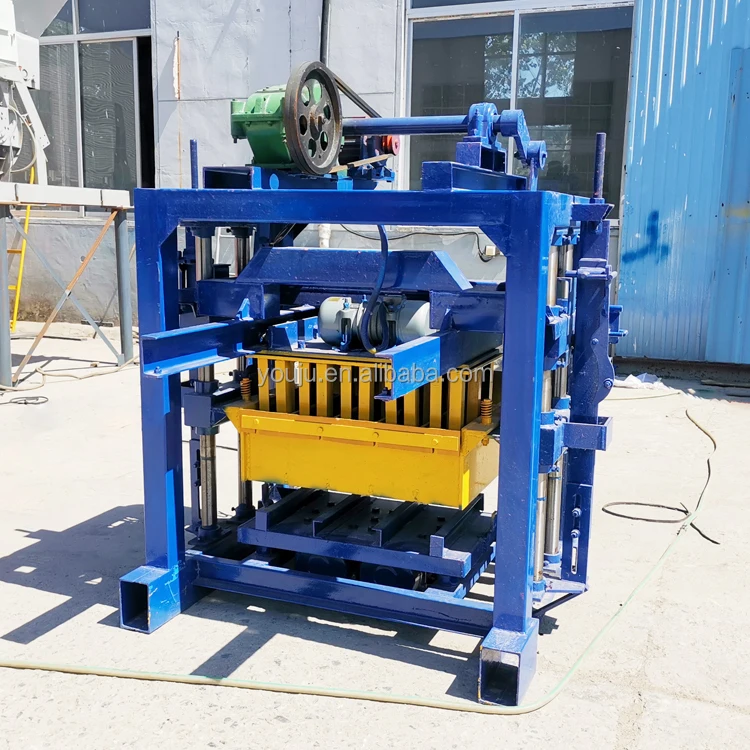
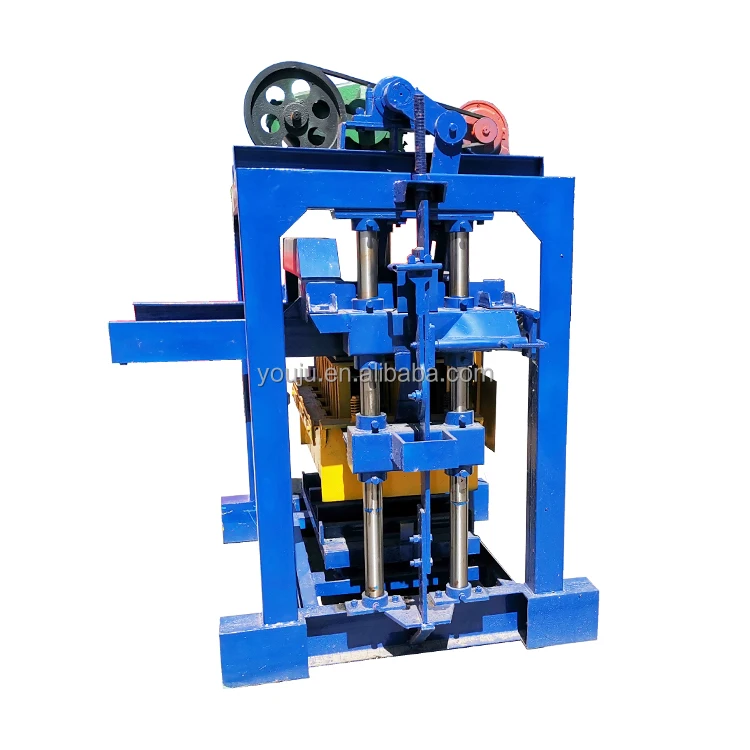
| Vibration Form | Platform Vibration |
| Vibration Frequency | 2800 r/min |
| Pallet Size | 850 × 450 mm |
| Overall Dimensions (L × W × H) | 1350 × 1460 × 1800 mm |
| Machine Weight | 1 T |
| Factory Area Required | 200 m² |
| Worker Requirement | 1–3 people |
| Raw Materials | Concrete, cement, fly ash, crushed stone, sand, dust, gravel, slag |
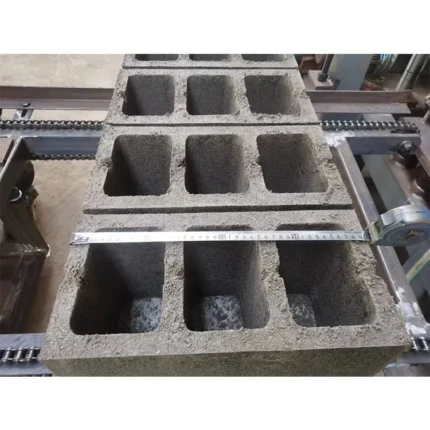
| Output Capacity | 2880 pcs/day (basis: 400 × 200 × 200 mm hollow block, 4 pcs/mould) |
| Output Capacity | 4000 pcs/day (basis: 400 × 150 × 200 mm hollow block, 5 pcs/mould) |
| Output Capacity | 7200 pcs/day (basis: 225 × 112.5 × 60 mm interlocking brick, 9 pcs/mould) |
| Automation Level | Semi-automatic with upgrade path to PLC-controlled operation |
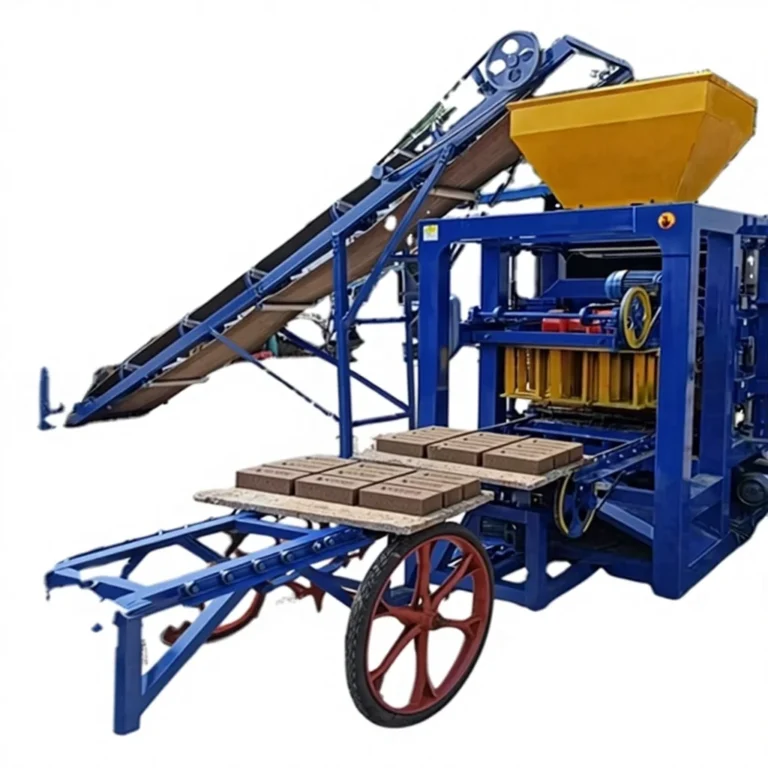
| Stacking Method | Manual (automatic stacking available as optional upgrade) |
| Top Die Mechanism | Push-pull with automatic scraper |
| Applied Products | Hollow/solid blocks, pavers, interlocking bricks, curbstone |
| Voltage & Frequency | Configurable to target market electrical standard |
| Control System | Available with manual or PLC control configuration |
Application Suitability
| Application | Material or Output |
|---|---|
| Hollow block production for masonry walls | Crushed stone, sand and cement at 1:4:5 approximate ratio |
| Solid block manufacturing for load-bearing structures | Concrete and fly ash blends with local aggregate |
| Interlocking brick production for paving and landscaping | Cement and fine aggregate mixes with colour oxide additive |
| Paver and curbstone forming for municipal projects | High-density concrete with graded gravel and slag |
| On-site block production for housing contractors | Locally sourced sand, dust and stone with Portland cement |
What "Semi-Automatic" Really Means for Your Daily Shift
The QTJ4-40 automates the top die cycle and scraper feed but leaves pallet handling to the operator — until you choose to close that gap with PLC-controlled pallet feeding and stacking.
Many buyers read "semi-automatic" in a brochure and assume the machine handles most of the work. In practice, a semi-automatic platform-vibration press still needs workers moving pallets in and out of the curing area by hand, which limits how many cycles one team can sustain over an eight-hour shift. [NEED_CITE: labour allocation in semi-automatic block plants] The automatic QTJ4-40 block machine PLC controlled configuration addresses this by adding sensor-driven pallet indexing and a programmable stacking station, removing the heaviest manual tasks from the operator while keeping the press footprint compact enough for a 200 m² workshop.
Closing the Loop Between Press and Pallet Handling
When pallet handling is manual, the press often sits idle waiting for the operator to pull a finished pallet and slide a fresh one into position. That dead time compounds across hundreds of cycles per shift. Adding a PLC-controlled pallet feeder synchronises pallet indexing with the vibration cycle, so the press is never waiting on human hands. The automatic QTJ4-40 block machine PLC controlled setup lets one operator oversee the entire feed-press-stack sequence from the control panel instead of walking between stations.
Batching Consistency Through Programmable Control
On a fully manual machine, mix ratios depend on the operator measuring cement, sand and stone by volume with shovels and buckets. Drift accumulates across a shift, and blocks pressed in the morning may not match those pressed in the afternoon. A PLC-controlled batching module meters each material by weight before it enters the mixer, keeping the cement percentage within a tight band throughout the production day. [NEED_CITE: PLC batching accuracy in concrete block production] This repeatability matters when buyers supply blocks to projects that specify compressive strength testing.
Reading the Specifications That Actually Affect Output
The platform vibration frequency of 2800 r/min determines how quickly the concrete mix consolidates inside the mould cavity, directly influencing block density and de-moulding strength. Higher vibration alone is not sufficient — the hydraulic pressure applied by the top die must be matched to the stiffness of the local aggregate, or the block will crack on release. The 850 × 450 mm pallet size sets the maximum mould footprint, which in turn dictates how many blocks of a given format fit per cycle. For a 400 × 200 × 200 mm hollow block, four pieces fit per mould, yielding a rated output of 2880 pcs/day based on an eight-hour shift. For a smaller 225 × 112.5 × 60 mm interlocking brick, nine pieces fit per mould, shifting the daily figure to 7200 pcs/day on the same shift basis. Buyers who overlook pallet size often discover after arrival that their existing curing racks and forklift cannot accommodate the dimensions specified. [NEED_CITE: pallet sizing and curing rack compatibility]
The Hidden Cost of Skipping the Voltage Conversation
A machine built for 380 V / 50 Hz will not start on a 415 V / 60 Hz supply without motor rewinding or a transformer, and the PLC display may boot in a language the local operator cannot read. [NEED_CITE: voltage and frequency standards by export market] These issues surface only after the container arrives on site, turning a planned two-day commissioning into a multi-week delay. Confirming voltage, frequency and control panel language in writing before production begins is the single step that prevents the most post-arrival rework on any automatic QTJ4-40 block machine PLC controlled installation.
Why Buyers Source This Platform Here
Block machinery is the single production focus, which means the press, mould, pallet and handling system are specified as one matched line rather than assembled from separate catalogues. Configuration is set against the buyer’s actual mix design and local aggregate, not a generic default. Mould design covers the formats the buyer’s market actually sells, with custom drawings accepted. Automation level is selectable, so a buyer can start semi-automatic and add PLC-controlled pallet feeding and stacking later without replacing the QTJ4-40 press itself. Installation support includes on-site commissioning and operator training to bring the team up to speed on the chosen control configuration.
Documentation & Verification
- Line layout and capacity calculation stating the block format assumed for the QTJ4-40 output figures
- Machine specification sheet with confirmed vibration frequency and pallet dimensions
- Mould drawing and format list covering hollow block, interlocking brick and paver options
- Hydraulic and electrical schematic matching the confirmed voltage and frequency
- Factory test record showing compaction results on the buyer’s submitted aggregate sample
- Operation and maintenance manual in the confirmed control panel language
Installation, Commissioning & Support
- 200 m² workshop floor with levelled concrete foundation to support the 1 T machine weight
- Dedicated electrical circuit matching the confirmed voltage, frequency and rated motor power
- Machine shipped partially assembled with top die and vibration platform secured for transit
- On-site commissioning includes vibration force adjustment to the buyer’s local mix design
- Operator training covers PLC cycle parameters, mould change procedure and safety interlocks
- Wear parts list supplied with recommended replacement intervals for scraper and vibration mounts
What to Share with Your Inquiry
Send the target block format and daily output you need, the raw materials available locally including a sample of your aggregate, and the voltage and frequency at your site. Let us know your preferred control language and whether you plan to start semi-automatic or move directly to PLC-controlled pallet handling. If you already have curing racks or a forklift, share the dimensions so the 850 × 450 mm pallet specification can be verified against your existing equipment before the line is configured.
Frequently Asked Questions
Q: How is realistic daily output verified per block format on the QTJ4-40?
A: Output is calculated separately for each block format based on the number of pieces per mould and the cycle time for that specific format. For example, a 400 × 200 × 200 mm hollow block produces four pieces per mould, rated at 2880 pcs/day, while a 225 × 112.5 × 60 mm interlocking brick yields nine pieces per mould at 7200 pcs/day. Buyers receive a written capacity table listing every format they plan to produce before the order is confirmed.
Q: What automation upgrades can be added to the QTJ4-40 after initial installation?
A: The platform supports staged upgrades starting from manual pallet handling through to PLC-controlled pallet feeding, automatic stacking and cubing. Each stage can be added independently, so a buyer can begin production with the semi-automatic configuration and introduce automatic pallet indexing once daily volume justifies the investment. The press itself does not need replacement when automation modules are added.
Q: How are voltage, frequency and control language confirmed before the QTJ4-40 ships?
A: These parameters are confirmed in writing during the quotation stage and again before production begins. The PLC display language is set to the buyer’s requirement so operators can read cycle parameters and fault codes on arrival. A pre-shipment test is conducted at the confirmed voltage and frequency to verify motor performance and control logic before the machine is crated.
Q: How is vibration force matched to the buyer’s local aggregate for the QTJ4-40?
A: Buyers are asked to send a sample of their local aggregate before the machine is configured. The vibration frequency and hydraulic pressure are adjusted during factory testing to produce blocks that meet the target compressive strength using that specific material. This prevents the common problem where a machine set for clean river sand underperforms when fed with high-clay local gravel.
Q: What is the mould change procedure and can it be sped up?
A: Mould change involves releasing the clamping bolts, lifting the current mould from the platform, positioning the replacement mould and re-securing the clamps. Quick-change bolt patterns and locating pins can be specified to reduce the number of tools and alignment steps required. Buyers who plan to run multiple formats per shift should request a quick-change system during the configuration stage to minimise downtime between formats.