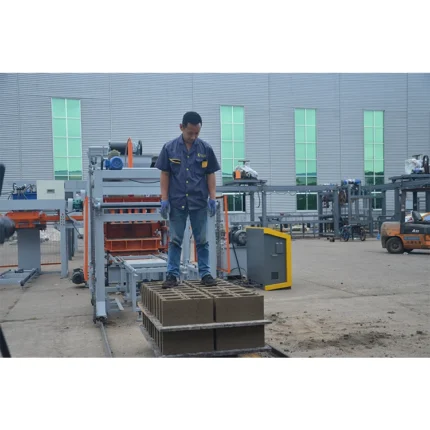


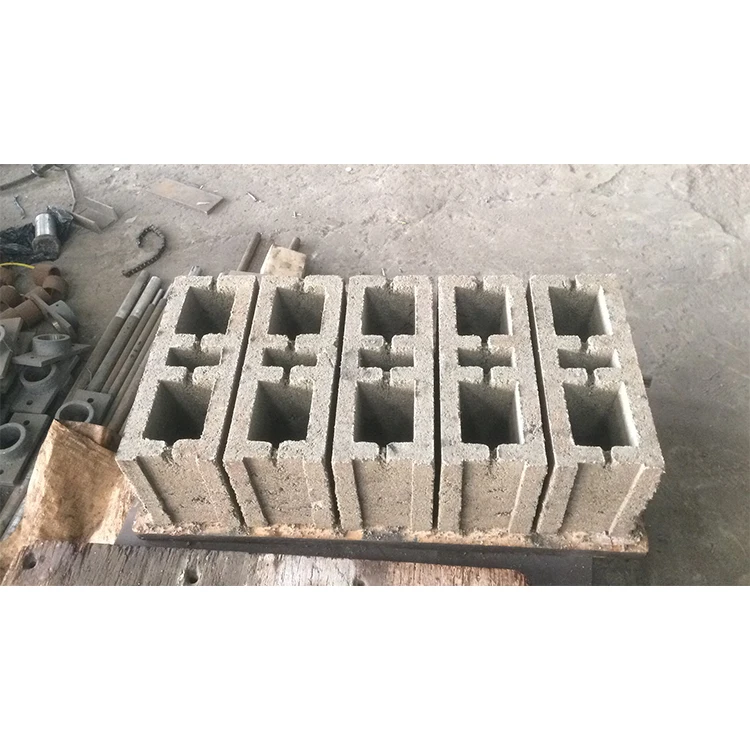
Description
Matched Control Logic — QTJ4-26 configured around the buyer’s actual block format and local aggregate rather than a catalogue default, with HMI language locked before dispatch.
Technical Specifications
| Parameter | Value |
|---|---|
| Model | QTJ4-26 |
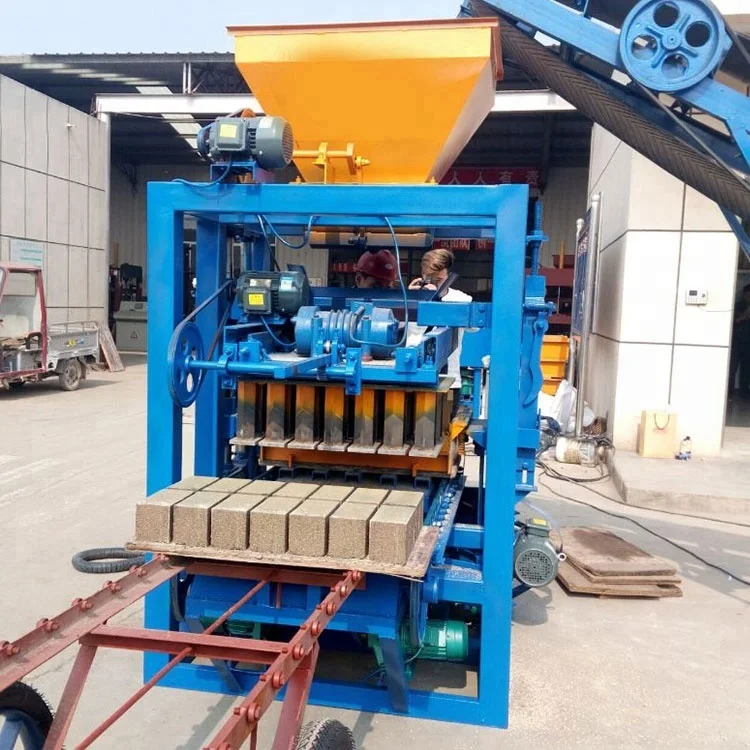
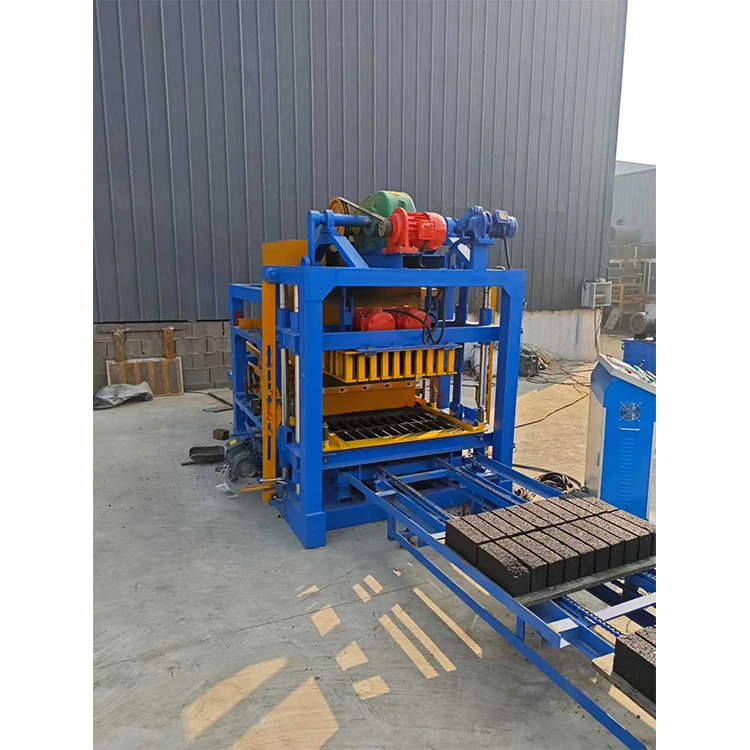
| Product Type | Small Scale Concrete Block Making Machine |
| Overall Dimensions (L×W×H) | 2060×1700×2650 mm |
| Rated Exiting Force | 35.5 kN (basis to be confirmed) |
| Main Vibration Form | Platform Vibration |
| Vibration Frequency | 4200 r/min |
| Pallet Size | 900×450 mm |
| Molding Cycle | 26 s (basis not stated in source — confirm block format and material) |
| Overall Power | 12.75 kW |
| Total Mass | 3600 kg |
| Demolding Method | Vibration |
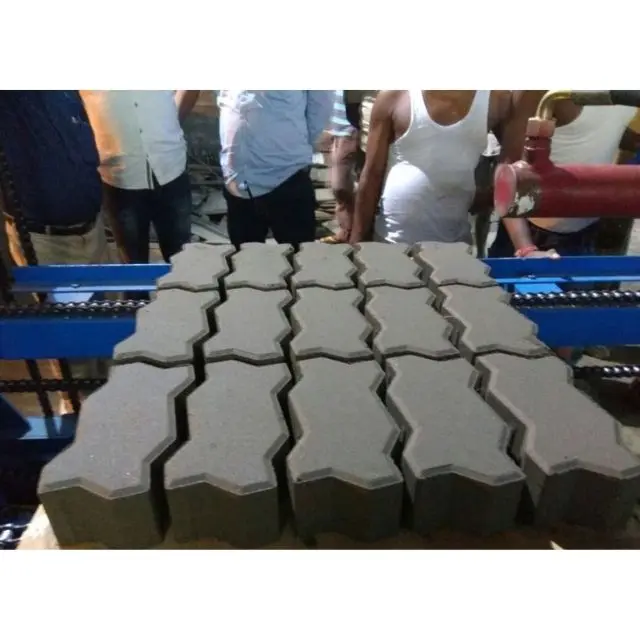
| Applied Products | Concrete blocks, hollow/solid blocks, pavers, interlocking blocks, curbstone, colored pavers |
| Raw Material | Crushed stone, sand, cement, dust, fly ash, gravel, slag |
| Control System | Not stated in source — confirm PLC / manual / semi-automatic level |
| Voltage & Frequency | Not stated in source — confirm before commissioning |
| Automation Level | Semi-automatic (implied — verify) |
| Warranty | 1 year for the whole machine (excluding spare parts) |
Application Suitability
| Application | Material or Output |
|---|---|
| Small-scale block production plants | Hollow and solid blocks from crushed stone, sand, and cement |
| On-site construction block manufacturing | Interlocking blocks and curbstone produced near the building site |
| Entrepreneurs setting up a first block plant | Standard concrete blocks from locally sourced gravel and fly ash |
| Distributors adding basic formats | Pavers and colored pavers from cement and fine aggregate |
Why the Control Language Must Be Decided Before the Crate Is Closed
An automatic block making machine with PLC control upgrade is only useful if the operator can read the screen on day one.
I once stood in a workshop outside Ho Chi Minh City watching a brand-new semi-automatic line sit completely idle. The HMI was locked to Chinese characters, and nobody on the floor could navigate past the alarm screen. The owner had paid for an automatic block making machine with PLC control upgrade path but received a control panel his team could not operate. That machine did not produce a single block for three days. [NEED_CITE: HMI language and PLC configuration requirements for exported industrial machinery]
This is not a rare problem. When the QTJ4-26 arrives with an unconfirmed display language or an incorrect voltage setting, the entire commissioning schedule collapses. Buyers focus on cycle time and pallet size, but the control interface and electrical specification determine whether the press runs at all during its first week on site.
Platform Vibration Consistency and Block Density
The platform vibration system runs at 4200 r/min, which delivers a steady compaction rhythm across the mould cavity. Consistent vibration frequency matters because it directly influences block density from one batch to the next. When the frequency drifts or the platform amplitude varies, blocks from the same shift can show noticeably different compressive strength. For a small-scale plant selling to local contractors, that variability erodes trust fast.
An automatic block making machine with PLC control upgrade allows the vibration duration and amplitude to be set once and repeated without operator guesswork.
Mould Change Downtime and the Automation Gap
The QTJ4-26 is designed to handle multiple block formats — hollow, solid, paver, interlocking — through mould swaps. But when pallet feeding and stacking remain manual, the time saved by a faster press cycle gets swallowed by the operator walking pallets to the curing area. The 26-second moulding cycle is achievable under specific conditions, yet the real throughput depends on how quickly the next pallet is in position and how the cured blocks are cleared.
An automatic block making machine with PLC control upgrade becomes meaningful when pallet feeding, stacking, and batching are brought under the same logic so the press never waits on a manual step. [NEED_CITE: typical bottlenecks in semi-automatic block production lines]
Reading the Specs Against Your Actual Mix and Format
The rated exiting force of 35.5 kN and the platform vibration at 4200 r/min must be evaluated together with the buyer’s mix design. A high-cement mix with fine sand responds differently to vibration than a lean mix with coarse crushed stone. The pallet size of 900×450 mm dictates how many blocks fit per cycle, but the actual output per shift depends on the block format being produced — a 400×200×200 mm hollow block yields far fewer units per pallet than a thin interlocking paver.
The 12.75 kW overall power envelope covers the press and vibration motor. If a buyer later adds an automatic batching station or a pallet return conveyor, the total line draw will exceed this figure, so the electrical supply must be planned for the expanded configuration from the start.
The Cost of Skipping the Control Specification
When voltage, frequency, and HMI language are left unconfirmed, the machine arrives and cannot be powered on without a transformer or a rewired control cabinet. I have seen buyers spend weeks sourcing a local electrician to rewire a panel that should have been built correctly at the factory. The delay is not just lost production — it is lost confidence from the contractor who was counting on those blocks for a foundation pour. [NEED_CITE: electrical specification mismatches in exported machinery installations]
Why Sourcing the Control Side Here Makes Sense
Block machinery is a single focus for the supplier, so the QTJ4-26 press, mould, pallet, and handling equipment are specified as one matched system. The configuration is set against the buyer’s actual mix design and local aggregate, not pulled from a generic catalogue. The automation level is selectable — a buyer can start with semi-automatic pallet handling and add an automatic pallet feeder and stacker later without replacing the press. Mould design covers the formats the buyer’s market actually sells, including custom drawings. Installation support includes operator training with the HMI already set to the buyer’s language.
Documentation & Verification
- Line layout showing QTJ4-26 footprint and pallet flow direction before shipment
- Capacity calculation stating which block format the 26-second cycle assumes
- Mould drawing and format list matching the buyer’s target market
- Voltage, frequency, and HMI language confirmation sheet signed before dispatch
- Factory test record run on the buyer’s specified mix design
Installation, Commissioning & Support
- 260 m² factory area required with level concrete floor for the QTJ4-26 platform
- Dedicated electrical circuit matching confirmed voltage and frequency before arrival
- Machine shipped in dismantled state within one 40HQ container for reassembly on site
- First-run commissioning includes vibration frequency calibration at 4200 r/min
- Operator training covers HMI navigation in the confirmed display language
- Wear parts and mould list provided with recommended replacement intervals
What to Share Before Requesting a Quotation
Provide the specific block formats you intend to produce, the daily output you need for each format, and the raw materials available locally. Confirm your site voltage, frequency, and the language your operators will need on the control screen. If you already have a curing area and forklift, share the dimensions so the pallet size and handling configuration can be matched to your existing setup.
Frequently Asked Questions
Q: What automation level does the QTJ4-26 ship with, and which operations remain manual?
A: The QTJ4-26 typically ships as a semi-automatic machine. The press cycle and vibration are controlled, but pallet feeding and block stacking are usually handled manually. An automatic block making machine with PLC control upgrade can later integrate automatic pallet feeding and stacking without replacing the core press unit.
Q: How does the 26-second cycle time change when different block formats are used?
A: The 26-second moulding cycle is a reference figure that depends on the block format, material mix, and thickness being produced. Larger hollow blocks may require longer vibration and pressing time, while thin pavers can cycle faster. Always request a capacity calculation that states the exact format assumed.
Q: Can the control system be upgraded to full PLC with automatic pallet feeding and stacking later?
A: Yes. The QTJ4-26 is designed to accept an automatic block making machine with PLC control upgrade that adds automatic pallet feeding, stacking, and cubing. The upgrade can be phased so the press continues operating while new stations are installed and integrated.
Q: What voltage, frequency, and HMI language options must be confirmed before the machine leaves the factory?
A: Voltage and frequency must match the buyer’s local supply standard, and the HMI display language must be set to the operator’s working language. These specifications should be confirmed in writing before production begins, as retrofitting after arrival causes significant commissioning delays.
Q: How does platform vibration consistency at 4200 r/min affect block strength uniformity?
A: A stable vibration frequency ensures that each mould cavity receives consistent compaction energy throughout the cycle. When the frequency is steady, blocks across the same batch show uniform density and compressive strength, which is critical for meeting contractor specifications and maintaining market reputation.